


Key Business Points
- Monitor Malawi’s public debt at K24 trillion (about 90.8 % of GDP) and press for transparent reporting to reduce fiscal uncertainty for investors, especially for the bizinesi community.
- Demand that any IMF‑linked reforms include strong social protection safeguards so that health, education and agriculture budgets stay intact and vulnerable households are shielded.
- Push for improved revenue collection, expenditure control and clear governance in areas like fuel levy and public procurement to rebuild confidence and attract investment.
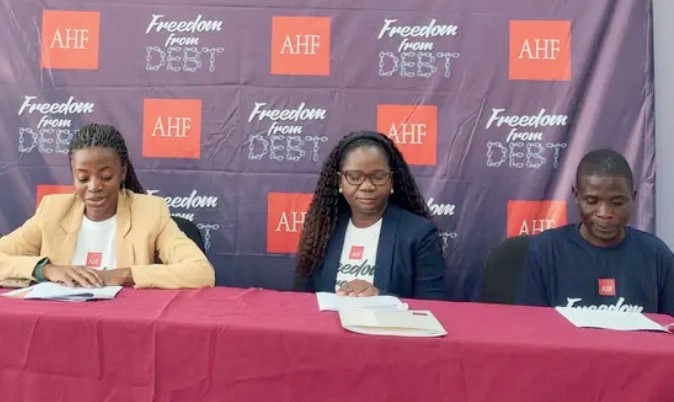
The National Debt Coalition, a grouping of 25 civil society organisations, said Malawi’s debt crisis has moved beyond a technical fiscal issue and is now a structural challenge needing urgent redress. Speaking at a press conference in Lilongwe, ActionAid Malawi policy coordinator Tusayiwe Sikwese urged coordinated action across all stakeholders to keep debt from derailing the country’s development path. She noted that the country’s public debt stands at K24 trillion, which is 90.8 percent of gross domestic product, and consumes about 40 percent of total revenue. This leaves social services and the production sector underfunded.
Sikwese stressed that any reforms tied to a potential International Monetary Fund programme must provide social protection safeguards and protect vulnerable people. She said reform programmes should protect vulnerable households and preserve access to essential services, in line with Malawi’s obligations under international human rights law, ensuring health, education and agriculture are shielded from excessive fiscal adjustment.
The coalition also warned that Malawi remains highly vulnerable to climate shocks such as cyclones and recurring floods, yet continues to service debt during crises, limiting its ability to respond effectively. Public finance expert Dalitso Kubalasa added that while fiscal discipline should be intentional and backed by firm rules to prevent expenditure overruns and growing debt, Malawi also needs to adopt a more realistic exchange rate framework and stronger social protection measures to cushion vulnerable households during reforms. He said government must always have an inclusive pre‑negotiated consensus on a reform compact with domestic stakeholders.
Meanwhile, Malawi Economic Justice Network executive director Bertha Phiri urged the government to show progress in revenue collection, expenditure control and to stop the accumulation of new arrears while strengthening governance measures, including transparency in fuel levy collections, asset declarations and public procurement. She said the Malawi Government ought to show a concrete picture of fiscal consolidation, not just plans anymore.
Finance Minister Joseph Mwanamvekha earlier told The Nation that the government is seeking a “win‑win” agreement with the International Monetary Fund that supports economic recovery while protecting vulnerable households. He said they will not accept any reforms that will harm the very people they want to protect.
In its April 2026 Africa Economic Update, the World Bank said Malawi’s debt restructuring launched in mid-2022 has stalled with no comprehensive agreement reached after the lapse of the IMF programme. The 2025 Debt Sustainability Analysis by the World Bank classified Malawi as being in debt distress, a situation that makes the government struggle to meet financial obligations, leading to a high risk of default.
What are your thoughts on this business development? Share your insights and remember to follow us on Facebook and Twitter for the latest Malawi business news and opportunities. Visit us daily for comprehensive coverage of Malawi’s business landscape.


- Lindian, French Firm Anchor Technology Deal to Elevate Malawi Economy - September 24, 2026
- Economic Positivity Gains Momentum as Inflation Pressures Ease - September 23, 2026
- Malawi Businesses Set to Gain from K3.4 Trillion Economic Stimulus - September 23, 2026