


Key Business Points
- Centenary Bank’s new €7.5 million facility opens funding for smallholder farmers, MSMEs and agri-food businesses.
- Half the money targets women’s economic empowerment, creating a clear opportunity for women-led enterprises to prepare loan-ready plans.
- Borrowers should expect training first, so groups must strengthen records, financial literacy and climate-smart farming before applying.
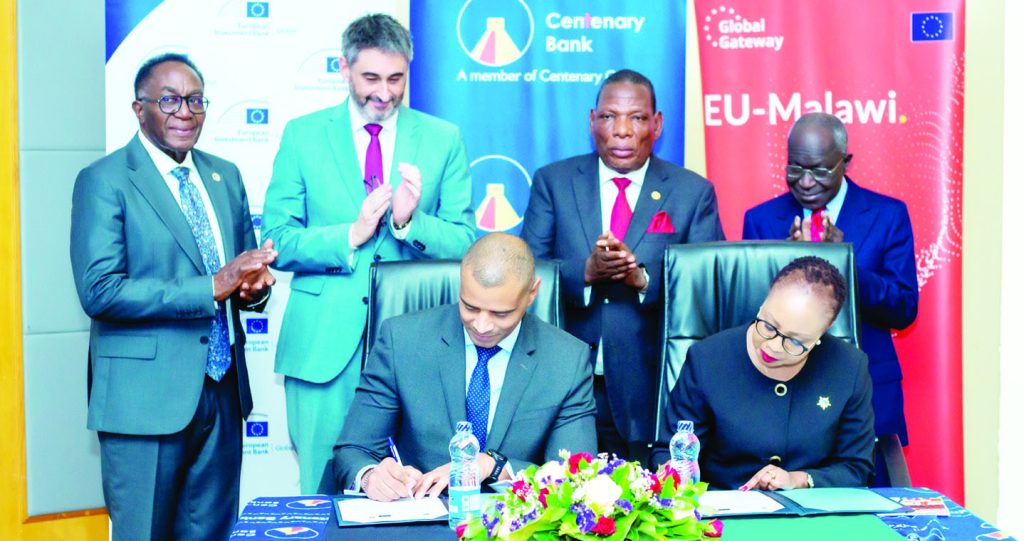
Malawi’s financial and agriculture sectors have received a major boost after the European Investment Bank, through EIB Global, signed a €7.5 million financing agreement with Centenary Bank, worth about K15 billion.
The facility is designed to expand lending to smallholder farmers, micro enterprises and agri-food businesses, with a strong focus on job creation, income growth and sustainable business models. Half of the financing is set aside for micro, small and medium enterprises, or MSMEs, and climate-resilient agriculture in Malawi. The other half will support the economic empowerment of women, making it an important opportunity for women-led cooperatives, traders, processors and rural producers.
EIB Southern Africa Region Hub head Jim Hodges said the funding is aimed at businesses that can prove they are sustainable and able to generate income. “We are really looking for sustainability,” he said, adding that investments must help create jobs and improve livelihoods.
Centenary Bank Board Chairperson Francis Pelekamoyo said the bank expects the facility to reach at least two million people in rural areas. He said the first stage will involve financial literacy training, where potential borrowers will be guided on loan requirements, business planning and repayment discipline. The bank will then select groups for support.
Acting Managing Director Beatrix Mosiwa said the partnership will help transform MSMEs by supporting productive activities that can strengthen local economies. She said expert support will also improve Centenary Bank’s agricultural lending and help beneficiaries adopt climate-resilient farming practices.
For Malawian entrepreneurs, the message is clear: access to finance will be linked to preparation. Groups seeking support should keep proper records, show how their businesses earn money, and demonstrate how they manage risk. In Chichewa terms, this is about using ndalama moyenerera, or using money wisely, and building mabizinesi that can survive shocks.
The support also matters because Malawi’s rural economy depends heavily on agriculture, where low funding, climate shocks and weak market access often limit growth. With this facility, local actors can look at processing, storage, packaging and supplying schools, hospitals or retailers.
EU Ambassador to Malawi Daniel Aristi-Gaztelumendi said the European Union remains committed to supporting Malawi’s economic transformation. He said EU programmes are helping farmers become more productive, competitive and commercially viable, while also improving access to finance for businesses.
Finance Minister Joseph Mwanamvekha urged Centenary Bank to reduce bureaucracy in releasing funds to beneficiaries. He said the partnership is important because it connects underserved communities with formal finance. He also pledged government support for an enabling environment for financial institutions.
Success will depend on transparent selection, affordable loan terms, timely payment and mentoring after loans are issued. Businesses that move early, organise into credible groups and present clear plans may be best placed to benefit.
The deal should also encourage service providers, transporters, input sellers and equipment suppliers to align with farmer groups that may receive support. For banks and development partners, the project offers a test of whether blended support can move money from national institutions to village-level businesses with measurable results for Malawi now.
What are your thoughts on this business development? Share your insights and remember to follow us on Facebook and Twitter for the latest Malawi business news and opportunities. Visit us daily for comprehensive coverage of Malawi’s business landscape.


- EIB and Centenary Bank’s €7.5M Pact to Fuel Malawi’s SME Growth - September 17, 2026
- Narrow Exports Threaten Malawi’s Business Growth - September 17, 2026
- NPM launches Malawi’s premier business expo at BICC on Nov 28 - September 16, 2026