


Key Business Points
- Banks are financing critical road projects through partnerships with the Malawi Government, unlocking infrastructure development.
- FDH Bank plc and National Bank of Malawi plc have each allocated K100 billion to improve the Golomoti-Monkey Bay Road, enhancing trade and tourism access.
- Infrastructure financing is becoming a key investment area for banks, driven by economic benefits like agricultural market access and alignment with Malawi 2063 goals.
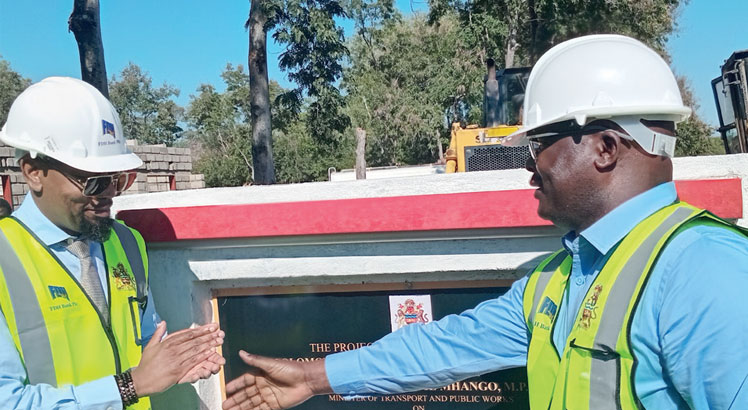
Malawi’s commercial banks are deepening their collaboration with the government to fund strategic road projects, a move seen as vital for economic growth. The latest initiative involves FDH Bank plc and National Bank of Malawi plc, two major financial institutions, each setting aside K100 billion to finance the 58.4-kilometer Golomoti-Monkey Bay Road. This project, split into two lots, will connect communities in Mangochi and Dedza, improving access to tourism hubs and fishing areas.
The first lot, covering 30 km from Chantulo Trading Centre to Monkey Bay Turn-off, is being constructed by Unik Construction Company, while the second lot (28.4 km) from Chantulo to Golomoti is handled by Mota-Engil. Both projects are scheduled for completion within 24 months. This follows earlier collaborations, such as NBS Bank plc’s support for the Parliament to Bingu National Stadium road and Standard Bank’s funding of the Saulos Chilima Highway.
Experts highlight the viability of such partnerships. Nico Capital CEO Misheck Esau noted that banks can manage large investments through cash flow-based financing, even with short-term funding. Finance expert Moffat Ngalande emphasized leveraging development finance arms and capital markets to structure infrastructure bonds, while investor Benedict Nkhoma stressed the need for transparency and repayment mechanisms to ensure project success.
The government views these efforts as critical to rehabilitating deteriorated roads under its broader infrastructure agenda. Transport Minister Jappie Mhango stated the Golomoti-Monkey Bay Road is a key link for communities and supports Malawi 2063, the country’s plan to become a lower-middle-income economy by 2030. Engineer Newton Kambala of the Roads Authority underscored the project’s role in boosting economic activity and aligning with national development goals.
For Malawi’s business community, these developments signal growing opportunities in infrastructure-related sectors. Improved road networks can reduce transport costs, enhance market access for farmers, and attract tourism investments. Entrepreneurs in construction, logistics, and agriculture stand to benefit as the government prioritizes connectivity.
However, experts caution that sustainability depends on proper project management and repayment frameworks. As banks increasingly view infrastructure as an asset class, businesses should explore partnerships with financial institutions to tap into these initiatives.
The shift toward public-private collaboration in road financing reflects a broader trend of leveraging private capital for public goods. For local entrepreneurs and investors, this opens avenues to participate in projects that directly impact Malawi’s economic trajectory.
By focusing on commercially viable, well-managed projects, Malawi can build a foundation for long-term growth while creating immediate opportunities for businesses across sectors.
What are your thoughts on this business development? Share your insights and remember to follow us on Facebook and Twitter for the latest Malawi business news and opportunities. Visit us daily for comprehensive coverage of Malawi’s business landscape.


- Streamlining Trade: Malawi & Mozambique Cut Border Delays for Business Growth - October 24, 2026
- Maize Prices Edge Up in September: Market Analysis for Malawi Investors - October 24, 2026
- IPMM Demands HR Bill Passage to Stabilize Malawi’s Labour Landscape - October 23, 2026