


Key Business Points
- Financing is the biggest bottleneck: fish farmers and feed makers say affordable loans, such as those from Agcom, could quickly raise fingerling and feed output.
- Fingerling supply meets only half of demand: hatcheries produce 6.2 million against a need of over 13 million, so investing in certified fingerling production is a clear opening.
- Local feed production can cut costs: with demand rising and Lake Malawi stocks falling, fish feed manufacturing offers a ready market for new and existing investors.
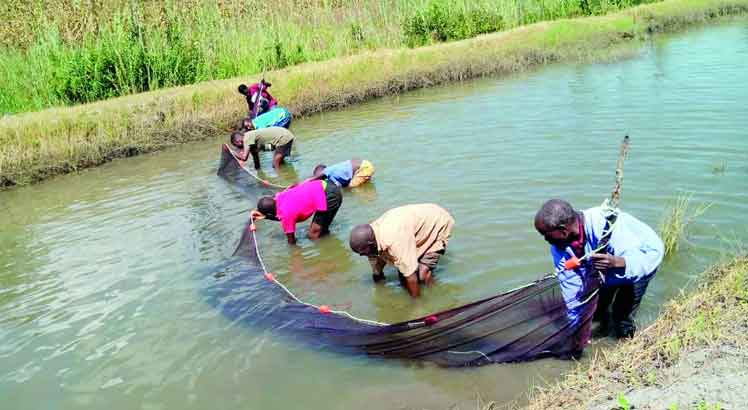
Malawi’s dream of producing 100,000 metric tonnes of farmed fish by 2030 is at risk. Output has stayed flat at about 14,000 tonnes for three years, even as declining catches from Lake Malawi and climate change squeeze supply from natural water bodies. WorldFish puts the national supply gap near 20,000 tonnes, a shortfall that hits households, traders and processors alike. Fish is a key part of the local diet, so the shortfall matters.
A policy brief by Mwapata Institute, titled Unlocking the Economic Potential of Malawi’s Aquaculture Sector through Commercialisation, points to slow commercialisation as the core problem. The study names limited quality fingerlings, weak technology use and rising fish feed costs as the main barriers. Without change, the gap will keep widening as demand grows.
The numbers are stark. Public and private hatcheries produced about 6.2 million mbewu za samala (fingerlings), against demand above 13 million, a deficit close to 50 percent. Many farmers reuse stock from their own ponds or neighbours, which leads to weaker fish, slower growth and more deaths, and weak profits for smallholder enterprises.
The brief, by researchers Joyce Minofu, Bonface Nankwenya, Maggie Munthali, Lemekezani Chilora, Zephania Nyirenda and Christone Nyondo, says Malawi 2063’s target is reachable but hard. It urges expansion of commercial fingerling and feed production, stronger extension services, cheaper financing and community-based business models. It backs solar-powered hatcheries at Luanar and Domasi to unlock idle capacity.
Lucky Penemulungu, chairperson of the Innovative Fish Farmers Network Trust, says the sector has the skills but lacks capital. "All we need now is organisations such as Agcom to provide us with financing," he said, noting that funds would lift fingerling and chakudya cha samala (fish feed) output.
Government signals support. Minister of Natural Resources Patricia Wiskes said aquaculture is a critical solution as Lake Malawi stocks decline, adding that feed production remains too low. The government pledge matters because feed is one of the highest costs for farmers. She was speaking after a tour of Central Poultry Feeds Limited in Lilongwe, where managing director Nizam Kasmani said the firm can make 45,000 tonnes of fish feed a year and is weighing investment in fingerlings.
For investors, the message is clear. Regional aquaculture grew from under 400,000 tonnes in 2000 to 2.4 million tonnes in 2024, while Malawi moved from 800 tonnes in 2005 to 14,000 in 2024, showing ample room to grow. Total fisheries output stood near 211,000 tonnes in 2025, yet each person eats only 9.5 kilogrammes a year, below the World Health Organisation guideline of 13 to 15.
That gap is the opportunity. Banks, agro-processors and youth-led startups can profit by financing hatcheries, local feed plants and pond systems that turn ngongole (loans) into chuma (wealth) for Malawi. Those who move first could help close the gap while building profitable businesses.
What are your thoughts on this business development? Share your insights and remember to follow us on Facebook and Twitter for the latest Malawi business news and opportunities. Visit us daily for comprehensive coverage of Malawi’s business landscape.


- Fish Farming’s Challenges, Malawi’s Opportunities - November 15, 2026
- Debt pressure cuts into growth capital - November 14, 2026
- Malawi’s Debt Burden: What It Means for Business, Investment, and Growth - November 14, 2026