


Key Business Points
- Magwero Industrial Park is near implementation, after delays caused by legal reviews and land compensation processes, offering imminent opportunities for investors and local businesses.
- Export diversification is a top priority, with the park projected to generate $600 million annually through textiles, pharmaceuticals, processed foods, and minerals processing.
- Local private sector participation is encouraged, though power shortages and lack of expertise may slow progress in sectors like mining.
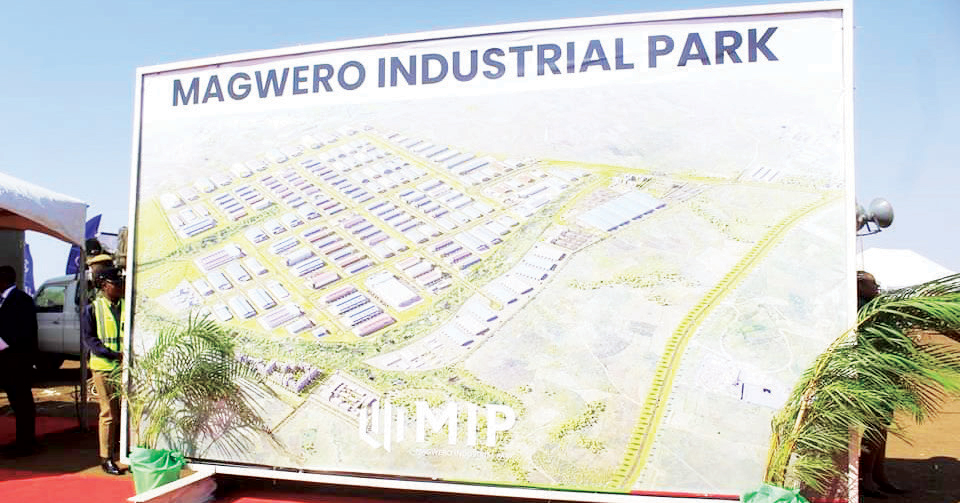
Malawi’s business community is closer to welcoming the Magwero Industrial Park, a planned special economic zone (SEZ) along the Kamuzu International Airport Road. After delays in starting construction since its 2024 groundbreaking, Principal Secretary Wiskes Nkombezi confirmed that the main partner, Arise IIP, is ready to begin works, with investors set to finalize project details soon. This marks a renewed push to establish the park as Malawi’s industrial hub, aimed at boosting export revenues and creating jobs.
The park, spanning over 400 hectares near the Kanengo Industrial Area, is designed to house industries such as textiles, pharmaceuticals, tiles, processed food, and mineral processing. Initial forecasts estimate annual exports of $600 million, a figure that could significantly bolster Malawi’s economy if achieved. However, delays earlier this year were attributed to the government’s review of the SEZ legal framework and the formulation of regulations. Compensating and relocating current land users also slowed progress.
Nkombezi emphasized the government’s intention to increase local participation in the project, with discussions already underway to involve domestic private sector players. “We want this to be a home for Malawian businesses,” he said. The Chamber of Mines, represented by Coordinator Grain Malunga, highlighted the mining sector’s potential within the park. However, Malunga cautioned that power shortages and a lack of technical expertise could hamper mineral processing operations. While the site’s limited space excludes oxide and carbonate production due to pollution risks, opportunities remain for small-scale beneficiation of locally mined resources.
Mzimba-based entrepreneurs and manufacturers may find the park’s focus on agro-processing and light industry particularly relevant, given Malawi’s reliance on agricultural exports like tobacco and maize. By fostering clusters of industries, the park could help diversify the economy beyond primary commodities, a critical step toward sustainable growth.
Despite these ambitions, challenges persist. The ongoing struggle with unreliable energy supply remains a barrier for industries requiring consistent power. Malunga noted that downstream mining activities—such as refining and chemical processing—need infrastructure upgrades to thrive. Additionally, the lack of skilled labor and access to specialized equipment could delay full-scale operations.
Yet, there is optimism. The government’s commitment to streamlining regulations and engaging local stakeholders signals a shift toward a more inclusive industrial strategy. For local business owners in Lilongwe, Blantyre, and Mzuzu, the park represents a long-awaited chance to access modern facilities, tax incentives, and global markets through export-oriented production.
As the project moves forward, entrepreneurs should monitor tender notices and partnership opportunities. Sectors like textiles and agro-processing may offer lower barriers to entry compared to mining, which requires heavy capital and technical know-how.
For now, the message is clear: Magwero Industrial Park is no longer a distant vision. With the right planning and collaboration between the public and private sectors, it could become a catalyst for economic transformation. Business owners and investors should stay engaged, as m’mawa (now) is the time to position themselves for what lies ahead.
Mzimba, Chilankhulo, and Nkombozi—terms that resonate with local stakeholders—could soon become synonymous with growth if this industrial dream takes flight.
What are your thoughts on this business development? Share your insights and remember to follow us on Facebook and Twitter for the latest Malawi business news and opportunities. Visit us daily for comprehensive coverage of Malawi’s business landscape.


- Government Courts Local Investors on $600 Million Industrial Parks Project - October 8, 2026
- Malawi Business Alert: Price Pressures Signal Margin Squeeze Across Sectors - October 8, 2026
- User Safety: safe - October 7, 2026