


Key Business Points
- Service delivery gaps hurt Malawi’s competitiveness; government targets raise customer satisfaction from 58% to 63% by next year.
- Public institutions need faster complaint handling (acknowledge within 24 hours, resolve within 72 hours) to lower business costs.
- Improving the Malawi Service Excellence Compact will strengthen investor confidence and support Malawi 2063 growth plans.
Minister of Industrialisation, Business, Trade and Tourism Simon Itaye has urged all public agencies and private firms to sharpen their service standards, warning that weak customer relations could stall the country’s push for higher investment and economic transformation. His appeal follows the first National Customer Satisfaction Index, which shows Malawi lagging behind the African average and highlights where immediate action is needed.
The index, covering 4 200 respondents across the three regions, recorded an overall satisfaction score of 58 percent—five points below the African benchmark of 63 percent. The lowest rating came from local councils at 38 percent, while hotels led at 75 percent, followed by banks (68 percent) and mobile money services (66 percent). In practical terms, a visit to a government office consumes about 4.2 hours on average, and roughly 38 percent of complaints are left unresolved after three days.
Itaye stressed that every investor starts as a customer; a delayed response or misplaced file can cost the country an opportunity before negotiations even begin. He linked the service deficits directly to Malawi’s broader business challenges, where administrative delays and unreliable public utilities raise transaction costs and disrupt commercial flow.
The World Bank’s September 2026 Malawi Economic Monitor reinforces this view, flagging inefficient state‑owned enterprises (SOEs) as a drag on competitiveness. Because the private sector relies on SOE‑provided electricity, water and other infrastructure, poor performance translates into higher operating costs and weaker market positioning. The report notes that SOE assets have risen from 14 percent of GDP in 2019 to 26 percent in 2024, while revenues grew from 8 percent to 11 percent. Despite the expansion—driven partly by capital investment and kwacha depreciation—operational inefficiencies persist.
To address these issues, Itaye introduced the Malawi Service Excellence Compact for 2026–2029. The framework sets concrete targets: lift the national satisfaction score to 63 percent by next year and 72 percent by 2029. It also mandates that institutions acknowledge customer complaints within 24 hours and resolve them within 72 hours, a timeline designed to restore confidence and reduce the hidden costs of slow service.
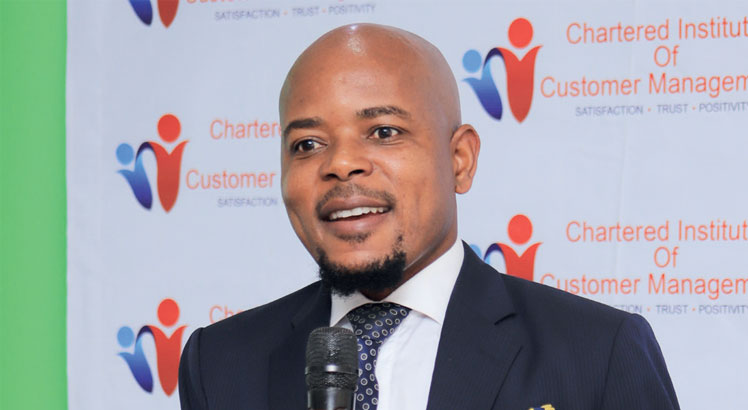
Rinos Mautsa, co‑founder and executive director of the Chartered Institute of Customer Management (Cicm), emphasized that improving service is a kugonja (responsibility) that extends beyond front‑line staff. He said Cicm is preparing a national customer‑service campaign, pending ministerial approval, to promote accountability, staff training and higher standards across both public and private sectors.
The push for better service aligns with Malawi 2063, the long‑term vision to become an upper‑middle‑income nation. By tightening complaint handling, raising satisfaction levels and upgrading SOE performance, the country can kuthenga (attract) investors, lower transaction costs and create a more predictable business environment. Business owners and entrepreneurs are encouraged to monitor these developments and engage with the new compact as it rolls out, seizing the opportunity to shape a more efficient and investor‑friendly market.
What are your thoughts on this business development? Share your insights and remember to follow us on Facebook and Twitter for the latest Malawi business news and opportunities. Visit us daily for comprehensive coverage of Malawi’s business landscape.


- Poor Service Drives Up Costs for Malawi’s Businesses - October 10, 2026
- Tapping Malawi’s Economic Potential: Strategic Opportunities for Business Growth - October 9, 2026
- Kayelekera Uranium Confidence Drives Malawi Investment Growth - October 9, 2026