


Key Business Points
- Partner with large manufacturers to supply locally produced inputs and support import substitution.
- Monitor foreign exchange policies and plan for raw material costs if your business relies on imports.
- Explore supply opportunities with CCBA and other plants investing in local production and job creation.
Malawi’s manufacturing sector is receiving renewed government attention as officials work to remove barriers that limit local production and export growth.
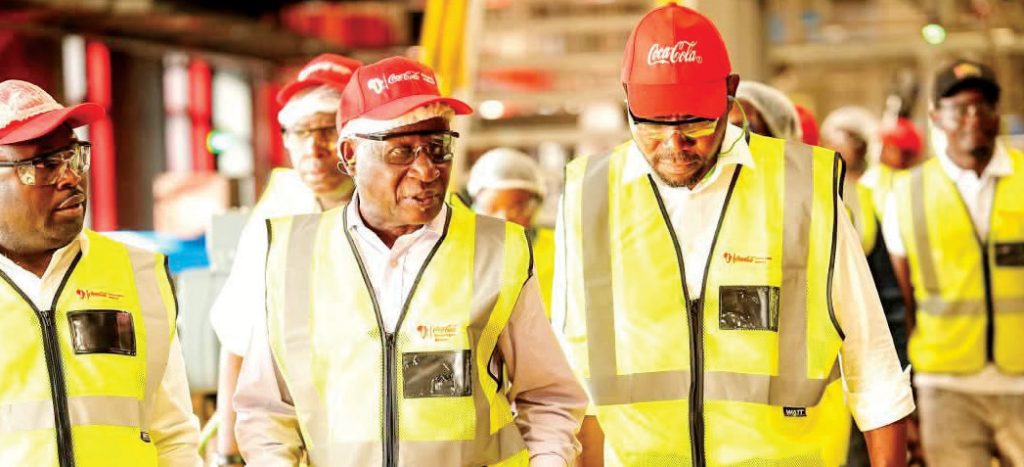
Industrialisation, Business, Trade and Tourism Minister Simon Itaye made the commitment during a visit to the Coca-Cola Beverages Africa factory in Kanengo, Lilongwe, on Tuesday. The Kanengo area is a hub for industrial activity in Lilongwe, and investment there often signals confidence in Malawi’s broader business climate. He said the administration is focused on creating an enabling environment for manufacturers and is engaging small and medium entrepreneurs to produce materials needed for local factories. This supports the country’s import substitution drive. Reducing reliance on imported goods also helps conserve foreign reserves and strengthens the kwacha over time.
Itaye noted that large manufacturers, including Coca-Cola Beverages Africa, face foreign exchange challenges because they rely on imported raw materials. He described the factory tour as one of the critical steps the government is taking to address production bottlenecks.
“The fact that we are moving closer to the private sector is, itself, a demonstration that we would like to have an enabling environment,” Itaye said.
The minister said large manufacturers are central to this effort because their demand for inputs can create markets for Malawian farmers and suppliers.
Neil French, general manager of CCBA Malawi, said the company remains committed to increasing local production. He added that solving these challenges would allow the company to use its installed capacity fully and create greater value for customers, communities and Malawi.
French said CCBA would keep working with the government to find practical solutions that support sustainable growth, investment and job creation.
In 2025, the company reinforced its long-term commitment with a $14.9 million investment in a modern production line in Lilongwe. The company’s decision to expand in Lilongwe comes at a time when many businesses are watching currency stability and input costs closely.
For local entrepreneurs, the development signals a mwayi (opportunity) to supply inputs to large manufacturers and take part in import substitution. It also highlights the need for businesses to manage foreign exchange exposure and build resilient supply chains. For farmers and small processors, the message is that consistent quality and reliable delivery can open doors to contracts with major brands.
The minister’s engagement with the private sector suggests that policy dialogue will continue. Companies that align with government priorities on local production may find clearer pathways to support and expansion.
As Malawi pushes to increase export volumes, partnerships between manufacturers, small businesses and regulators will be essential. Business owners should watch for new guidelines on local sourcing and consider how they can position their operations to meet demand from large plants.
Practical next steps include registering as a supplier, improving product standards, and engaging with industry associations that represent small businesses.
For now, the message to Malawi’s business community is clear: local production is a national priority, and those who can deliver quality inputs at scale stand to benefit from the country’s industrialisation drive.
What are your thoughts on this business development? Share your insights and remember to follow us on Facebook and Twitter for the latest Malawi business news and opportunities. Visit us daily for comprehensive coverage of Malawi’s business landscape.


- Secure Investment Climate Drives Malawi Business Growth - November 7, 2026
- Seize the Opportunity: Malawi’s EU Exports Surge 19% in Two Years - November 6, 2026
- Malawi’s Import Bill Surges to $3 Billion: What It Means for Your BusinessMalawi’s $3 Billion Import Surge: Navigating the Economic ShiftThe $3 Billion Import Spike: Assessing the Impact on Malawi’s EconomyImport Costs Soar: Malawi’s $3 Billion Challenge for BusinessesMalawi’s Record $3 Billion Import Bill: A Catalyst for Local Innovation - November 6, 2026