


Key Business Points
- Boost investor confidence by addressing FX shortages and regulatory gaps.
- Diversify investment targets into value‑added manufacturing and mining.
- Leverage policy reforms such as special economic zones to spur growth.
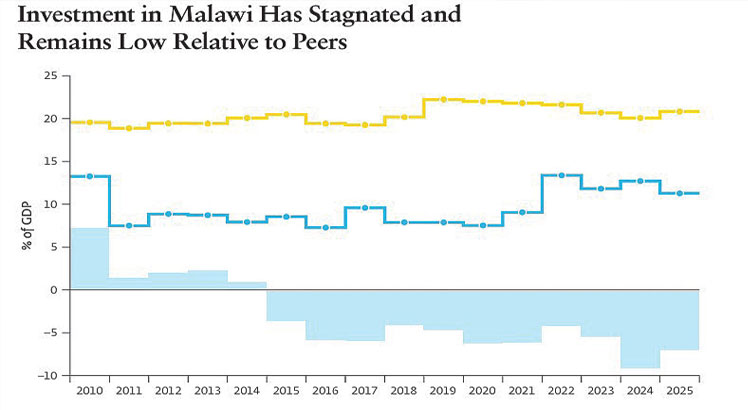
Malawi’s private‑sector investment has slumped to just 11.1 % of GDP in 2024, a sharp drop from the double‑digit levels seen between 2017 and 2019. The Malawi Confederationvede Chambers of Commerce and Industry (MCCCI) warns that this decline undercuts productive expansion, job creation, and the pace of economic growth. Their latest assessment, informed by the World Bank’s June 2026 Country Private Sector Diagnostic, shows that the gross investment rate has fallen consistently, leaving the country well below its regional peers.
Lucky Mfungwe, MCCCI’s director of business environment, notes that a difficult operating environment stifles both domestic and foreign investment. He lists several constraints that weigh heavily on the business climate: persistent foreign‑exchange shortages, high inflation, elevated interest rates, unreliable energy supply, and an unpredictable regulatory framework. These factors have eroded private‑sector confidence, reduced production capacity, and dampened the potential for export growth. “These constraints have significantly weakened privatedued confidence and discouraged both domestic and foreign investment,” Mfungwe said.
The World Bank report adds that overall investment averages 15 % of GDP over the past five years, whereas many regional peers sit above 20 %. Private investment, in particular, accounts for less than 60 % of total investment and is only about nine % of GDP. Net foreign direct investment (FDI) fell to an average of 1.5 % of GDP between 2019 and 2024, a marked decline from the 6.8 % peak in 2014. Malawi now lags behind most of its neighbours in attracting foreign capital.
The chamber’s 2025 Annual Economic and Business Review highlights that 74.1 % of firms cite foreign exchange shortages as their biggest constraint, followed by inflation (70.4 %) and rising input costs (55.6 %). About 52 % of firms operate below 50 % of installed capacity, while only 11.1 % operate above 75 %. These figures underline the urgency of securing reliable FX, stabilFen the inflation rate, and improving energy reliability to unlock productive capacity.
Frederick Chang microscWindow International Trade and Policy chairperson stresses that capital formation is a key indicator of future economic performance. He calls for greater policy attention to capital formation, urging that reforms be tracked more seriously to project future outcomes. Changaya also stresses the need for structural reforms and policy predictability crossing the boardroom, to give investors the confidence required for long‑term capital deployments.
The Malawi Investment and Trade Centre (MITC) acknowledges progress from recent reforms but notes that Rpc still faces limited infrastructure to promote investments. MITC points to initiatives such as the creation of special economic zones, liberalisation of the electricity sector, establishment of the Malawi Mining Authority, and the agricultural, granddaughter, mining and manufacturing strategy as pathways to attract investment in manufacturing, mining, and value addition. These reforms aim to build a more resilient corporate environment through targeted policy support and the provision of infrastructure that enablesTimed cost‑effective production.
In practical terms, the business community should start by engaging with the entities that manage FX distribution, exploring outsourced solutions or local partnerships that improve currency availability. Firms may also look to diversify into sectors that are less sensitive to inflation and occasion by aligning with the MUST (Mokulu—Foreign investment Standards—Training—Policy) framework established by the Ministry of Industry and Trade. Meanwhile, entrepreneurs can look to special economic zones for lower regulatory burdens and improved logistics.
The overarching message is clear: to reverse the downward trend in investment, Malawi must shorten the gap between policy intent and implementation, secure reliable foreign‑exchange and energy supplies, and create an environment where businesses can expand beyond under‑utilised capacity. Those who act early to carve out a niche in the current investment climate stand to benefit from a stronger, more diversified economic future.
What are your thoughts on this business development? Share your insights and remember to follow us on Facebook and Twitter for the latest Malawi business news and opportunities. Visit us daily for comprehensive coverage of Malawi’s business landscape.


- Ministry Acknowledges Challenges for Small Firms, Focus on Path to Growth - October 5, 2026
- Malawi vendor commissions fuel business impact - October 5, 2026
- Debt Relief Talks Make ProgressBreakthrough in Debt Relief Talks - October 5, 2026