


Key Business Points – Falling inflation and potential interest rate cuts could lower borrowing costs for businesses and households.
- Improved fuel and food supplies may stabilize supply chains and reduce operational costs for enterprises.
- The banking sector’s resilience, shown by strong profits and prudent debt management, offers opportunities for investment and credit growth.
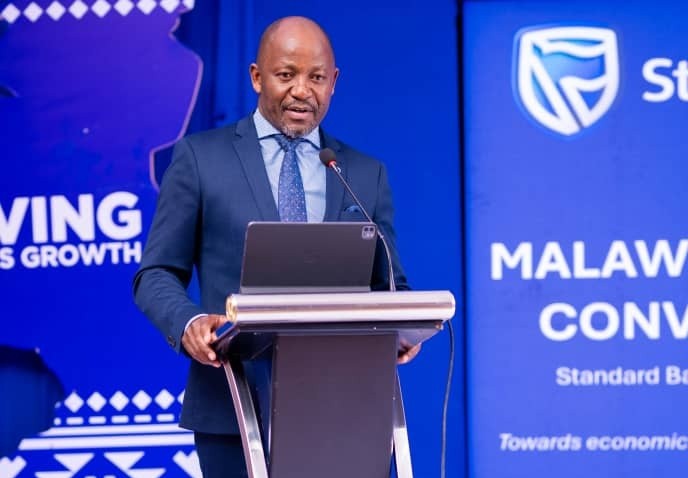
Malawi’s business community has reason to cautiously celebrate as Standard Bank plc highlighted recent economic improvements during its 28th Annual General Meeting (AGM) in Blantyre. The bank’s CEO, Phillip Madinga, emphasized that falling inflation, easing macroeconomic pressures, and better availability of essential resources are creating a foundation for recovery. These developments are not just good news for Standard Bank but signal broader opportunities for Malawi’s economy.
Madinga pointed to a significant drop in inflation, which fell to 23.4% in May 2025. This decline is expected to drive down interest rates, reducing the cost of borrowing for businesses and households. For entrepreneurs and small businesses, cheaper loans could mean more investment in expansion, hiring, or new ventures. Madinga stressed that as inflation stabilizes, monetary policy will likely ease, making credit more accessible. “This environment should stimulate credit demand,” he said, highlighting how lower borrowing costs could boost private sector activity and fuel economic growth.
The CEO also noted improvements in fuel supply and food availability as key drivers of consumer and business confidence. These supply-side gains are easing pressure on households and companies, which have been strained by past shortages. For manufacturers and retailers, reliable access to fuel and food could lower operational costs and improve profit margins. Madinga added that these changes are helping to stabilize the economy, creating a more predictable environment for decision-making. This stability is critical for attracting both local and foreign investment, as businesses can plan for the future with less uncertainty.
The bank’s financial performance further reinforces optimism. In its latest results, Standard Bank reported a 41% increase in profit after tax to K122 billion in 2025, up from K118 billion in 2024. This growth occurred despite macroeconomic challenges, showing the bank’s ability to navigate difficult conditions. Madinga attributed this success to strategic investments in its balance sheet, digital transformation, and customer service. For the broader banking sector, these results signal resilience and adaptability, encouraging other institutions to adopt similar strategies. The Ministry of Finance’s push for debt restructuring has added pressure on banks, but Standard Bank’s early provisioning for risks demonstrates foresight that could set a benchmark for peers.
Frank Harawa of the Minority Shareholders Association of Listed Companies praised Standard Bank’s performance, calling it a model of prudent management. He noted that while debt restructuring has posed risks across the sector, Standard Bank’s proactive approach to setting aside funds for potential losses has paid off. This disciplined conduct is crucial in maintaining trust among stakeholders and ensuring long-term stability in Malawi’s financial sector.
The banking sector’s health is vital to Malawi’s economy, as it provides the credit needed for businesses to grow. Standard Bank is one of five banks listed on the 16-counter Malawi Stock Exchange (MSE), alongside FDH Bank plc, National Bank of Malawi plc, NBS Bank plc, and FMB Capital Holdings plc. These institutions collectively play a central role in channeling savings into productive investments. The MSE’s performance, bolstered by Standard Bank’s results, could attract more listing opportunities, further integrating small and medium enterprises (SMEs) into the formal financial system.
Standard Bank’s growth is also tied to increasing loan and advance portfolios, which expanded by 31% year-on-year. This rise in lending, coupled with a 63% surge in financial investments, reflects stronger demand from both individuals and businesses. For entrepreneurs, this trend underscores the importance of building relationships with banks to access capital. Madinga urged businesses to take advantage of the current environment to secure financing for revenue-generating projects. “The time to invest is now,” he advised, pointing to the narrowing gap between economic recovery and credit availability.
The connection between inflation, interest rates, and business viability is clear. High inflation in recent years eroded purchasing power and increased borrowing costs, stifling growth. With inflation under control, businesses can better forecast expenses and allocate resources. This is particularly relevant for sectors like agriculture and manufacturing, which rely on stable pricing and affordable credit. Local entrepreneurs in these fields could benefit from expanded credit access to invest in technology, machinery, or market expansion.
However, challenges remain. The debt restructuring pressures faced by some banks could limit availabilities for certain borrowers. Additionally, while fuel and food supplies are improving, global price shocks or logistical issues could disrupt this progress. Businesses must remain vigilant and diversify supply sources where possible. Madinga emphasized that the gains are real but not guaranteed, requiring sustained policy support and prudent management from all economic players.
For Malawi’s business community, the current environment offers a unique chance to capitalize on lower costs and improved conditions. Companies that adapt to the changing landscape—whether through digital tools, supply chain resilience, or customer-focused services—are likely to thrive. Standard Bank’s own focus on technology and customer experience highlights a broader trend of modernization in Malawi’s financial sector. Entrepreneurs could draw lessons from this, prioritizing innovation to stay competitive.
The news from Standard Bank’s AGM is a reminder that economic recovery is possible with the right conditions. While inflation and credit access are key drivers, their success depends on collective efforts—from policymakers ensuring stable macroeconomic policies to businesses embracing change. For entrepreneurs and investors, this is a call to act. The easing of pressures creates a window to explore new markets, enhance productivity, and build partnerships that can weather future shocks.
In summary, Malawi stands at a pivotal point. The combination of falling inflation, better resource availability, and a resilient banking sector paints a picture of a recovering economy. Businesses that act decisively to leverage these trends could not only survive but lead the next phase of growth. As Madinga put it, “The economy is improving, but the journey requires commitment from everyone—businesses, banks, and the government.” The time to invest, innovate, and collaborate is now.
What are your thoughts on this business development? Share your insights and remember to follow us on Facebook and Twitter for the latest Malawi business news and opportunities. Visit us daily for comprehensive coverage of Malawi’s business landscape.


- Malawi’s Industrial Growth Playbook: Learning from Zimbabwe’s Success - September 25, 2026
- Malawi Business Leaders Demand Policy Certainty to Drive Capital Growth - September 25, 2026
- User Safety: safe - September 25, 2026