


Key Business Points
- Tobacco revenues are down 55 % – expect tighter cash flow for export‑driven firms and plan for lower foreign‑exchange earnings.
- Supply exceeds demand by about 27 million kg – look for opportunities to diversify into alternative crops or value‑added processing to reduce excess stock.
- Fewer buyers are active (8 vs 10 last season) – negotiate early with existing traders or explore new regional markets to secure better terms.
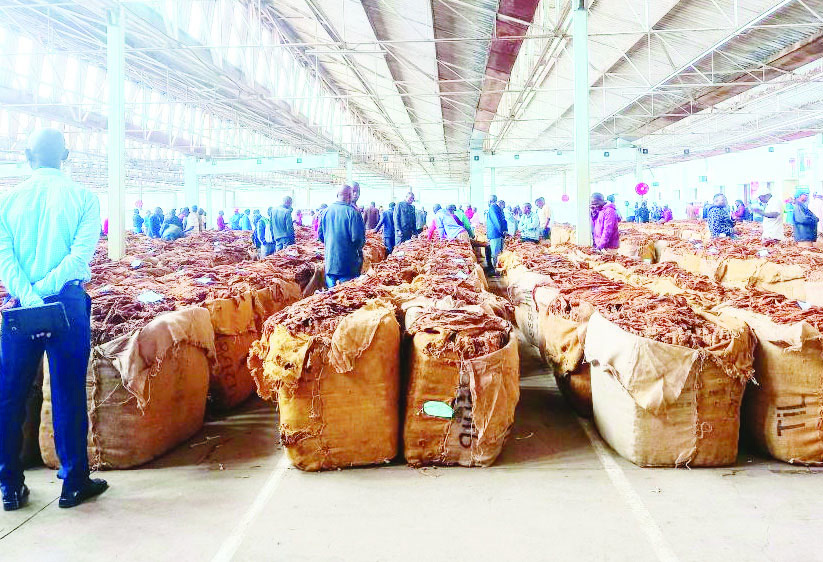
Malawi’s 2026 tobacco marketing season has turned into a significant drag on the national economy. By the end of week five, Auction Holdings Limited reported sales of 29.01 million kg at an average $2.10 per kg, generating $61.02 million (K106.8 billion) in revenue. Compared with the same period in 2025, sales volume has fallen almost 48 % and revenue has dropped 55 %, erasing $74.71 million (over K130 billion) in earnings.
The decline is driven by three inter‑related factors. First, prices have slipped by $0.32 per kg, squeezing farmer margins at a time when production costs are rising. Second, the market is now over‑supplied: estimates put total 2026 output at 197 million kg, while firm demand sits at 170 million kg, leaving a surplus of 27 million kg that depresses prices further. Third, the buyer base has contracted; only eight companies participated this season compared with ten in the previous cycle, and several of those are only minimally active.
Economist Marvin Banda warned that continued under‑performance could push Malawi into a “precarious situation” for its foreign‑exchange stability. He noted that the economy’s heavy reliance on tobacco inflows makes the exchange rate vulnerable. “It is time to rethink strategically the implications of over‑reliance on the market when it comes to forex inflows,” he said, urging policymakers and the private sector to seek diversification.
For tobacco growers, the outlook remains mixed. Abiel Kalima Banda, president of the Tobacco Farmers Trust, lamented the poor market performance but cautioned against drawing final conclusions too early. He highlighted that higher‑quality leaf may still arrive later in the season, potentially lifting prices at the auction floor.
The sector’s challenges present both risks and opportunities for Malawi’s business community. Companies that depend on tobacco export earnings should review cash‑flow forecasts, consider hedging strategies, and explore alternative revenue streams. Agribusiness investors might look at processing facilities for surplus leaf, or at crops such as soybeans, sunflower, or maize, which can absorb the excess labour and land while providing new export avenues.
Regional trade partners are also watching the trend. With fewer buyers at home, Malawian traders could target neighboring markets—Zambia, Tanzania, and Mozambique—where demand for raw leaf remains steadier. Early engagement with these markets may secure better terms before the national surplus deepens.
In the policy arena, the Ministry of Industry and Trade is expected to review incentive structures for non‑tobacco crops and consider credit facilities that help farmers transition. Such measures could mitigate the impact on the kwacha’s stability, which is already under pressure from reduced foreign‑exchange earnings.
Overall, the 2026 tobacco season underscores the need for greater resilience in Malawi’s export‑dependent economy. While the current downturn poses immediate cash‑flow challenges, proactive steps—diversifying crops, expanding into processing, and seeking new export markets—can turn the crisis into a catalyst for broader agricultural transformation. Business leaders who act now will be better positioned to ride out the current slump and benefit from a more balanced, sustainable growth trajectory.
What are your thoughts on this business development? Share your insights and remember to follow us on Facebook and Twitter for the latest Malawi business news and opportunities. Visit us daily for comprehensive coverage of Malawi’s business landscape.


- Malawi Debt Restructuring Paves Path for Business Growth - September 20, 2026
- Mwapata Institute Maps Profitable Pathways in Malawi’s Soybean Value Chain - September 20, 2026
- TNM Introduces Tailored Packages to Elevate Malawi Business Performance - September 20, 2026