
Five Banks Chalk K724bn Post Tax Profit in 2025: A Sign of Economic Resilience
Key Business Points
- Listed commercial banks’ cumulative net profit nearly doubled to K724.5 billion in 2025, primarily driven by elevated interest rates and increased government borrowing.
- Banks’ profitability is heavily dependent on lending to government rather than the private sector, raising concerns about limited support for real sector development.
- Slowing interest rates and government’s plan to reduce domestic borrowing may challenge banks’ ability to maintain high profit levels in 2026.
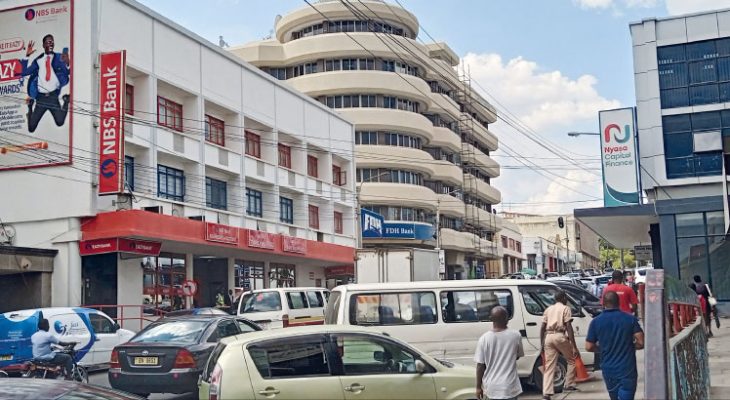
Five commercial banks listed on the Malawi Stock Exchange posted record net profits of K724.5 billion in 2025, nearly doubling the previous year’s K384.46 billion. The strong earnings were fuelled by high interest rates and increased government borrowing, with major players FDH Bank, Standard Bank, NBS Bank, NBM and First Capital Bank all reporting significant profit growth. For instance, FDH Bank’s profit more than doubled to K147.8 billion from K74.06 billion in 2024.
Financial stability indicators remained positive, with the banking sector maintaining adequate capital, satisfactory earnings, sufficient liquidity, and improved asset quality throughout 2025. The Reserve Bank of Malawi’s latest Financial Stability Report confirms that capital and liquidity levels stayed above prudential thresholds.
Financial expert Benedict Nkhoma attributes the sector’s robust performance to substantial investments in government borrowing during the high interest rate period. He notes that listed companies have generally fared well throughout 2025, with banks consistently outperforming inflation.
However, concerns are emerging about the source of these profits. Nico Capital Limited CEO Misheck Esau warns that most bank earnings come from government lending rather than private sector lending. He stresses the need to reverse this trend so that profits flow from supporting productive private sector investment, which would ultimately drive broader economic development and wealth creation in Malawi.
Stock market investor Brian Kampanje expresses skepticism about the sustainability of this performance in 2026, citing the anticipated downward trend in interest rates and government’s commitment to reduce domestic borrowing. These factors could significantly reduce interest income, a crucial revenue stream for banks.
Consumers Association of Malawi executive director John Kapito points out that the surge in bank profits stems from high charges, interest rates, and particularly government lending. He highlights that while banks thrive on government business, ordinary Malawians and businesses continue to struggle with limited access to affordable credit.
Meanwhile, commercial banks’ credit extension to the private sector showed mixed signals. While credit access declined slightly from 45 percent in Q3 to 44.7 percent in Q4 2025, the stock of private sector credit increased by K55.4 billion to K2.3 trillion on a quarterly basis, up from 29.4 percent in the corresponding period in 2024.
These developments highlight a critical juncture for Malawi’s financial sector. While banks enjoy record profits, the economy’s broader development hinges on redirecting credit flows from government to productive private sector ventures. The coming year will test whether banks can adapt their business models to support sustainable economic growth beyond government borrowing, or if continued reliance on public sector lending will limit their contribution to Malawi’s economic transformation.
What are your thoughts on this business development? Share your insights and remember to follow us on Facebook and Twitter for the latest Malawi business news and opportunities. Visit us daily for comprehensive coverage of Malawi’s business landscape.

- Malawi Debt Restructuring Paves Path for Business Growth - September 20, 2026
- Mwapata Institute Maps Profitable Pathways in Malawi’s Soybean Value Chain - September 20, 2026
- TNM Introduces Tailored Packages to Elevate Malawi Business Performance - September 20, 2026