
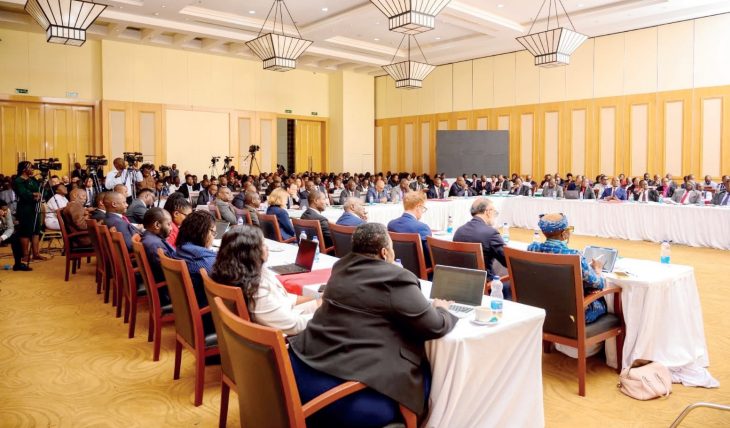
Recovery to Growth: Malawi’s Business Momentum Agenda
Key Business Points
- Prioritise projects that boost exports and create jobs; focus on agriculture, manufacturing and tourism.
- Secure predictable foreign‑exchange access and stable credit costs to build investor confidence.
- Join public‑private partnerships that channel capital into infrastructure and energy to speed up execution.
Malawi is at a crossroads, and the recent National Economic Recovery Plan (NERP) workshop in Lilongwe highlighted that the country’s biggest asset is ideas, while the real test is execution. The forum, convened by Standard Bank plc, brought together government officials, private‑sector leaders and development partners to move policy discussions toward concrete action.
Understanding the challenges
The diagnosis presented at the workshop is clear: rising inflation, widening fiscal deficits, growing public debt and chronic foreign‑exchange shortages have slowed growth and shaken confidence. Global shocks – the pandemic, climate events and geopolitical tensions – have added pressure, but structural and policy gaps at home are the core obstacles. Recognising these issues is the first step toward a sustainable recovery.
From ambition to results
The NERP sets out bold targets: bring inflation back to single digits, lower debt ratios, lift export volumes and return to steady GDP growth. Achieving these goals will require prioritisation, policy consistency and disciplined implementation. The consensus among participants was that Malawi no longer needs to define what must be done; it must ensure that plans are delivered on time and on budget.
Private‑sector’s central role
A major shift in the NERP is the acknowledgement that the government cannot drive recovery alone. Private investment is essential to close the financing gap and stimulate growth in key sectors such as agriculture, manufacturing, mining, tourism and infrastructure. To attract this capital, Malawi must create an environment where businesses can operate with confidence: predictable foreign‑exchange availability, affordable borrowing costs and clear, stable regulatory frameworks. Confidence, the speakers argued, is built through consistency.
Banking sector priorities
- Financing productive sectors – Standard Bank continues to fund agricultural value chains, including tobacco, which remains a vital foreign‑exchange earner, and to support local manufacturers expanding capacity and reducing import dependence.
- Expanding credit access – Small and medium enterprises (SMEs) and family‑run businesses are the backbone of the economy. Initiatives such as the Phuka SME Programme combine training, market access and funding to help these firms grow.
- Driving digital inclusion – Digital platforms like Business Online and Enterprise Online, together with the rollout of agency banking, bring banking services to remote communities, lowering barriers for the unbanked and fostering broader participation in the formal economy.
Partnerships that deliver
Public‑private partnerships (PPPs) emerged as a proven driver of impact. Standard Bank’s role as lead arranger for the Dr Saulos Klaus Chilima Highway financing illustrates how innovative funding can unlock large‑scale infrastructure. Likewise, the bank’s support for fuel imports has helped keep energy supplies steady during periods of market stress. These examples show how collaboration can turn policy into tangible outcomes.
Discipline in implementation
Workshop participants stressed that implementation is everything. They outlined five practical steps:
- Clear prioritisation of high‑impact interventions
- Strong coordination among institutions
- Robust accountability and performance management
- Transparent public‑financial management
- Ongoing monitoring with the ability to adjust course
In simple terms, execution must become the strategy itself.
Restoring confidence
The path to recovery hinges on renewed confidence—in fiscal discipline, in a stable foreign‑exchange market, and in the reliability of governance systems. Leadership from both the public and private sectors will be tested as they translate the NERP’s framework into jobs, expanded businesses, higher exports and improved livelihoods.
Malawian entrepreneurs can seize the moment by aligning their projects with the NERP’s priority sectors, leveraging digital banking tools for efficiency, and seeking PPP opportunities that bring additional capital and expertise. With disciplined execution and collaborative spirit, the vision of a resilient, growing economy is within reach.
What are your thoughts on this business development? Share your insights and remember to follow us on Facebook and Twitter for the latest Malawi business news and opportunities. Visit us daily for comprehensive coverage of Malawi’s business landscape.

- Malawi’s 2030 Ambition: A Blueprint for Business Growth - September 24, 2026
- Lindian, French Firm Anchor Technology Deal to Elevate Malawi Economy - September 24, 2026
- Economic Positivity Gains Momentum as Inflation Pressures Ease - September 23, 2026