
Financing Gap Stifles Malawi’s Business Growth – The Times Group
Key Business Points
- Secure local financing: Taragawo businesses are missing up to 90 % of credit; push for community banks and SME lines to fill the gap.
- Prioritise infrastructure: The National Economic Recovery Plan allocates K1.5 trillion to roads, rail and ports—key for reducing transport costs and boosting export volumes.
- Lever the public‑private dialogue: Regular meetings between chambers, banks and ministries can speed policy changes that unlock investment and job creation.
The World Bank’s latest Private Sector Diagnostic Survey paints a sober picture for Malawi’s industrial base. Credit remains a critical weakness: 90 % of registered enterprises cannot secure financing. Without capital, production cannot scale, and export volumes have slipped, dragging the economy toward stagnation.
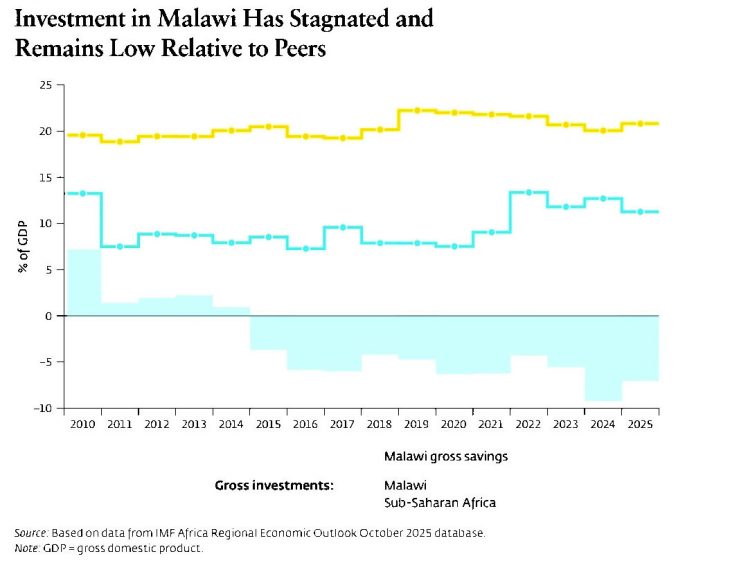
Investment trends mirror this crisis. Gross investment fell to 11.1 % of GDP in 2024, a steep drop from the 20 % peak in 2017 and 2019. Over five years, the average sits at 15 %, noticeably below the 23 % regional peer composite. Foreign direct investment is similarly modest at just 1.5 % of GDP, offering inadequate stimulus for industrial rejuvenation. Transportation and high operating costs further erode competitiveness, leaving Malawi a net importer with only 40,000 jobs created annually against a demand of 270,000.
The output of these challenges spills into poverty metrics. GDP per capita has slipped to $520, placing the country at the lower middle‑income threshold; 76 % of Malawians live on less than $3 a day. The World Bank highlights an even deeper poverty trap than in 1998, pointing to structural and macro‑economic imbalances. Fiscal strain, high inflation, an overvalued exchange rate, and rising public debt are constraining domestic demand and production cycles.
In response, Finance Minister Joseph Mwanamvekha unveiled the National Economic Recovery Plan (NERP). NERP aims to trim public debt from 90 % to 60 % of GDP, cut inflation to 8.5 % and lift revenue to 25 % of GDP. It also targets 20 % of GDP for exports and a 6.5 % growth rate over the next five years. With a K3 trillion budget, the plan will bankroll K1.5 trillion in infrastructure, K1 trillion in agricultural transformation, and K200 billion in mining and tourism. The World Bank expects these sectors to collectively generate up to $2 billion annually if policy conditions improve.
The civil society arm echoes the need for co‑ordination. Daisy Kambalame of the Malawi Confederation of Chambers of Commerce and Industry highlights the public‑private sector dialogue as a catalyst for unlocking potential. Bankers Association president Phillip Madinga echoes this sentiment, underscoring how policy‑holder collaboration can deliver tangible returns.
For business owners and entrepreneurs, the message is clear: to thrive you must secure financing, align with the infrastructure push, and engage in multi‑stakeholder dialogue. By tapping government‑backed investment in transport, boosting agro‑value chains, and partnering on mining and tourism, local firms can compete globally. The period ahead offers a window—if the NERP’s reforms materialize—during which enterprises that adapt can drive growth, create jobs, and elevate Malawi from an import‑dependent economy to a trade‑aged one.
The road is still long, yet the catalysts laid in the NERP and the momentum of public‑private collaboration present a realistic path toward vibrant, inclusive economic expansion.
What are your thoughts on this business development? Share your insights and remember to follow us on Facebook and Twitter for the latest Malawi business news and opportunities. Visit us daily for comprehensive coverage of Malawi’s business landscape.

- Lindian, French Firm Anchor Technology Deal to Elevate Malawi Economy - September 24, 2026
- Economic Positivity Gains Momentum as Inflation Pressures Ease - September 23, 2026
- Malawi Businesses Set to Gain from K3.4 Trillion Economic Stimulus - September 23, 2026