
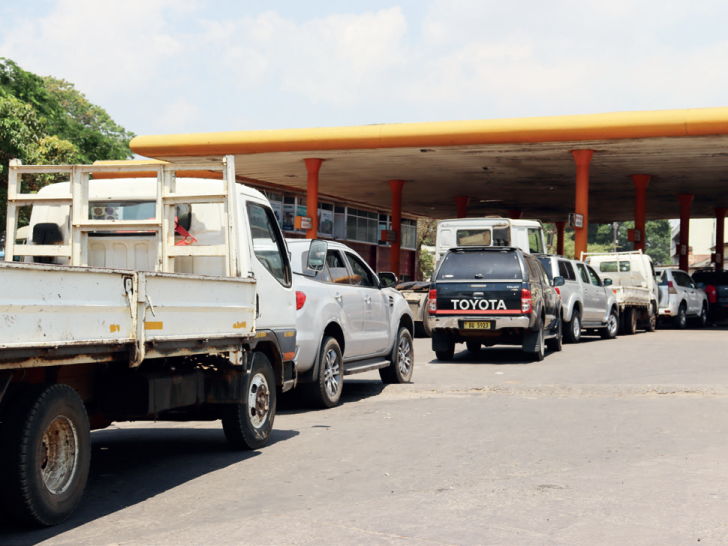
Fuel Price Hike Sparks Concerns Among Malawi’s Business Community
Key Business Points
– Urban households are hardest hit by fuel price shocks, with income losses up to 6.84% compared to 6.30% for rural households
– Rising fuel costs are expected to push national poverty rates up by 0.1 to 0.5 percentage points, worsening economic pressures
– Malawi faces major forex challenges, needing $600 million annually for fuel imports while generating only $1 billion in foreign exchange
Rising global fuel prices, triggered by Middle East tensions, are putting increasing pressure on Malawian households and businesses, a new study has revealed.
The research from the Centre for Agricultural Research and Development shows that household incomes are shrinking as fuel costs rise, with urban families experiencing steeper losses. Under a moderate 10% fuel price increase, incomes drop by 1.11%, but that widening impact intensifies sharply with larger shocks. At a 50% increase, incomes plummet by up to 6.52%, reflecting growing economic strain.
Urban households face the brunt of this pressure, with income losses reaching 6.84%, while rural households see reductions of up to 6.30%. However, rural families are slightly cushioned by subsistence farming, whereas urban households rely entirely on cash income, leaving them more exposed.
Spending power is also eroding. Household consumption decreases from 0.95% under a 10% price increase to 5.44% at a 50% shock, meaning lower demand for goods and services across the economy. As a result, national poverty levels are projected to rise by between 0.1 and 0.5 percentage points, signaling deeper hardship for many families.
The study highlights Malawi’s vulnerability, noting that fuel imports account for 15–20% of the country’s total import bill. Malawi needs around $600 million annually just for fuel imports—a significant portion of the $3 billion import bill. With forex earnings of only about $1 billion per year, the country struggles to balance payments, especially as global prices fluctuate.
The Middle East’s continuing role in global oil markets—supplying 30–35% of the world’s oil with the Strait of Hormuz handling 20–30% of traded petroleum—makes the country highly susceptible to disruptions. Geopolitical tensions in the region quickly translate into higher fuel costs for net-importing countries like Malawi, where energy is vital for transport, production, and daily life.
Recent fuel price hikes in Malawi, linked to Strait of Hormuz disruptions, underline these challenges. Petrol prices have risen by 34% to K6,672 per litre, diesel by 35% to K6,687 per litre, and paraffin by 82% to K5,824 per litre. International airports now charge up to K5,439 per litre for jet fuel, further increasing costs for aviation-related businesses.
The Malawi Energy Regulatory Authority attributes these increases to supply chain disruptions stemming from Middle East tensions, affecting global availability and driving up prices due to supply constraints.
Consumer advocates warn of ripple effects—higher fuel costs are pushing up the price of goods and services. The Centre for Social Concern estimates that over 60% of urban household budgets go to food and transport, leaving little room to absorb price shocks. This creates a risk of further economic slowdown as consumer spending declines.
The research suggests that resilience against such shocks requires a mix of short-term relief measures and long-term strategies, including improving energy efficiency, boosting domestic productivity, and expanding social protection. Without these, Malawi will remain highly exposed to volatility in global energy markets, potentially hampering efforts to grow the economy and reduce poverty.
What are your thoughts on this business development? Share your insights and remember to follow us on Facebook and Twitter for the latest Malawi business news and opportunities. Visit us daily for comprehensive coverage of Malawi’s business landscape.

- Fuel Price Hike Sparks Concerns Among Malawi’s Business Community - April 9, 2026
- Major Economic Shocks: What They Mean for Malawi’s Business Future - April 9, 2026
- Malawi’s Economy Faces Turbulence: What Business Leaders Need to Know - April 9, 2026