
Maize Prices Beyond SGR: Business Implications in Malawi
Key Business Points
- Plan maize supply and cash flow around seasonal price swings, as prices can move sharply after harvest and during lean months.
- Watch regional trade signals, because maize may flow into Malawi when local prices rise and out when neighbours pay more.
- Use Admarc and NFRA timing as a market guide, since better stock releases and purchases can reduce uncertainty for farmers, traders and consumers.
Malawi’s strategic grain reserves are not doing enough to smooth maize prices, according to a new International Food Policy Research Institute study, “Can strategic grain reserves stabilise maize prices in Malawi?” The findings matter for a country where maize, or chimanga in Chichewa, is both a staple food and a major business input for households, millers, transporters, retailers and livestock producers.
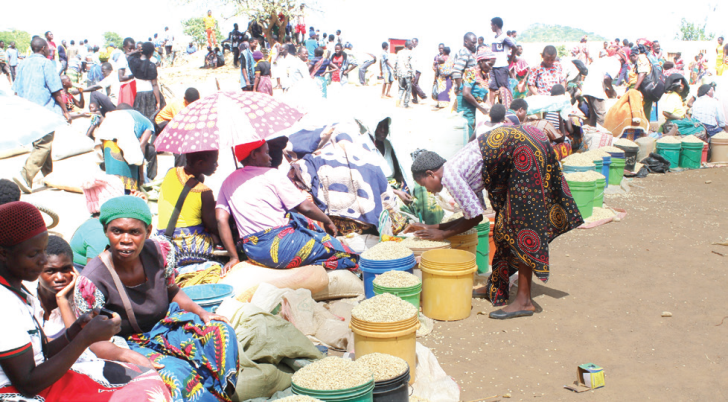
Recent price trends show the pressure. Maize rose from about K600 per kilogramme in June 2024 to K1,700 per kg by March 2025. For consumers, that means higher food costs. For traders and processors, it means tighter margins and harder planning. For farmers, it creates uncertainty because many sell soon after harvest to raise quick cash, then face higher buying costs later in the year.
The study says the weakness is not that grain reserves have no value. Rather, their impact is limited by storage capacity, financing, timing of purchases and sales, regional market behaviour, and Malawi’s seasonal production and consumption patterns. Farmers often sell a large share of their harvest to repay production costs and meet household needs. As household stocks fall, market supply tightens and prices rise.
Agricultural economist Horace Phiri of Lilongwe University of Agriculture and Natural Resources said the study confirms a familiar lesson: government can help reduce seasonal price swings, but it must be more strategic. The key issue is how Admarc and the National Food Reserve Agency (NFRA) time their buying and selling in the msika. Buying too late, releasing stocks too late, or holding grain when traders need confidence can weaken the effect of public intervention.
Tamani Nkhono Mvula, an agriculture policy development expert, said government has limited tools to stabilise prices outside agencies such as Admarc and NFRA. This makes coordination important. If public stockholding supports, rather than competes with, private traders, the market can work better for both rural producers and urban consumers.
Regional trade adds another layer. Malawi is closely linked to neighbouring maize markets through formal and informal cross-border trade. When local prices rise above the cost of imports, traders bring grain in. When local prices are lower than what traders can earn by selling abroad, maize flows to countries where prices are higher. For business owners, this means regional prices in Mozambique, Zambia, Zimbabwe and South Africa can affect local supply and margins.
The study does not dismiss strategic grain reserves. It says they remain important for food security during droughts, poor harvests and humanitarian crises. But stabilising prices requires more than one tool. Better timing, stronger financing, clearer rules for stock releases, improved storage, and closer monitoring of regional trade can help.
For entrepreneurs, the opportunity is to build businesses that respond to these gaps: reliable storage, aggregation, transport, milling, market information services and contract farming. In Malawi’s maize economy, the businesses that understand timing, regional price signals and food security policy will be better placed to manage risk and serve growing demand.
What are your thoughts on this business development? Share your insights and remember to follow us on Facebook and Twitter for the latest Malawi business news and opportunities. Visit us daily for comprehensive coverage of Malawi’s business landscape.

- Malawi’s 2030 Ambition: A Blueprint for Business Growth - September 24, 2026
- Lindian, French Firm Anchor Technology Deal to Elevate Malawi Economy - September 24, 2026
- Economic Positivity Gains Momentum as Inflation Pressures Ease - September 23, 2026