
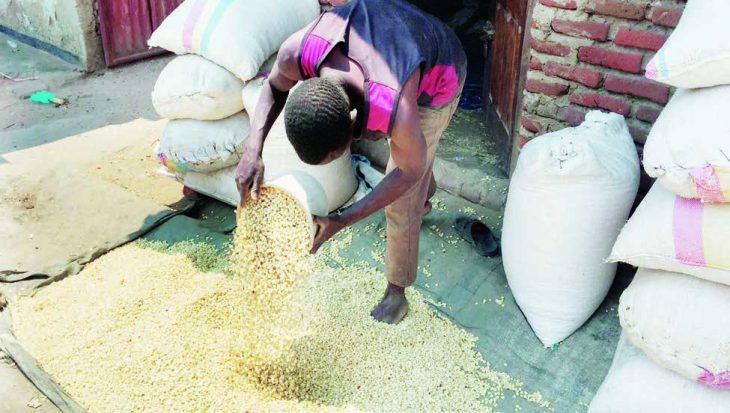
Maize Prices Edge Up in September: Market Analysis for Malawi Investors
Key Business Points
- Maize prices rose only 3 percent in September 2026, offering relief to households and businesses alike.
- The national average retail price reached K997 per kg, helping stabilize input and food costs for small-scale traders.
- Lower inflation in staple food prices may boost consumer spending power and support local market growth.
Maize prices in Malawi moderated during September 2026, limiting the average monthly increase to 3 percent, according to the International Food Policy Research Institute (IFPRI). This marks a notable slowdown compared to previous months and offers a welcome reprieve for both consumers and businesses relying on stable food prices.
IFPRI’s September 2026 maize market report shows that the national average retail price of maize rose by 3 percent to K997 per kilogramme (kg) in the final week of September, equivalent to K49,850 per 50kg bag, from K966 per kg (K48,300 per 50kg bag) in August. The modest rise reflects improved supply conditions and better-than-expected harvests across key growing regions, particularly in the Central and Southern parts of the country.
This stability in maize prices has significant implications for Malawi’s economy. As a staple food, maize plays a central role in household budgets and local markets. A slower rate of price increases helps ease the financial burden on families, allowing them to allocate more income toward other goods and services. For small business owners, especially those in retail and food processing, stable input costs can improve profit margins and reduce pricing pressures.
In urban centers such as Lilongwe and Blantyre, the price adjustment has been even more moderate, providing some relief to city dwellers who spend a large portion of their income on food. Traders dealing in maize and related products have reported increased customer traffic due to improved affordability. Meanwhile, farmers who sold their produce earlier in the season benefited from relatively strong market prices, supporting rural incomes and contributing to broader economic activity.
The IFPRI report also noted that government efforts to improve market access and storage infrastructure played a role in stabilizing prices. Investments in warehouse receipt systems and improved road networks have enabled farmers to get their produce to markets more efficiently, reducing post-harvest losses and ensuring consistent supply. These measures are helping strengthen the link between rural producers and urban consumers, creating more resilient market conditions.
Looking ahead, analysts expect maize prices to remain within a manageable range through the end of the year, provided there are no major disruptions in production or supply chains. However, vulnerabilities remain, including the impact of unpredictable rainfall patterns and currency fluctuations, which could influence future pricing trends.
For entrepreneurs and investors, opportunities may arise in sectors tied to agriculture and food security. Processing plants, transport firms, and agro-dealers stand to gain from sustained demand and stable market conditions. Additionally, initiatives aimed at adding value to raw commodities — such as milling, packaging, and fortified foods — could attract interest as consumer preferences evolve.
Overall, the recent moderation in maize prices signals a positive shift for Malawi’s economy, offering both immediate benefits and longer-term prospects for inclusive growth. With continued policy support and strategic investments in agriculture and infrastructure, the country is well-positioned to build on this momentum and create new pathways for economic development.
What are your thoughts on this business development? Share your insights and remember to follow us on Facebook and Twitter for the latest Malawi business news and opportunities. Visit us daily for comprehensive coverage of Malawi’s business landscape.

- Maize Prices Edge Up in September: Market Analysis for Malawi Investors - October 24, 2026
- IPMM Demands HR Bill Passage to Stabilize Malawi’s Labour Landscape - October 23, 2026
- MDC Overhaul Gains Momentum, Signaling New Investment Era - October 23, 2026