
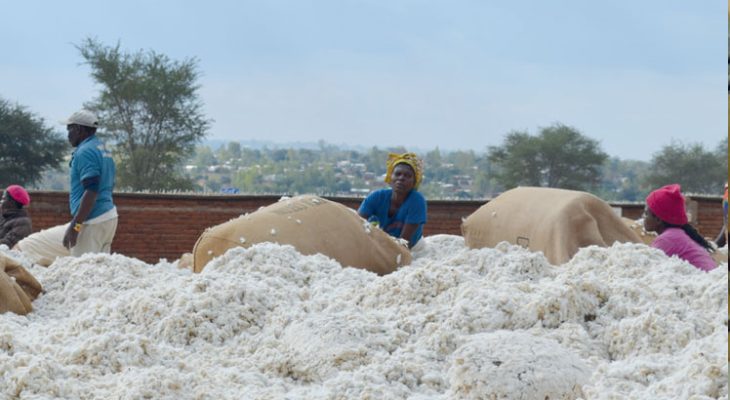
Malawi’s Cotton Sales Season Commences with 22,800MT Output: Strategic Opportunities for Business and Investment
Key Business Points
-Secure fair farm‑gate rates now by signing contracts with approved buyers
- Invest in local ginnery capacity to capture more value from Mchira production
- Work with Cotton Council reforms to access subsidised seed and extension services
The Cotton Council of Malawi opened the 2025 marketing season on Monday confirming an output estimate of 22 894 metric tonnes. This figure marks a more than twofold increase over last season’s 10 000 tonnes and aligns with the regulator’s vision of reaching 50 000 tonnes next year. Executive Director Apatsa Selemani told journalists in Lilongwe that 13 599 hectares were cultivated and the council aims for sustainable production across the value chain. The sector’s target of 50 000MT is supported by growing ginning demand that now stands at roughly 400 000 tonnes meaning domestic output still covers only a fraction of market appetite.
A new strategy to achieve the target emphasizes better regulation stronger stakeholder collaboration and expanded buyer participation. This year five licensed buyers are active including the newly entered Illovo Sugar (Malawi) Nchalo Estate alongside Admarc Limited Afrisian Limited Malawi Cotton Company and Masapa Cotton Ginners. Deputy Director Osborne Tsoka of the Ministry of Agriculture urged purchasers to respect the government set minimum price of K1 500 per kilogramme stating that all cotton should be bought under this guarantee.
Cotton Farmers Association President Labson Zidana recalled last season’s frustrations over input cost spikes delayed payments and occasional misdirected bank transfers while the Cotton Information Management System was piloted. He called for faster resolution of such technical glitches to protect farmer confidence.
Parliamentary Committee Chairperson Tiaone Hendry urged the government to increase the Cotton Council’s budget beyond the K1.78 billion allocated for 2026/27 recommending at least K4 billion to subsidise seed boost extension services and modernise infrastructure. Historical data show that cotton output peaked at 100 000 tonnes in 2010 but has averaged only 10 000-13 000 tonnes over the past decade underscoring the urgency of the current push.
The marketing season will run for 90 days across 50 designated outlets nationwide giving growers multiple points to sell their Mchira. Stakeholders see this period as a catalyst for Ufulu wa chisuk improved market access and for broader economic gains if the sector can scale up. Business leaders are encouraged to partner with local buyers explore value-adding investments and advocate for policy support to harness the cotton revival for national growth.
Entrepreneurs can seize this momentum by exploring integrated processing ventures that add value beyond raw fibre. Securing financing through agricultural credit schemes and leveraging public-private partnerships can reduce upfront costs. Training programs focused on best agronomic practices and post-harvest handling will raise yields and quality, making Malawian Mchira more competitive in regional markets. Additionally, businesses that register early with the Cotton Council’s registration portal gain priority access to subsidised inputs and extension visits. By aligning commercial strategies with the council’s 50 000MT ambition, firms can contribute to rural employment, boost export earnings, and strengthen the country’s position as a reliable cotton supplier in Southern Africa. Investors may also consider joint ventures with established ginneries to share technology, reduce processing bottlenecks, and accelerate market entry, thereby fostering inclusive growth across the value chain and attracting additional domestic capital. These collaborations can facilitate training, improve access to credit, and create jobs in communities, strengthening agricultural economy.
What are your thoughts on this business development? Share your insights and remember to follow us on Facebook and Twitter for the latest Malawi business news and opportunities. Visit us daily for comprehensive coverage of Malawi’s business landscape.

- Malawi Debt Restructuring Paves Path for Business Growth - September 20, 2026
- Mwapata Institute Maps Profitable Pathways in Malawi’s Soybean Value Chain - September 20, 2026
- TNM Introduces Tailored Packages to Elevate Malawi Business Performance - September 20, 2026