
Malawi’s K211 Billion Deficit: Strategic Paths to Sustainable Growth
Key Business Points
- Watch the fiscal trajectory: monitor the quarterly deficit and adjust cash‑flow planning accordingly.
- Strengthen revenue diversification – prioritize expanding tax collection and non‑tax income to offset future shortfalls.
- Target strategic investments – identify sectors where policy support and infrastructure improvements create new profit opportunities.
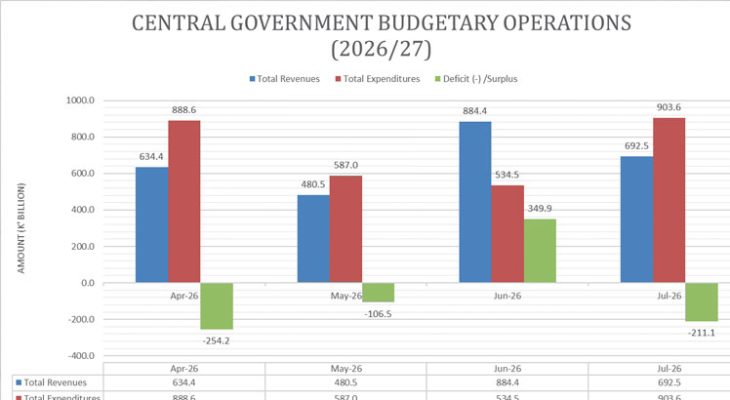
Malawi’s treasury slipped back into a K211.1 billion fiscal deficit in July, undoing the K349.9 billion surplus recorded in June. The shift happened because spending rose sharply while tax receipts grew modestly. Total outlay climbed 69 percent to K903.6 billion, the highest monthly figure in thirteen months, driven mainly by recurrent expenses that now account for 87 percent of the budget. Development spending reached K118.9 billion, yet interest payments consumed K214.3 billion, equal to one third of all tax money collected. Even though tax revenue hit a record K607.7 billion, non‑tax receipts collapsed from K313.7 billion to K19.8 billion, pulling the overall balance negative.
The decline in non‑tax income stems from a sudden drop in other receipts, which fell from K304.7 billion to K6.4 billion in July. Economist Velli Nyirongo notes that the jump from surplus to deficit should not be read as a permanent weakening of the government’s fiscal stance; monthly fluctuations often reflect timing of receipts and payments. He urges investors to examine the cumulative picture rather than a single month.
University of Malawi professor Edward Lemani adds caution, saying the recent surplus was a temporary boost and that ongoing deficits could raise borrowing needs and squeeze private‑sector financing. In practice, this means that firms should build resilient cash reserves and seek multiple revenue channels.
For business owners, the main takeaway is to stay agile. Companies can protect themselves by maintaining healthy liquidity, especially when public spending patterns shift. Diversifying product lines and entering markets where the government is pushing reforms—such as agro‑processing, renewable energy, or digital services—offers strong investment opportunities. Engaging with local partners who understand the Mavuto (growth) mindset of Malawian enterprises will help navigate regulatory changes and capture emerging demand.
Sector outlook highlights several areas where businesses can find steady demand. Agriculture remains a cornerstone of the economy, and the push for value‑added products such as processed maize flour, coffee beans, and horticultural exports aligns with the government’s export promotion agenda. Manufacturing hubs in Lilongwe and Blantyre are attracting small‑scale factories that benefit from cheap power and incentives for import substitution. Renewable energy projects, especially solar farms, are gaining momentum as the state seeks to reduce dependence on imported fuel. These sectors offer concrete entry points for new ventures and can thrive if companies adopt the Mavuto spirit of adaptability.
Practical steps for entrepreneurs include building flexible supply chains, securing reliable credit lines, and keeping a close eye on policy updates. Registering with the Ministry of Trade early can simplify licensing for food processing or clean‑energy equipment. Joining chambers of commerce provides networking opportunities and access to training programs that teach modern bookkeeping and digital marketing. By aligning their operations with the country’s reform agenda, businesses can tap into subsidies, tax holidays, and preferential loan schemes designed to spur private‑sector growth. This proactive approach turns uncertainty into a platform for sustainable expansion.
Finally, policymakers’ focus on improving tax administration and reducing reliance on volatile non‑tax streams creates a clearer path for sustainable growth. Entrepreneurs who align their strategies with these trends can turn the current fiscal turbulence into a catalyst for long‑term prosperity.
Investors should act now, seize the emerging opportunities, and contribute to the nation’s continued economic resilience. A strong commitment today builds lasting value tomorrow.
What are your thoughts on this business development? Share your insights and remember to follow us on Facebook and Twitter for the latest Malawi business news and opportunities. Visit us daily for comprehensive coverage of Malawi’s business landscape.

- Malawi’s K211 Billion Deficit: Strategic Paths to Sustainable Growth - September 15, 2026
- K642.3bn Debt Interest in Q2: Malawi’s Business Impact - September 15, 2026
- Old Mutual Delivers Strong Returns from Sustainability Investment – The Times Group - September 15, 2026