
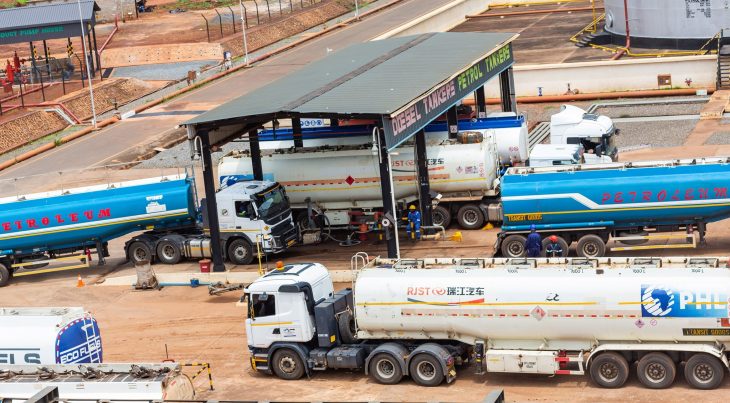
Fuel Price Shock Ahead: Malawi Businesses Face Rising Import Costs Amid UN Fuel Oil Price Spike
Key Business Points
- Prepare for a possible $240 million rise in fuel import costs; tighten budgeting and explore hedging options now.
- Anticipate higher transport and production expenses that could push food prices up; adjust pricing strategies and negotiate contracts early.
- Strengthen foreign‑exchange management and consider local alternatives to imported fuel and fertilizer to protect margins.
Malawi is facing a sharp escalation in fuel import costs that could add about 2.2 % of GDP to the national budget if global oil prices climb by 50 percent after the latest disruptions in the Middle East. A recent United Nations Conference on Trade and Development (UNCTAD) report, Strait of Hormuz disruptions: The burden of oil price shocks on vulnerable economies, places Malawi among the least‑developed economies most exposed to sudden oil price spikes.
The analysis shows that 34.4 % of Malawi’s oil imports come from Gulf producers whose shipments rely on the strategic Strait of Hormuz. With Malawi’s GDP estimated at $10.9 billion (≈K19 trillion), the projected price jump translates to roughly $240 million (≈K420 billion) in extra fuel import bills. The country’s annual fuel spend could surge from $700 million (≈K1.2 trillion) to nearly $940 million (≈K1.6 trillion) if the full shock is passed through to import prices.
The report warns that rising energy costs will force difficult trade‑offs between covering fuel bills and financing essential public services. UN Secretary‑General António Guterres noted that when the Strait of Hormuz is blocked, “the world’s poorest and most vulnerable cannot breathe.” For Malawi, which already battles foreign‑exchange shortages and depends entirely on imported fuel, the impact could be swift and deep.
Higher oil prices will ripple through the whole economy. Transport operators will see fuel inflation, raising the cost of moving goods. Manufacturers and agro‑processors will face higher production expenses, which are likely to be passed on to consumers, putting upward pressure on food prices. Economist Milward Tobias highlighted that the exchange rate could weaken further, eroding the already thin foreign‑exchange reserves—currently enough for only about half a month of imports. Public debt already exceeds 90 % of GDP, leaving little fiscal room to absorb the shock.
The Malawi Energy Regulatory Authority (MERA) has ruled out any immediate reduction in levies or taxes that make up roughly 29 % of pump prices. MERA’s finance director, Zachariah Ng’oma, explained that about 60 % of fuel pricing factors are outside the regulator’s control, mainly landing costs, while the remaining 40 % consists of local taxes and fees. The Price Stabilisation Fund, which normally cushions consumers from sudden price spikes, is depleted and overdue on payments, limiting its protective role.
For business owners and entrepreneurs, the situation calls for proactive measures:
- Review and lock in supply contracts now, before fuel costs rise further. Fixed‑price agreements can shield firms from volatile import bills.
- Diversify energy sources where possible. Small‑scale solar or bio‑fuel projects can reduce reliance on imported diesel and gasoline, cutting operational risk.
- Strengthen cash‑flow management by securing additional foreign‑exchange lines, perhaps through export‑linked financing or partnerships with regional traders.
- Monitor government policy for any emergency fiscal measures or subsidies that could ease the burden on specific sectors, such as agriculture or transport.
Local traders are already feeling the pressure. A transport company in Lilongwe reported that fuel expenses have risen by 12 % in the past month, forcing them to increase freight rates. Meanwhile, a fertilizer distributor warned that import costs could climb by up to 25 %, jeopardizing the planting season for smallholder farmers.
Despite these challenges, opportunities exist for those who can adapt quickly. Companies that can source or produce alternative inputs—for example, locally manufactured fertilizer blends or renewable energy kits—may capture market share as imports become costlier. Additionally, firms able to leverage foreign‑exchange hedging tools will be better positioned to maintain profit margins.
The broader economic outlook remains fragile, but the current shock underscores the need for greater resilience in Malawi’s supply chains and financing structures. By taking decisive steps now—securing fuel supplies, managing currency risk, and exploring local alternatives—businesses can mitigate the impact of higher oil prices and continue to grow even in a turbulent global environment.
What are your thoughts on this business development? Share your insights and remember to follow us on Facebook and Twitter for the latest Malawi business news and opportunities. Visit us daily for comprehensive coverage of Malawi’s business landscape.

- EDF and FDH Bank Partner to Drive Malawi’s Gold Buying Expansion - September 21, 2026
- Malawi Debt Restructuring Paves Path for Business Growth - September 20, 2026
- Mwapata Institute Maps Profitable Pathways in Malawi’s Soybean Value Chain - September 20, 2026