
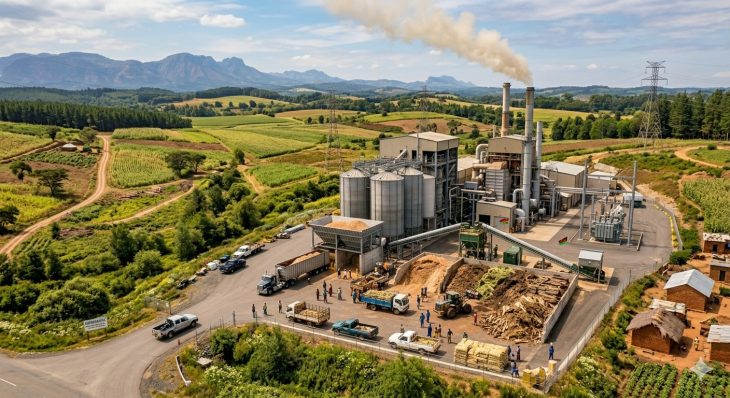
Modernizing Malawi’s Energy Mix for Industrial Growth
Key Business Points
- Environmental costs mounting: Degradation drains nearly 7% of Malawi’s GDP annually, affecting all sectors
- Energy transition opportunity: Moving away from biomass energy can restore landscapes and create business opportunities
- Agricultural productivity under threat: Declining yields and soil erosion constrain growth in the key sector
Malawi’s Environmental Crisis Threatens Economic Future
Malawi faces a growing economic challenge as environmental degradation continues to drain nearly seven percent of the country’s gross domestic product annually, according to the first National State of the Environment and Outlook Report published in over 15 years.
Released during World Environment and Biodiversity Day celebrations in Lilongwe, the report paints a stark picture for businesses and the economy. Without urgent action, Malawi risks falling further behind its ambitious development goals outlined in MW2063, which aims to transform the nation into a lower middle-income economy by 2030.
Major Economic Impacts
The report identifies several critical challenges facing Malawi’s business landscape. Land degradation affects nearly 70 percent of the country’s territory, while forest cover has dropped from 28 percent in 2010 to just 22 percent. Alarmingly, 96 percent of households still rely on biomass fuel, contributing to annual deforestation of approximately 33,000 hectares.
For smallholder nkhunaki and commercial farmers, the situation is particularly concerning. Average farm sizes have shrunk from 0.78 hectares in 2010 to 0.66 hectares in 2024, as population pressure intensifies competition for arable land. Despite a 52.3 percent increase in fertilizer usage between 2013 and 2021, maize yields remain below 2,500 kilograms per hectare, indicating severe soil quality deterioration.
Soil erosion rates reach nearly 40 metric tonnes per hectare annually in some regions, threatening the foundation of Malawi’s agricultural economy – the primary source of livelihoods for most citizens.
Path Forward
Principal Secretary Misheck Munthali of the Ministry of Natural Resources emphasizes that environmental challenges amplify climate-related disasters in an economy already dependent on natural resources. The report recommends three strategic priorities: accelerating energy transition away from biomass, implementing sustainable land management practices, and strengthening environmental governance.
These interventions present significant business opportunities. The renewable energy sector could attract investors as Malawi seeks cleaner alternatives to biomass. Agricultural technology companies may find openings to address soil health challenges and improve productivity per hectare.
UN Resident Coordinator Rebecca Addah-Dontoh notes that over 4.4 million people face acute food insecurity, creating markets for agricultural solutions and highlighting the urgency of addressing these interconnected challenges.
The findings suggest that businesses across sectors must now factor environmental sustainability into their core operations. Companies investing in soil conservation, renewable energy solutions, or climate-resilient technologies position themselves advantageously as Malawi navigates this critical development juncture.
For entrepreneurs and established firms alike, the message is clear: sustainable practices are not just environmentally responsible – they are essential for long-term profitability and national economic progress.
What are your thoughts on this business development? Share your insights and remember to follow us on Facebook and Twitter for the latest Malawi business news and opportunities. Visit us daily for comprehensive coverage of Malawi’s business landscape.

- EDF and FDH Bank Partner to Drive Malawi’s Gold Buying Expansion - September 21, 2026
- Malawi Debt Restructuring Paves Path for Business Growth - September 20, 2026
- Mwapata Institute Maps Profitable Pathways in Malawi’s Soybean Value Chain - September 20, 2026