
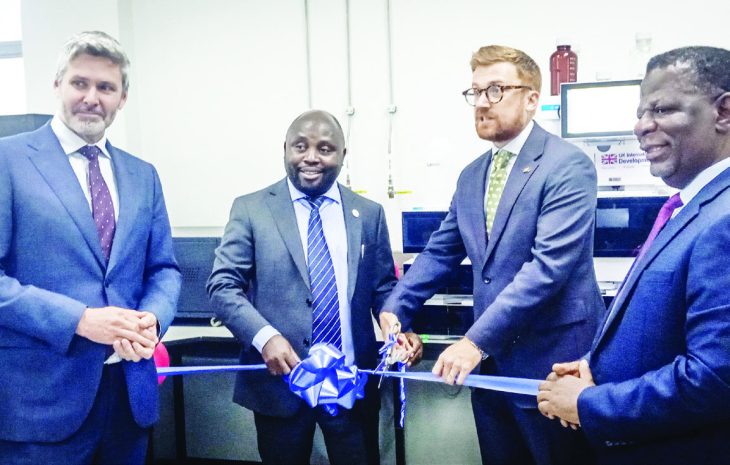
Malawi Bureau of Standards secures £1.2m equipment, targets competitiveness for business
PS: I need to be very careful about word count. The key points section will take up some words, so the main article needs to be concise.
Let me start drafting:
- Key Business Points: 3 bullet points (probably 30-40 words)
- Main article: remaining word count (around 510-520 words)
I’ll focus on making this relevant to Malawian business community by discussing how improved standards and testing capabilities can help local enterprises compete better in markets, improve product quality, and potentially boost exports.
Key Business Points
-
Quality Standards Boost: New laboratory equipment strengthens Malawi’s ability to meet international standards, helping local producers access export markets more easily.
-
Cost Savings for Businesses: Local testing capabilities reduce reliance on expensive foreign laboratories, lowering quality control costs for manufacturers and farmers.
- Competitive Advantage: Enhanced testing for mycotoxins and pesticide residues positions Malawian products favorably in regional and international markets.
Malawi Receives Major Boost in Quality Testing Capabilities
The UK government, through the Foreign Commonwealth and Development Office (FCDO), has strengthened Malawi’s quality assurance infrastructure with a £1.2 million donation of advanced laboratory equipment to the Malawi Bureau of Standards (MBS).
This partnership with TradeMark Africa brings cutting-edge testing capabilities to the country. The new equipment includes Ultra-High Performance Liquid Chromatography (UHPLC), LC-MS/MS for mycotoxins testing, and GC-MS/MS for pesticide residue analysis. These tools will significantly improve Malawi’s ability to verify product quality and safety standards.
For Malawi’s business community, this development represents more than just new machinery. It’s an investment in the nation’s competitiveness. Local companies can now conduct sophisticated quality tests domestically rather than sending samples abroad, which previously cost thousands of dollars per test.
The economic impact extends beyond cost savings, as businesses can now respond quickly to quality concerns and maintain consistent production standards. This is particularly crucial for Malawi’s agricultural exports, including tobacco, tea, and horticultural products, where quality certification often determines market access.
Dr. Benson Chimwala, Director of Standards at MBS, highlighted that the equipment will enhance the bureau’s capacity to enforce standards across industries. "This infrastructure allows us to provide faster, more reliable services to businesses and consumers," he noted.
The laboratory upgrades align with Malawi’s broader industrialization goals. By ensuring higher quality products, local manufacturers can command better prices in regional markets such as the Common Market for Eastern and Southern Africa (COMESA) and potentially European markets.
For small and medium enterprises, which form the backbone of Malawi’s economy, this development offers new opportunities. Businesses can now obtain rapid quality certifications, reducing the time from production to market. The improved testing capabilities also help producers meet the requirements of larger international buyers who demand rigorous quality assurance.
The equipment will support testing across multiple sectors including food processing, pharmaceuticals, and agricultural products. This comprehensive approach addresses quality concerns throughout the value chain, from farm to fork.
TradeMark Africa’s involvement demonstrates continued donor confidence in Malawi’s commitment to improving business conditions. The partnership reflects growing recognition that strong quality infrastructure attracts investment and supports inclusive economic growth.
Local entrepreneurs should view this as an opportunity to invest in quality improvements. Companies that quickly adopt these enhanced standards may find themselves well-positioned to benefit from increased market access and premium pricing.
The handover marks a significant milestone in Malawi’s journey toward becoming a quality-focused economy. As the equipment becomes operational, business leaders can expect improved regulatory processes and stronger support for compliant manufacturers.
What are your thoughts on this business development? Share your insights and remember to follow us on Facebook and Twitter for the latest Malawi business news and opportunities. Visit us daily for comprehensive coverage of Malawi’s business landscape.

- K82 Million Monthly Revenue: Malawi’s Water Bottling Opportunity - October 6, 2026
- CFTC Calls for Deeper Regional Ties to Expand Malawi’s Market Access - October 6, 2026
- Costly Money Transfers to Malawi Hamper Business Growth – The Times Group - October 6, 2026