
Malawi Businesses Benefit as Pension Funds Shift Focus to Real Estate
Key Business Points
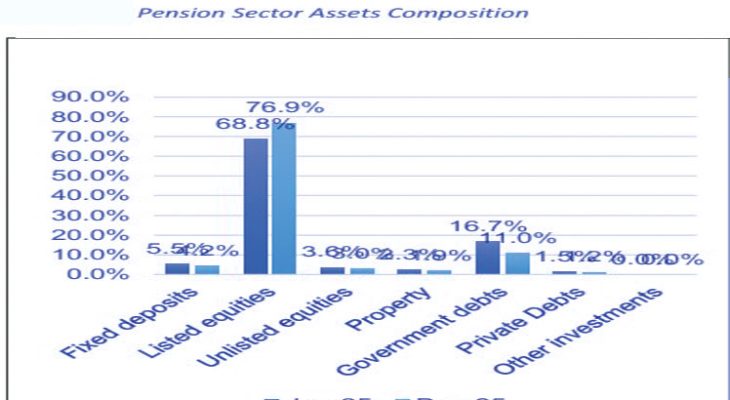
- Diversify Away from Equities: Fund managers must reduce overexposure to listed equities (currently at 76.9%) to comply with regulations and mitigate market volatility risks.
- Partner for Real Estate Investment: Collaborate with property professionals for thorough due diligence on tangible assets like residential, commercial, and mixed-use properties before committing funds.
- Explore Broader Opportunities: Look beyond property into sectors like mining for portfolio diversification and enhanced returns, potentially through joint ventures with established firms.
Malawi’s investment landscape faces a critical call for diversification as large institutional funds grapple with dangerous overexposure to listed equities, exceeding the 60% regulatory limit set under the Financial Services (Investment Management of Life Insurers and Pension Funds) Directive of 2025. With a staggering 76.9% of pension assets currently invested in the 16-counter Malawi Stock Exchange (MSE), funds are highly vulnerable to market volatility and compliance risks. This concentration was starkly highlighted in the recent Reserve Bank of Malawi (RBM) Financial Stability Report, which noted that equity holdings have become the largest single asset class, posing significant dangers.
Property experts like Knight Frank Managing Director Desmond Namangale are urging a strategic shift. Namangale underscores that real estate – whether residential, commercial, or mixed-use – offers substantial advantages as an investment vehicle. "Property remains one of the best investment vehicles of all time," he states, emphasizing its nature as a tangible asset that hedges against inflation through rental income and capital value appreciation. Given its capital-intensive nature, Namangale stresses the need for investors to consult property professionals to understand market demand thoroughly before committing funds, ensuring effective due diligence.
Finance analyst Brian Kampanje supports this view, describing property as a viable sector for Malawi as the nation modernises. He strongly recommends that fund managers adopt joint ventures with reputable international real estate firms. "The best approach is to partner with reputable international brands to provide concepts and clientele for offices and flats catering for both affluent and middle-class societies," Kampanje explains. He adds that proper project appraisals significantly reduce business risks. While acknowledging that fund managers can be risk-averse, favouring the relative stability of equities, Kampanie points out that diversification beyond property is also crucial. He suggests that institutional investors could tap opportunities in mining to broaden their portfolios and boost returns.
The urgency for this shift is underscored by recent market performance. Over the last five months, the MSE market capitalisation has plunged by K5 trillion, declining from K33 trillion in December 2025 to K28.3 trillion at the end of May. Analysts attribute this significant drop partly to institutional investors, including pension funds and insurers, actively reducing their equity positions to align with regulatory requirements. This compliance-driven selling further amplifies the vulnerability associated with over-concentration.
For Malawi’s business community and entrepreneurs, this signals both challenges and opportunities. The current over-reliance on equities presents clear risks to financial stability for these large funds. However, it opens up a significant window for real estate investment and other alternative sectors like mining, provided fund managers engage in strategic partnerships with experienced professionals. Proper kuzindikira (investment) planning, leveraging local expertise and international joint ventures for properties targeting different economic classes, could unlock sustainable growth for investors while contributing to Malawi’s economic development through meaningful mabanja (capital) deployment.
What are your thoughts on this business development? Share your insights and remember to follow us on Facebook and Twitter for the latest Malawi business news and opportunities. Visit us daily for comprehensive coverage of Malawi’s business landscape.

- Malawi Debt Restructuring Paves Path for Business Growth - September 20, 2026
- Mwapata Institute Maps Profitable Pathways in Malawi’s Soybean Value Chain - September 20, 2026
- TNM Introduces Tailored Packages to Elevate Malawi Business Performance - September 20, 2026