
Malawi’s Donor Funding Shift: What It Means for Business Growth
Key Business Points
- Funding shift: Malawi must raise domestic revenue by 2027 to replace falling donor aid for social protection programmes.
- Revenue measures: VAT base rationalization, fuel levy changes, mining royalties and reallocation from the Farm Input Subsidy could generate more than K30 billion annually.
- Impact on businesses: Sustainable, predictable financing will lower investment risk, while careful design is needed to avoid extra cost pressure on households.
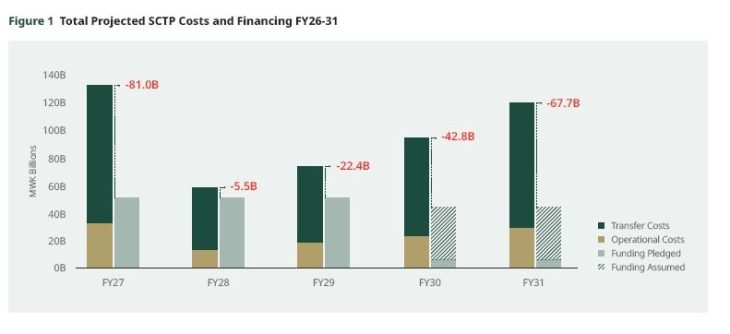
Malawi’s social protection system is entering a critical transition as donor contributions dwindle. The World Bank and the European Union have announced plans to cut their support by over half, leaving the government to fill a large financing gap. The Malawi Sustainable Financing Strategy for Social Protection outlines a roadmap that mixes new domestic revenue sources with smarter spending to keep safety‑net programmes alive.
Current donor funding covers more than 95 percent of flagship initiatives such as cash transfers, public‑works schemes and school meals. The strategy proposes a mix of measures: expanding the VAT base, restructuring fuel levies, improving pension contribution compliance, tapping future mining revenues and redirecting about K23.1 billion from the Farm Input Subsidy Programme in 2027. Officials estimate these actions could raise K20.8 billion from VAT and K3.21 billion from fuel levies in the same year. Mining royalties are projected to eventually deliver up to $100 million (around K175 billion) per year.
In a written comment, Christopher Mbukwa, an economic lecturer at Mzuzu University, cautioned that while the plan looks solid on paper, the impact will not be immediate. He warned that VAT and fuel levies may raise living costs while mining revenues could take years to materialize. Mbukwa stressed the need for clear local financing goals and fiscal consolidation that deliberately shields social protection funding, which is vital for poverty reduction among low‑income households.
Agness Nyirongo, programme officer for economic governance at the Centre for Social Concern, highlighted the importance of predictability. She said, “The real test is not simply how much government can raise, but whether the financing will be predictable and sustainable enough to protect social protection programmes from budget pressures.” Nyirongo urged that reforms to VAT, fuel levies, mining revenues and reallocations must be carefully designed to avoid adding burden to poor families.
The fiscal situation is already tight. Domestic revenue rose from 15.1 percent of GDP in 2015 to 20.1 percent in 2024, while expenditure grew from 18.1 percent to 28.4 percent over the same period. Public debt now stands at K23 trillion, equivalent to 90.2 percent of GDP. Statutory spending has consumed about 93 percent of domestic revenue each year for the past four fiscal years, leaving little room for new initiatives. Debt service alone increased from 28 percent of domestic revenue in 2020/21 to an estimated 46 percent in the 2024/25 fiscal year, further squeezing available funds.
Sophie Kang’oma, acting Principal Secretary in the Department of Economic Planning and Development, acknowledged that finding new revenue streams is insufficient. She called for commitment and collaboration across ministries to implement the strategy effectively. “Effective implementation requires sacrifices and increased commitment,” she said.
Meanwhile, the social cash transfer programme is slated for expansion. Monthly payments are expected to rise from K16 380 in 2025/26 to K28 000 in 2026/27, with further adjustments linked to inflation.
For Malawi’s business community, the emerging financing model presents both a challenge and an opportunity. Companies that monitor the new revenue sources and engage with policymakers may position themselves to benefit from a more stable economic environment. Investors will watch how the government balances fiscal discipline with the need to protect vulnerable households, as this balance will shape the country’s long‑term growth prospects and investment climate.
What are your thoughts on this business development? Share your insights and remember to follow us on Facebook and Twitter for the latest Malawi business news and opportunities. Visit us daily for comprehensive coverage of Malawi’s business landscape.

- Malawi’s Donor Funding Shift: What It Means for Business Growth - September 19, 2026
- Closing the Regional Trade Gap: Strategic Opportunities for Malawian Business - September 19, 2026
- Malawian Cotton: The Next Frontier for China Market Expansion - September 18, 2026