
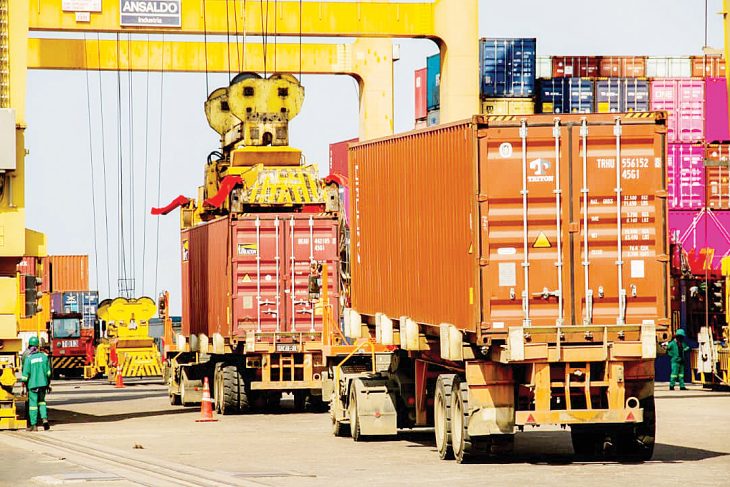
Malawi’s Import Bill Surges to $3 Billion: What It Means for Your Business Malawi’s $3 Billion Import Surge: Navigating the Economic Shift The $3 Billion Import Spike: Assessing the Impact on Malawi’s Economy Import Costs Soar: Malawi’s $3 Billion Challenge for Businesses Malawi’s Record $3 Billion Import Bill: A Catalyst for Local Innovation
Key Business Points
- Monitor foreign exchange trends and adjust cost structures to protect profit margins
- Expand export destinations and product lines to counter the sharp fall in export earnings
- Advocate for smoother customs procedures and better access to finance to strengthen local production
Malawi’s import bill rose 11.3 percent to $3 billion in the first nine months of the year, according to the latest release from the National Statistical Office. The increase comes while the country continues to grapple with foreign exchange shortages that limit the ability of firms to pay for essential inputs.
At the same time exports declined 22.9 percent to $106 million in September compared with the same month last year, widening the trade gap and putting additional pressure on the Uchumi. The data signals that the productive sector is struggling to generate foreign currency, a situation that affects manufacturers, agribusinesses, and service providers alike.
For local entrepreneurs the numbers highlight two practical responses. First, businesses can pursue import substitution by sourcing raw materials and components from domestic suppliers wherever feasible. This reduces the demand for hard currency and supports the Makola for locally made goods. Second, firms should explore export diversification, targeting new markets in the region and beyond to rebuild foreign exchange earnings.
Policy makers have a role to play. Streamlining customs clearance, improving access to trade finance, and offering incentives for value-added processing can lower transaction costs and make Malawian products more competitive. The private sector should engage in dialogue with the Ministry of Trade and the Reserve Bank to ensure that reforms address the most binding constraints.
In the short term, companies that track exchange-rate movements closely and hedge where possible will be better positioned to manage cost volatility. Building relationships with reliable local suppliers and investing in quality certification can also open doors to larger buyers who demand consistent standards.
The current trade picture is a clear signal that the economy needs a coordinated push toward higher value-added activity. By aligning business strategies with the emerging policy direction, entrepreneurs can turn the present challenge into a platform for Kukhala ndi Chuma and sustainable growth.
Malawi’s main trading partners include South Africa, China, and the United Arab Emirates, which together account for the bulk of fuel, machinery, and fertilizer imports that drive the import bill higher. The Reserve Bank reports that gross foreign reserves have fallen below three months of import cover, limiting the ability of firms to secure letters of credit. In response, the government has accelerated talks with the International Monetary Fund on a new financing arrangement that could unlock budget support and stabilize the Uchumi. Private firms that align their cash-flow planning with the expected disbursement schedule will reduce the risk of sudden payment delays.
The African Continental Free Trade Area offers a pathway for Malawian producers to reach a market of more than one billion consumers without facing prohibitive tariffs. Exporters who obtain Chigwirizano certification and meet regional standards can list products on the Makola platform that connects buyers across the continent. Meanwhile, the Malawi Investment and Trade Centre provides advisory services, matchmaking events, and access to concessional finance for firms that commit to value-added processing. By leveraging these instruments, entrepreneurs can turn the current trade deficit into a foundation for Kukhala ndi Chuma and long-term resilience.
What are your thoughts on this business development? Share your insights and remember to follow us on Facebook and Twitter for the latest Malawi business news and opportunities. Visit us daily for comprehensive coverage of Malawi’s business landscape.

- Seize the Opportunity: Malawi’s EU Exports Surge 19% in Two Years - November 6, 2026
- Malawi’s Import Bill Surges to $3 Billion: What It Means for Your BusinessMalawi’s $3 Billion Import Surge: Navigating the Economic ShiftThe $3 Billion Import Spike: Assessing the Impact on Malawi’s EconomyImport Costs Soar: Malawi’s $3 Billion Challenge for BusinessesMalawi’s Record $3 Billion Import Bill: A Catalyst for Local Innovation - November 6, 2026
- Malawi’s Household Solar Expansion Powers Business and Investment Growth - November 6, 2026