
Malawi’s Medf Loans: A K240bn Challenge for Growth and Recovery
Key Business Points
- Malawi Enterprise Development Fund (Medf) faces more than K240 billion in unpaid loans, undermining its impact.
- New 2026-30 strategic plan aims to improve recovery, targeting agriculture, women, youth and people with disabilities.
- Government stresses strict lending discipline, warning loans are not gifts to avoid patronage and ensure sustainability.
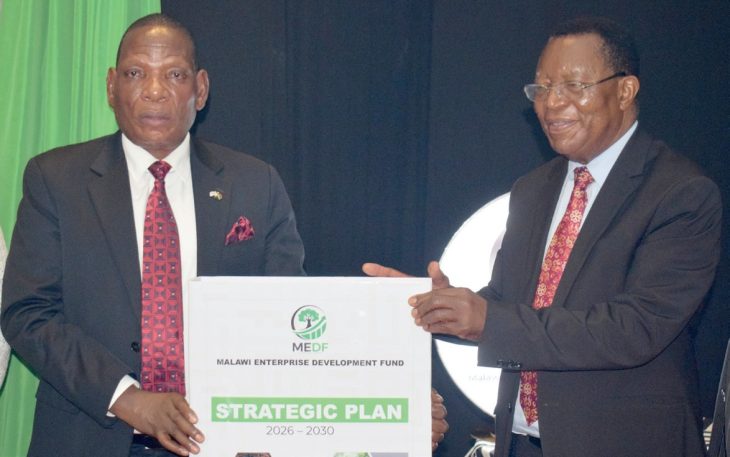
The Malawi Enterprise Development Fund (Medf) has rebranded from National Economic Empowerment Fund (Neef) with a renewed strategy to drive enterprise growth, but faces an immediate test over more than K240 billion in unpaid loans. The unpaid loans raise questions on whether the rebrand signals real reform or a reset without structural change. Medf board chairperson James Naphambo, speaking in Lilongwe on Wednesday during the rebranding event, said the institution is shifting towards stricter lending discipline after years of weak credit controls that saw loans extended to borrowers with no repayment capacity. He said past lending practices undermined the fund’s sustainability, with only about K20 billion of the K240 billion loan book currently secured. “The previous Neef [administration] extended loans to people who could not pay, or those who could have accessed financing from commercial banks,” said Naphambo, pointing to a breakdown in credit discipline. He said Medf has the potential to contribute to foreign exchange generation and food security if lending is directed toward productive sectors and repayment discipline is enforced. Naphambo stressed the need for a shift in borrower behaviour, adding: “They can get bigger loans after paying back the first loan.” Minister of Finance, Economic Planning and Decentralisation Joseph Mwanamvekha, who spoke during the event, warned against repeating past failures. “Let me be unequivocal, Medf loans are not gifts. These are loans to be disbursed to Malawians with a capacity to pay back,” he said, urging recovery of the K240 billion to restore the fund’s revolving model. Mwanamvekha cautioned that the institution must not be reduced to “an instrument of patronage,” signalling government awareness of the political risks that have historically undermined state-backed lending. The relaunch is anchored on a new 2026-30 strategic plan aligned to Malawi 2063, the country’s long-term development plan, with a strong focus on agriculture productivity and commercialisation as a pathway to growth, foreign exchange generation and food security. Under the plan, Medf has outlined six key result areas, including strengthening loan portfolio management, expanding inclusive finance to women, youth and persons with disabilities and driving institutional commercialisation and partnerships. The strategy also stressed improving credit risk management, diversifying lending across sectors, and enhancing post-disbursement monitoring, areas that have historically been weak. On the inclusion side, Medf plans to design tailored financial products, integrate financial literacy and enterprise support and support income growth and job creation among underserved groups. Medf chief executive officer Kayisi Sadala said the plan represents a shift toward measurable impact and stronger stakeholder engagement. “We remain anchored in accountability, integrity and measurable impact,” he said. However, the scale of legacy debt and weak recovery rates highlights the gap between strategy and execution, with analysts noting that enforcement—not design—will determine success. The institution has undergone multiple transitions from Malawi Rural Development Fund (Mardef) to Medf and then to Neef in 2020 and now back to Medf without fully resolving longstanding concerns around governance, targeting and loan recovery. The reset places Medf at the centre of Malawi’s enterprise development agenda, but with more than K240 billion in unpaid loans, its success will hinge on whether it can transform into a disciplined development finance institution or remain caught in a cycle of rebranding without reform. Neef had a loan recovery rate of about 48 to 52 percent, far below the 90 percent recorded by commercial banks and 85 percent by the Export Development Fund (EDF), a peer State-run institution. The poor recovery rate led the institution to write-off K6 billion on Neef loans in April 2024.
What are your thoughts on this business development? Share your insights and remember to follow us on Facebook and Twitter for the latest Malawi business news and opportunities. Visit us daily for comprehensive coverage of Malawi’s business landscape.

- MCCCI Alerts: Fuel Shortage Endangers Malawi’s Business Growth - October 7, 2026
- K82 Million Monthly Revenue: Malawi’s Water Bottling Opportunity - October 6, 2026
- CFTC Calls for Deeper Regional Ties to Expand Malawi’s Market Access - October 6, 2026