
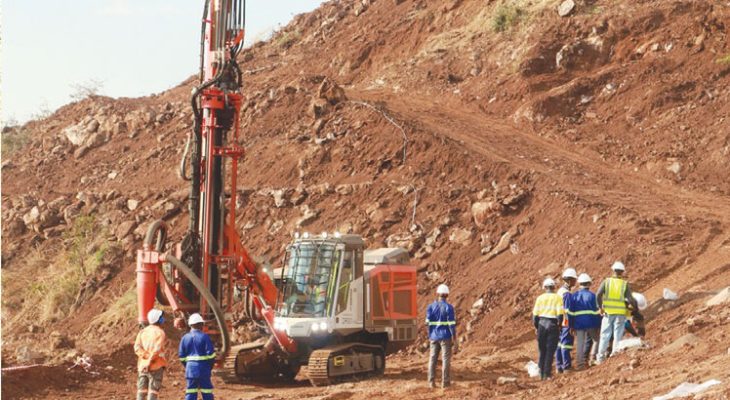
Mining reforms to drive local value chains and new business opportunities—Ministry
Key Business Points:
• Malawi’s proposed Minerals Act amendments aim to boost value addition and expand local participation in the mining sector.
• Exporting processed minerals instead of raw ore is expected to create jobs, support industrialisation and increase the sector’s contribution to GDP.
• Stakeholders stress that reliable electricity and access to financing, especially for small scale miners, are critical for the reforms to deliver real economic impact.
Ministry of Mining has expressed optimism that proposed amendments to the Minerals Act 2023 will strengthen value addition, expand local participation and increase the sector’s contribution to the economy. In an interview on Friday in Lilongwe, Secretary for Mining Rodwell Mzonde said the reforms are designed to ensure Malawi derives greater economic benefits from its mineral resources.
The proposed changes are expected to be tabled in the next meeting of Parliament. Among the amendments are provisions promoting value addition, increasing local equity participation in mining projects and tightening the regulation of exploration activities. Mzonde said exporting processed mineral products rather than raw minerals will create jobs, encourage industrialisation and raise mining’s contribution to gross domestic product.
“We are going to increase local content in whatever the mining companies are doing, and in the process create more jobs in the mining sector,” he said. “But most importantly is the contribution of the mining sector to economic activity. This consultation is helping us frame the Act in a way that facilitates the growth of the sector.”
The proposals have received broad support from industry stakeholders, although concerns remain over the capacity of small scale miners and the country’s energy constraints. Malawi Women in Mining Association president Ashley Simbeye welcomed the emphasis on value addition, but said many small scale miners lacked the financial resources needed to acquire processing equipment. “Looking at women, the financial capacity is not there to afford the machinery for value addition. It is only a few individuals who are currently adding value to their products,” she said.
Chamber of Mines and Energy president Maxwell Kazako described the reforms as proactive, but warned that inadequate electricity supply can undermine efforts to expand local processing. He said large scale mineral beneficiation required substantial and reliable power generation. “Real mining operations require a lot of energy,” said Kazako, who is also country manager for Sovereign Metals Limited.
He encouraged small scale miners to form cooperatives to improve their access to financing for mining equipment and processing machinery. The reforms come as Malawi seeks to position mining as a key pillar of economic growth under the Malawi 2063, the country’s long term plan, which identifies the sector as a major driver of the country’s ambition to attain lower middle income status by 2030 and upper middle income status by 2063.
Mining currently contributes about one percent of the economy, according to the 2026 Malawi Government Annual Economic Report. However, its contribution was significantly higher before 2014, when production at the Kayelekera Uranium Mine in Karonga District was in full swing.
For local entrepreneurs, the reforms signal new pathways to engage with the sector. Kukhala kuunda chitetezo cha kuwerenga chifukwa cha kusamapereza ndi chabe cha anthu amodzi, achimodzi chimodzi ku funda chabe choti chanu. Support can help Malawians turn mining related ideas into viable businesses, creating jobs and driving community development across the nation, while the government’s local content focus ensures training and value chains benefit families directly.
What are your thoughts on this business development? Share your insights and remember to follow us on Facebook and Twitter for the latest Malawi business news and opportunities. Visit us daily for comprehensive coverage of Malawi’s business landscape.

- Mining reforms to drive local value chains and new business opportunities—Ministry - October 21, 2026
-
High Seed Costs Squeeze Malawi’s Cotton Sector—Council Warns
- October 21, 2026 - K1.15M Cost of Living Spike: September Impact on Malawi Businesses - October 20, 2026