
MPs’ Cautious Position on Sexual Minorities: Business Considerations for Malawi
Key Business Points
- Malawi’s outdated laws and social stigma around LGBTIQ persons hurt the country’s reputation and make it harder to attract investment and retain skilled workers.
- Lawmakers avoiding the issue leaves businesses without clear policy direction on inclusion, which matters for workplace culture and growth.
- Ignoring human rights protections in the Constitution risks leaving space for prejudice that drives away talent and slows economic progress.
Malawi’s business environment is shaped not only by taxes, infrastructure, and trade policies but also by the social climate that determines whether the country can attract investment and build a workforce fit for the future.
Colonial-era Penal Code laws still criminalise same-sex relationships, exposing LGBTIQ people to discrimination and violence. This reality has direct business implications. When talented Malawians face stigma and fear, they are less likely to stay in the country or contribute to the formal economy. Foreign investors increasingly look beyond profit margins to assess whether a country respects human rights and offers a safe environment for all people.
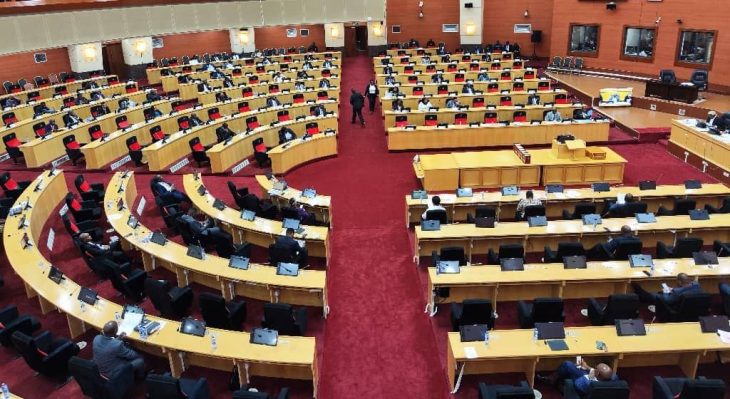
The current debate around these laws is mostly being avoided by elected officials. When all 10 MPs randomly contacted by this publication refused to share their views, it revealed how politically sensitive the topic has become. Zomba Malosa MP Grace Kwelepeta said simply, "Izi ayi. Sorry, it’s not worth discussing." Mzimba North’s Catherine Mzumara said it is "something I can’t even mention in my constituency." Even Oxford-trained engineer Matthews Mtumbuka, Rumphi Central MP, said it is "too early to talk about it."
This silence from lawmakers creates uncertainty for businesses trying to build inclusive workplaces and for organisations pushing for fair treatment of all citizens. Section 20 of the Malawi Constitution prohibits discrimination based on colour, race, sex, language, or political opinion. Yet many people, including some MPs, treat this as something that does not apply to sexual orientation.
Centre for Human Rights and Rehabilitation executive director Michael Kaiyatsa noted that public debate on LGBTIQ matters is often shaped more by religious beliefs, moral panic, and misinformation than by constitutional principles or evidence. He warned that avoiding the issue entirely will not make it disappear, but only leaves room for prejudice and continued marginalisation. This has real economic consequences. An Afrobarometer poll from 2014 found that 93 percent of Malawians would not want homosexuals as neighbours, showing how deep the stigma runs.
For business owners, the takeaway is clear: inclusion is not just a rights issue, it is a growth issue. Gift Trapence, executive director of Centre for the Development of People, urged MPs to promote non-discrimination and protect the rights of all citizens regardless of sexual orientation. Nyasa Rainbow Alliance plans to engage the new Legal Affairs Committee of Parliament because most MPs are new and operate in a hostile environment toward LGBTIQ people.
Malawians do not only elect MPs to echo common sentiments but also to uphold the Constitution and promote informed national dialogue. As the business community competes for investment and talent, a society that protects all its citizens will always have the advantage.
What are your thoughts on this business development? Share your insights and remember to follow us on Facebook and Twitter for the latest Malawi business news and opportunities. Visit us daily for comprehensive coverage of Malawi’s business landscape.
