
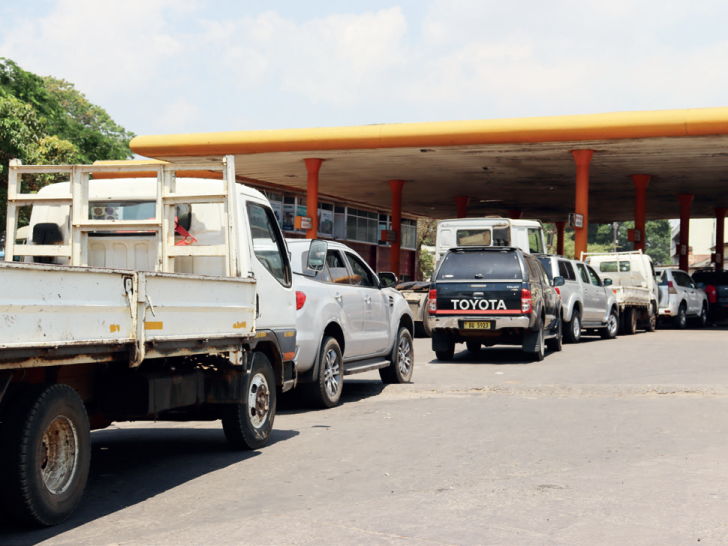
Erratic Fuel Supplies Disrupt Business Momentum in Malawi
Key Business Points
- Fuel shortages, especially diesel, are disrupting transport and delivery services, increasing costs for business owners
- Fuel stations are operating at reduced capacity but still paying full operating costs, squeezing profit margins
- Unofficial fuel prices are rising on the parallel market, adding extra expenses for small businesses and transport operators
Fuel supply challenges in Malawi are hitting businesses hard. Erratic access to diesel and petrol is slowing down logistics, pushing costs higher, and creating daily losses for transporters, taxi operators, and fuel station owners.
Transporters Association of Malawi director Frank Banda says haulage of essential goods like agricultural produce and fertilizer is being disrupted. "Trucks are stuck due to diesel shortage, and we only generate income when our vehicles are moving," he explained. Delays also follow issues in Mozambique, where trucks were stranded without fuel for over six weeks, adding to operating expenses.
Long-distance truck drivers are facing delays too. "I was in Karonga ready to leave on Thursday but only managed to go on Sunday because I couldn’t access enough diesel," said Truck Drivers Union of Malawi’s Francis Mkandawire.
At fuel stations, the situation is equally painful. Happy Jere, chairperson of the Fuel Retailers Association, reports that stations in urban areas are now down to 60 percent of normal sales, and rural ones to just 20 percent, all while still paying full overhead costs. This double squeeze threatens shop closures and job losses.
A taxi driver traveling between Mangochi and Monkey Bay is responding by buying fuel on the black market at K6 500 per litre, well above the official rate of K4 965. "I rely on this business to support my family, so I hope the situation improves soon," he said.
Small and medium businesses are also feeling the pinch. James Chiutsi, president of the Malawi Union of Small and Medium Enterprises, says while immediate impacts are small, a prolonged shortage will raise operating costs across the sector.
Mera has acknowledged the problem and says it is "making efforts to stabilise the flow of fuel supplies." The country currently consumes about one million litres each of petrol and diesel every day — a heavy demand to meet as supply disruptions persist.
With no quick fix in sight, these akafunika (needs) mean many business players are being forced to mamirapo nawo (tough it out) until supply chains normalise. Until then, rising fuel costs could dampen economic activity and push up prices for everyday goods across Mzuzu, Lilongwe, Blantyre, and beyond.
What are your thoughts on this business development? Share your insights and remember to follow us on Facebook and Twitter for the latest Malawi business news and opportunities. Visit us daily for comprehensive coverage of Malawi’s business landscape.

- Economists Urge Prompt ECF Agreement to Drive Malawi’s Business Expansion - September 22, 2026
- Malawian Economists Urge Mutharika to Reassess Esoma Act’s Business Impact - September 22, 2026
- EDF Drives Gold Market Expansion Across New Districts - September 22, 2026