
Malawi Business Pulse: Manufacturing & Trade Data Reveal Economic Shift
havi Kwanjani kwa Malawilolo Poyamba
Key Business Points
- Reassess capital deployment: Allocate funds to sectors with high value‑added potential, especially those that can overcome the current foreign‑exchange bottleneck.
- Secure a steady power supply: Engage with the utilities sector to identify and support projects that reduce reliance on hydro‑dependent grid services, ensuring continuous production lines.
- Advocate for targeted industrial policy: Push for clearer policy frameworks and accountability that allow firms to plan long‑term investments without fear of sudden interest‑rate spikes or currency devaluation.
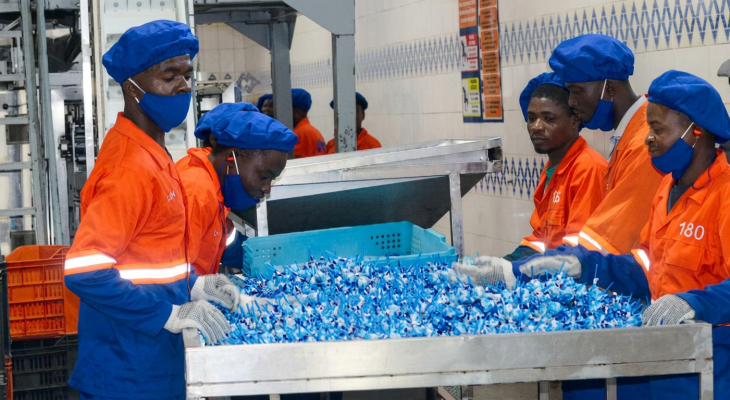
The Reserve Bank of Malawi’s National Accounts Report (2017–2026) reveals a worrying slide in the manufacturing sector’s share of GDP from 11.3 % to 11.1 %, while wholesale and retail trade fell from 12.6 % to 10.6 %. Since 2023, both segments have posted flat growth rates of just 0.5 % and 1.1 % respectively.
Economists point to a trio of challenges driving this stagnation: foreign‑exchange scarcity, energy constraints, and high interest rates. University of Malawi lecturer Edward Lemani calls the slowdown “concerning” and stresses that the economy needs a stronger industrial base to absorb agricultural labour and value‑add locally. “Escalating borrowing costs, coupled with intermittent currency devaluations, inflate the price of imported machinery and raw materials,” he notes.
Trade expert Paul Kwengwere warns that the continued decline undermines Malawi’s long‑term ambition under the Malawi 2063 vision, which aims to lift the country into upper‑middle income status by 2063. “In a developing economy, manufacturing should expand as a share of GDP to ukulandirani agricultural workers and drive local value addition,” Kwengwere says. He highlights energy shortages as a key bottleneck: over 90 % of grid power comes from the Shire River basin, where weather shocks frequently stifle hydro generation. When national generation drops, plants struggle to maintain continuous assembly lines or thermal processes.
National Planning Commission Director‑General Frederick Changaya states that reforms remain stalled by political economy constraints. “What we need is aggressive State intervention, proper industrial policy, strong institutions, and accountability frameworks,” Changaya explains. He cites examples of countries that have transitioned from fragile economies to industrial heavyweights by identifying strategic sectors with high growth potential and pushing value‑added exports.
The Malawi Confederation of Chambers of Commerce and Industry Business Climate Survey paints a stark picture: most firms operate below capacity, with 51.9 % functioning under 50 % utilisation, 37 % between 50–75 %, and only 11.1 % above 75 %. Ministry of Industrialisation, Business, Trade and Tourism spokesperson Patrick Botha remains upbeat despite the challenges. “Many firms have downsized or closed, but reforms promoting value addition are expected to yield results,” he affirms.
From the finance side, Ministry of Finance, Economic Planning and Decentralisation spokesperson Williams Banda cites capital and energy constraints as key barriers yet points to falling interest rates, driven by reduced government borrowing, as easing pressure on production.
For local entrepreneurs and investors, the current environment demands a proactive stance: secure foreign‑exchange channels for critical inputs, align procurement with renewable or backup energy options, and lobby for clear industrial policy that shields investments from sudden policy shifts. Strengthening domestic supply chains can reduce exposure to foreign‑exchange volatility, while engaging in public‑private partnerships may unlock targeted infrastructure support.
In the near term, those who can navigate the energy constraint and tap into the value‑added potential of Malawi’s sectors will likely find fertile ground for growth. The road ahead is clear: policy clarity, energy reliability, and strategic capital deployment are the keys to revived industrial performance and a stronger economic outlook for Malawi’s business community.
What are your thoughts on this business development? Share your insights and remember to follow us on Facebook and Twitter for the latest Malawi business news and opportunities. Visit us daily for comprehensive coverage of Malawi’s business landscape.

- Bridging the Gap: Navigating Malawi’s Inequality Risks for Sustainable Economic Growth - September 26, 2026
- Mwapata Study Maps Malawi’s Rice Market Expansion - September 26, 2026
- Malawi must negotiate the ECF programme it owns – The Times Group - September 26, 2026