
Malawi Economy Ends Year Strong – What It Means for Business Growth
Key Business Points
- Malawi closed the 2025-26 financial year with K8.425 trillion in spending, K173 billion below the revised budget, reflecting new fiscal discipline.
- Government-funded spending excluding foreign resources dropped by K876 billion, signaling tighter control over salaries, recurrent costs, and development projects.
- Analysts warn underspending could stall key infrastructure and public services, raising concerns over long-term economic growth.
Malawi’s 2025-26 financial year ended on Tuesday with government expenditure reaching K8.425 trillion, falling short of the K8.589 trillion budget approved mid-year. The shortfall of K173 billion came after a sharp K468.6 billion slowdown in spending during the second half of the fiscal period.
A review of the Supplementary Appropriation (2025-26) Bill shows that roughly K4.4 trillion was spent in the first half of the year from April to September 2025 under the previous administration. Spending in the second half, from October to March, totaled K3.95 trillion the release kumboonetselako, including foreign-financed resources.
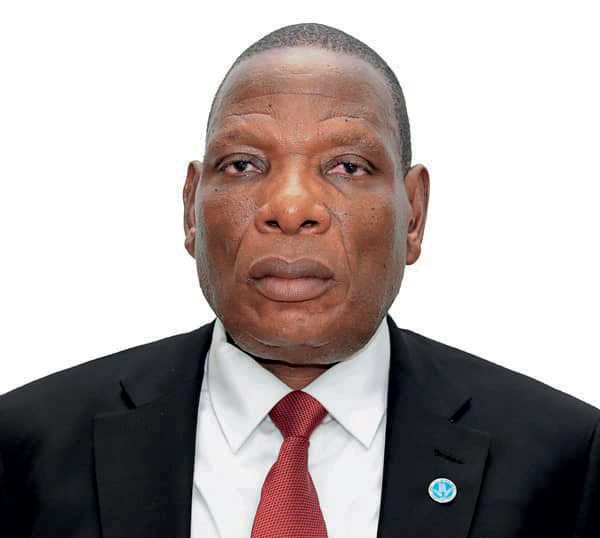
Finance Minister Joseph Mwanamvekha attributed the decline to the implementation of stricter spending controls. "However, if we exclude foreign-financed resources (Part I expenditure), government-funded spending—including salaries, other recurrent transactions (ORT), and Development Part II expenditure—fell by K875.9 billion, demonstrating the level of fiscal discipline the new administration is exercising," he said.
Parliament had initially approved a K8.076 trillion budget in March 2025, later revised to K8.589 trillion in November. Economists offered mixed views on the outcome. Marvin Banda noted that the (Bandake kuimba abale) K173 billion underspend might appear to signal fiscal discipline but warned it should not be viewed as automatically positive in Malawi’s context.
Scotland-based economist Velli Nyirongo said the implications depended on interpretation and underlying factors. "On the surface, spending less than the approved budget can appear to be a sign of fiscal discipline. A gap of K173 billion between the revised allocation and actual spending could, in principle, reflect tighter controls, improved efficiency, or a conscious effort to limit borrowing," he said.
However, Nyirongo reminded that underspending was not inherently beneficial. "When allocated funds are not utilised, it often means infrastructure projects stall, public services are delayed, or essential investments in health, education, and development do not materialise," he said. "In such cases, the ‘savings’ may come at a real cost to citizens and long-term economic growth." He added that underspending could also point to structural inefficiencies such as procurement bottlenecks, weak administrative systems, or delayed disbursement of funds.
For Malawi’s business community, the challenge now lies in balancing fiscal prudence with the timely execution of development projects ukuoneka kwa okhaokha. Entrepreneurs and investors should monitor how remaining budget allocations are managed in the coming months to assess whether tighter controls will enhance efficiency or hinder critical economic activities.
What are your thoughts on this business development? Share your insights and remember to follow us on Facebook and Twitter for the latest Malawi business news and opportunities. Visit us daily for comprehensive coverage of Malawi’s business landscape.

- Malawi Economy Ends Year Strong – What It Means for Business Growth - April 2, 2026
- Pension Fund Insights: A Game Changer for Malawi’s Economic Landscape - April 2, 2026
- Malawi’s Cheque Trends: What It Means for Your Business Strategy - April 2, 2026