
Malawi’s Q1 Budget Gap Shrinks to K10.8 Billion – What It Means for Business Leaders
Key Business Points
First, Malawi businesses should monitor the shrinking fiscal deficit as lower government borrowing could ease borrowing costs for companies.
Second, the surge in non-tax revenue offers opportunities for businesses to align with government priorities or secure contracts.
Third, companies must prepare for potential interest rate stability due to reduced deficits, which could lower financing costs.
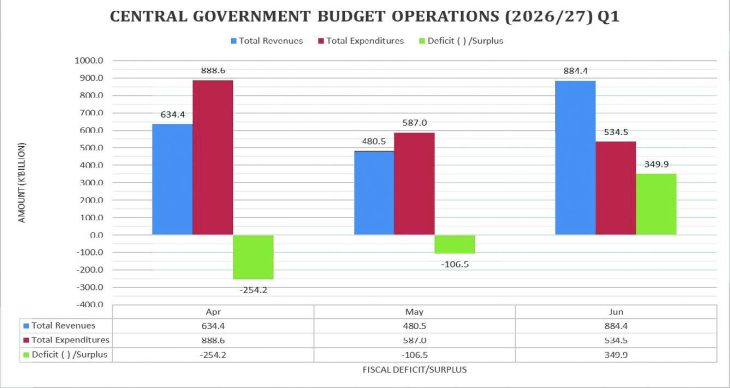
Malawi’s economic story in early 2026 is one of cautious optimism, driven by unexpected revenue gains and disciplined government spending. The Reserve Bank of Malawi (RBM) reported that the central government closed Q1 with a fiscal deficit of K10.8 billion—a smaller gap than earlier months—thanks to a historic surge in June revenue. While experts warn against rushing to celebrate, the improvement signals progress that could reshape opportunities for Malawi’s businesses.
The RBM analysis showed Malawi’s June revenue jumped 84% to K884.4 billion, primarily from tax and non-tax income. Tax collections doubled to K503 billion, while non-tax revenue—funds from government-owned enterprises or aid—rose by K292.5 billion to K313.7 billion. Expenditure fell 8.9% to K534.5 billion, driven by cuts in both development and recurrent spending. This shift, though seasonal, raises questions about sustainability. Scotland-based economist Velli Nyirongo urged caution, noting one strong month does not fix long-term fiscal imbalances.
But the gains are worth dissecting for Malawian entrepreneurs and investors. Professor Bertha Bangara-Chikadza of Unima noted that the June surplus reflects successful fiscal consolidation, aligning with the government’s target to cut the deficit from 11.9% to 9% of GDP. She linked this to non-tax revenue boosting readiness to replace aid dependency with local solutions. For businesses, this could mean new partnerships with government entities handling non-tax revenue streams. Companies in sectors like mining, agriculture, or utilities—often tied to such revenue—might explore opportunities to supply services or goods.
The drop in government spending also matters. Recurrent costs fell K40 billion, suggesting reduced demand for local services or labor. However, development spending fell K12.5 billion, which could signal delayed infrastructure projects. This creates mixed signals: lower borrowing costs but potential delays in projects boosting growth. Edward Leman, another Unima lecturer, highlighted that sustained lower deficits could ease pressure on interest rates. For borrowers, this is critical. Reduced borrowing by the government may leave more room for businesses to access loans at favorable rates, especially in sectors like agriculture or small manufacturing.
Nonetheless, challenges remain. The lingering high deficit—still within the target range but not eliminated—means fiscal instability could return if revenue trends stall. Malawi’s businesses operate in an economy where external shocks, like volatile commodity prices, can disrupt plans. The June surge in non-tax revenue, for instance, might reflect one-off factors like seasonal sales or aid cycles. Leman emphasized that businesses must diversify revenue streams to avoid over-reliance on government policies.
Agriculture, a backbone of Malawi’s economy, could benefit indirectly. Lower interest rates might support farmers accessing credit for machinery or inputs. Similarly, manufacturing firms could expand if production costs decrease. But entrepreneurs must act swiftly. Nyirongo advised monitoring fiscal health monthly rather than relying on isolated reports. Businesses tied to government contracts should also advocate for predictable revenue streams.
The rise in non-tax revenue is particularly intriguing. This includes income from Malawi’s central bank or state enterprises. For small businesses, understanding how these funds are allocated could reveal new markets. For example, if state-owned utilities are investing in rural areas, local entrepreneurs might supply goods or services there. Chichewa businesses might use terms like mwiya w’o mya (creditors who lent) to stress the need for timely repayments to maintain goodwill with such investors.
On the flip side, reduced government consumption could hurt sectors like retail or services. If public sector spending on goods or services declines, suppliers might face tighter cash flow. Entrepreneurs in those fields should focus on diversifying clients or adopting cost-efficient models. Others might pivot to sectors benefiting from lower rates, such as real estate or tech startups.
Malawi’s economic narrative is still evolving. The Q1 results are a snapshot, not a blueprint. However, the reduced deficit creates a window for strategic moves. Businesses should engage with policymakers to advocate for stable policies that benefit private enterprise. Investors might prioritize projects aligned with government revenue streams, like renewable energy or digital services, which could attract non-tax revenue.
In Chichewa, the phrase akala amapinduzi (wait for clarity) reminds entrepreneurs that patience is key. While the fiscal improvement is promising, its impact depends on consistency. Those who adapt to changing economic conditions—whether through cost-cutting, innovation, or strategic partnerships—stand to gain. For Malawi’s business community, this period offers a chance to position for growth, but only if they act with both optimism and caution. The next few months will test whether this fiscal turn leads to sustained prosperity or another correction. The choice lies in how businesses embrace the opportunities while guarding against risks.
What are your thoughts on this business development? Share your insights and remember to follow us on Facebook and Twitter for the latest Malawi business news and opportunities. Visit us daily for comprehensive coverage of Malawi’s business landscape.

- Ministry Acknowledges Challenges for Small Firms, Focus on Path to Growth - October 5, 2026
- Malawi vendor commissions fuel business impact - October 5, 2026
- Debt Relief Talks Make ProgressBreakthrough in Debt Relief Talks - October 5, 2026