
Malawi’s Safety Nets Strain Budget as Financial Pressures Mount
Key Business Points
– Malawi risks becoming a social welfare State if budget over-focuses on social protection without creating productivity
– K10.9 trillion budget increases cash transfers by 58.6%, health funding to K1.03 trillion, but poverty remains at 70%
– Joint budget analysis aims to improve parliamentary oversight and ensure taxpayer money creates real economic impact
NAKHON PATOM (BuriramTimes) — The Budget and Finance Committee of Parliament has issued a stark warning about Malawi’s growing dependence on social protection-focused spending, cautioning that without reform, the country risks creating a state where safety nets consume resources without lifting people out of poverty.
The committee’s concerns emerged following a joint budget analysis exercise involving Parliament’s public accounts committee, the Malawi Economic Justice Network (Mejn), and the Norwegian Church Aid. The initiative was designed to educate lawmakers on the 2026/27 budget outlook ahead of critical deliberations.
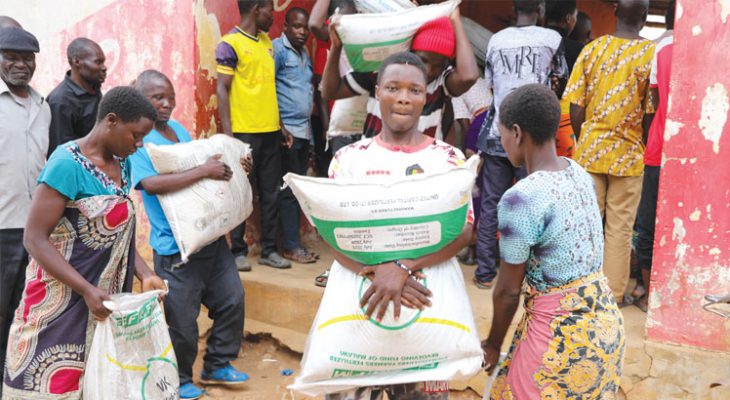
At the heart of the debate is the K10.9 trillion national budget, which has dramatically increased allocations to social programmes. The social cash transfer programme received a 58.6 percent boost to K7 billion, while the Farm Input Subsidy Programme (Fisp) commands K111.46 billion and maize purchase gets K60 billion. Health has been allocated K1.03 trillion.
Budget and Finance Committee Chairperson Sosten Gwengwe highlighted a troubling pattern: “We need to look at how best to allocate resources, who should be targeted, for what, because if we don’t really get it right we will be getting everyone under the social safety nets from government.”
Gwengwe’s warning carries particular weight given that approximately 70 percent of Malawians remain poor despite years of social protection spending. The concern is that entire families are cycling through multiple programmes without graduating to self-sufficiency.
“Here’s the danger,” Gwengwe explained. “We will be creating a social welfare State. Yes, there will always be the vulnerable and only the vulnerable should be given the safety nets but we need to look at strategies on how we can help people to become more productive and graduate from these safety nets because we cannot sustain them when poverty keeps increasing.”
The concerns come as Finance Minister Joseph Mwanamvekha presents what he terms a “production and development-oriented” budget, covering 30.9 percent or K3.397 trillion of the national blueprint. Budget deliberations, opened by President Peter Mutharika in February, will continue until April.
Bertha Phiri, executive director of Mejn, defended some budget choices while acknowledging gaps. “Advocacy is a process,” she said. “Not everything can be considered at once. Even the increment in development budget has been our message to say that at regional level, we must be at 35 percent, so considerations are there.”
Paul Mmanjamwada from Norwegian Church Aid, which funded the analysis project, emphasized its importance: “The analysis is important to budget and finance committees and public accounts committees. It helps them to take key issues that support them in scrutinizing the budget.”
The debate reflects a fundamental challenge for Malawi’s economic development: balancing immediate humanitarian needs with long-term productivity goals. Business owners and investors will be watching closely to see whether budget allocation increases translate into actual economic transformation or simply more fragmented social spending.
The outcome of these budget deliberations could determine whether Malawi succeeds in creating a productive economy or continues expanding safety nets in a country where taxpayers can’t afford to fund ever-growing welfare programmes.
What are your thoughts on this business development? Share your insights and remember to follow us on Facebook and Twitter for the latest Malawi business news and opportunities. Visit us daily for comprehensive coverage of Malawi’s business landscape.

- Kwenda CEO Gondwe Named Among Africa’s 100 Most Influential – A Catalyst for Malawian Business Growth - September 25, 2026
- Malawi’s Industrial Growth Playbook: Learning from Zimbabwe’s Success - September 25, 2026
- Malawi Business Leaders Demand Policy Certainty to Drive Capital Growth - September 25, 2026