
Tax Support, Stronger Budgets: What Malawi’s Latest Data Means for Your Business
Key Business Points
- MRA targets tax-to-GDP ratio of 20 percent by 2031 requiring businesses to prepare for stricter compliance and digital filing systems
- Customs duties dominate at 72 percent of collections meaning importers face continued scrutiny while domestic tax base expansion creates opportunities for formalisation
- K6.2 trillion revenue target signals government commitment to reduce external borrowing which could stabilise the kwacha and lower interest rates for local enterprises
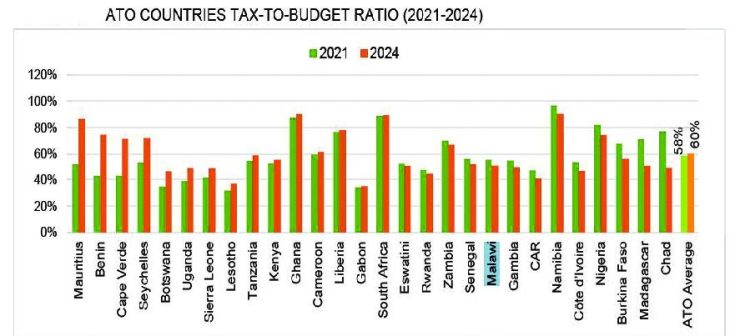
Malawi’s capacity to fund its national budget through tax revenue has weakened according to new data from the African Tax Administration Forum. The 2025 African Tax Outlook shows the country’s tax-to-budget ratio declined from roughly 55 percent in 2021 to about 50 percent in 2024. This trend runs opposite to the continental average which rose from 58 percent to nearly 60 percent over the same period.
The report places Malawi below regional peers. Tanzania recorded approximately 60 percent while Zambia reached 65 percent. South Africa led with 89.4 percent. Customs revenue accounted for 72 percent of total tax collections in 2024 with domestic taxes contributing only 28 percent. This heavy reliance on border taxes exposes the budget to trade volume fluctuations and limits revenue resilience.
Ataf executive secretary Mary Baine noted the disparities highlight the need for sustained reforms tailored policy interventions digital transformation and stronger institutional capacity. She pointed to rising public debt tightening global financial conditions declining concessional financing climate vulnerabilities and growing demand for quality public services as pressures on government finances.
The Malawi Revenue Authority has responded with its 2026 to 2031 Corporate Strategic Plan. The authority aims to raise the tax-to-GDP ratio from 16.83 percent to 20 percent by 2031. It also targets improvement in on-time tax filing from 71 percent to 90 percent and recovery of collectible tax arrears from 89 percent to 100 percent. The plan prioritises widening the tax base digital transformation and improved compliance.
Minister of Finance Joseph Mwanamvekha emphasised that stronger domestic revenue mobilisation is critical to reducing reliance on external financing. He stated increased domestic revenue means more classrooms better equipped hospitals safer roads and more opportunities for youth. This vision aligns with the mwendo wa chuma approach where sustainable growth builds from internal strength.
MRA faces a K6.2 trillion domestic revenue collection target for the fiscal year ending March 2027. The authority collected K1.39 trillion in the first quarter against a K1.37 trillion target delivering a K20 billion surplus. This early performance suggests the digital systems and compliance measures are gaining traction.
For business owners the message is clear. Formalisation is no longer optional. The shift toward digital filing and broader tax base capture means informal operators will face increasing pressure to register. Companies already compliant should invest in robust accounting systems to meet the 90 percent on-time filing target. Importers must factor continued customs scrutiny into cost structures.
The focus on domestic resource mobilisation also creates opportunities. As government reduces external borrowing pressure on the kwacha may ease creating a more stable environment for long-term investment. Local entrepreneurs who formalise early gain access to government procurement credit facilities and business development services reserved for compliant taxpayers.
The path forward requires partnership between revenue authorities and the private sector. MRA’s digital transformation must be matched by business adoption of electronic invoicing and real-time reporting. Those who adapt early will navigate the transition smoothly while gaining competitive advantage in a formalising economy.
What are your thoughts on this business development? Share your insights and remember to follow us on Facebook and Twitter for the latest Malawi business news and opportunities. Visit us daily for comprehensive coverage of Malawi’s business landscape.

- Tax Support, Stronger Budgets: What Malawi’s Latest Data Means for Your Business - November 20, 2026
- Malawi Business Leaders Secure Rwandan Banking License, Driving Regional Growth - November 20, 2026
- Why ECAMA’s Social Protection Advice Matters for Malawi’s Economy - November 20, 2026