
Turning Effort into Enterprise: Accelerating Malawi’s Economic Momentum
Key Business Points
-
Smallholder tobacco farmers face a severe cost-price squeeze with production costs of K1.83 million but only K3.67 million in revenue, leaving minimal profit margins despite rising input costs like fertiliser at 59% of total expenses.
-
Contract farming significantly outperforms traditional sales methods, generating K5.95 million per season compared to K2.65 million at auction floors, presenting a major opportunity for farmers to increase income through organized partnerships.
- Government and industry stakeholders should prioritize establishing a tobacco price stabilisation fund and strengthening farmer cooperatives to improve market regulation and protect producers from volatile global demand and declining leaf quality.
Tobacco Farmers Struggle as Production Costs Soar and Market Returns Decline
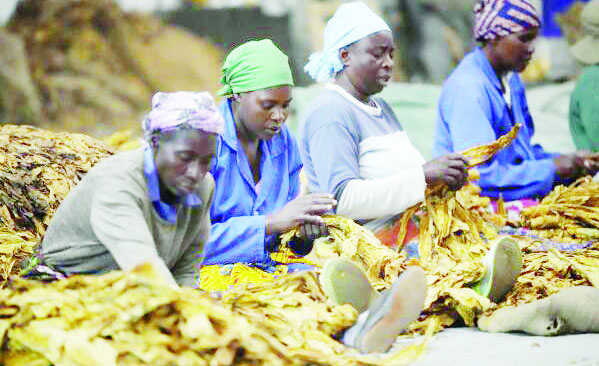
Malawi’s smallholder tobacco farmers continue earning low returns from their toil, amid the ever rising cost of production, a recent study has shown. Findings of the study by the Lilongwe University of Agriculture and Natural Resources (Luanar) and the Farmers Union of Malawi (Fum) attributes the low earnings to falling global demand, reduced buyer competition and structural weaknesses in the tobacco marketing system.
This is contained in a policy brief titled "Maximizing Tobacco Farmers’ Returns in Malawi Under Declining Global Demand: Evidence-Based Policy Insights for Pricing, Contracts and Market Governance."
The policy brief surveyed 300 smallholder farmers in Dowa, Mchinji and Lilongwe districts between April and May 2026. The research reveals the urgent need for market reforms to support Malawi’s agricultural sector, which remains heavily dependent on tobacco exports.
High Costs, Lower Returns
Fertiliser emerged as the biggest expense for farmers at 59 percent of total production costs, followed by labour at 17 percent. Transport costs accounted for six percent, cost of chemicals at five percent, cost of seed at four percent, and curing cost at three percent, with other expenses making up the remaining six percent.
This meant farmers spent an average of K1.83 million to produce tobacco in recent growing seasons from 2020 to 2025. Despite these high costs, farmers earned average seasonal revenue of K3.67 million, leaving them with a minimal profit margin of roughly K1.84 million.
The situation is even more dire for farmers selling through informal channels, as the study found that farmers sold tobacco at an average price of about K3,448 per kg, though some sold the leaf to vendors at prices as low as K400 to K700 per kg in the past five years.
Contract Farming Offers Better Prospects
The study found that farmers under contract arrangements earn significantly higher revenues than those selling through auction floors or informal channels. Figures show that contract farmers earned an average of K5.95 million per season, while auction farmers earned about K2.65 million.
"This shows that formal contract arrangements can double farmer incomes," said a researcher involved in the study. "However, only a small percentage of farmers participate in these programs."
"The widening gap between production costs and selling prices has created what they describe as a ‘cost-price squeeze’ affecting many smallholder farmers," reads the report in part.
Policy Recommendations for Growth
The report recommends establishing a tobacco price stabilisation fund to cushion farmers from effects of fluctuating prices. This would be particularly valuable given Malawi’s reliance on tobacco exports for foreign exchange.
The policy brief also recommends creation of an independent grading and dispute resolution system, strengthening farmer cooperatives and improving regulation of cross-border tobacco trade to enhance transparency and farmer returns.
Agriculture policy expert Tamani Nkhono Mvula pointed out that the challenges facing tobacco farmers partly stem from policy changes that liberalised tobacco production after 1994. The shift increased production but weakened market regulation and in some cases contributed to declining leaf quality.
"We need to return to a more controlled production system where farmers grow tobacco under organised cooperatives so that output, quality and access to inputs can be better managed," he said.
This approach could help restore the mwamburi (cooperative) system that historically provided better support structures for farmers.
Market Outlook
Speaking during the opening of the Mzuzu Auction Floors, Minister of Agriculture, Irrigation and Water Development Roza Mbilizi called on researchers and regulators to strengthen crop management systems to control production levels and stabilise the market.
Malawi is expected to produce about 197 million kg of tobacco this season, about 14 percent higher than the recommended national output of 170 million kgs. This overproduction could further pressure prices downward.
Statistics from the Tobacco Commission show that the country earned $26.1 million from 12.3 million kg of tobacco sold in the first three weeks of the 2026 marketing season, compared to $31.9 million from 14 million kg during the same period last year.
The declining revenue despite increased volumes suggests the need for better value addition and market diversification strategies.
For Malawi’s agricultural sector, the findings underscore the importance of moving beyond raw leaf exports toward processed tobacco products and value-added activities that can command higher prices in international markets.
The study’s recommendations offer a roadmap for policymakers to address the persistent challenges facing one of Malawi’s most important cash crops, potentially improving livelihoods for hundreds of thousands of smallholder farmers while maintaining the sector’s contribution to national economic growth.
What are your thoughts on this business development? Share your insights and remember to follow us on Facebook and Twitter for the latest Malawi business news and opportunities. Visit us daily for comprehensive coverage of Malawi’s business landscape.

- K82 Million Monthly Revenue: Malawi’s Water Bottling Opportunity - October 6, 2026
- CFTC Calls for Deeper Regional Ties to Expand Malawi’s Market Access - October 6, 2026
- Costly Money Transfers to Malawi Hamper Business Growth – The Times Group - October 6, 2026