
User Safety: safe
Key Business Points
- Regional collaboration is essential for Malawi’s non-banking financial sector to unlock domestic savings for local infrastructure and entrepreneurship.
- Strong governance and transparency must guide investments in pensions, insurance, and capital markets to protect everyday Malawians and small business owners.
- Non-bank financial institutions can drive Malawi’s development priorities by broadening access to finance and supporting key sectors like manufacturing and tourism.
Regional players in non-banking financial services are gathering in Lilongwe this week under the Sadc Committee of Insurance, Securities and Non-Banking Financial Authorities (Cisna). The 49th Annual General Meeting runs for six days under the theme "Breaking Barriers to a Deep and Broad Financial System in the Sadc Region."
The indaba brings together regulators and industry leaders to discuss financial inclusion, market development and sustainable economic growth. For Malawi, the meeting offers a platform to align domestic reforms with regional integration goals. Business owners should watch because outcomes shape how domestic savings are mobilized.
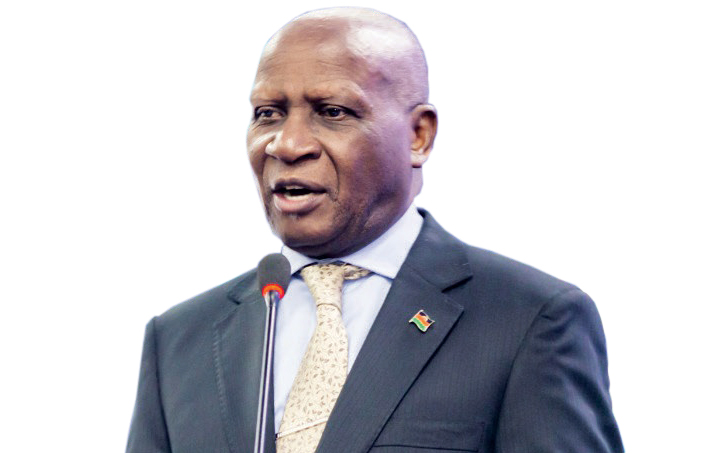
Minister of Industrialization, Business Trade and Tourism Simon Itaye attended the opening session and urged regional players to collaborate as nations push integration. He emphasized that institutions overseeing pension funds, insurers, capital markets, collective investment schemes, microfinance institutions, financial cooperatives and other non-bank providers play a critical role in the Sadc growth agenda.
"Together, these sectors hold more than financial assets. They hold people’s hopes: the pension of a nurse, the insurance claim of a farmer, the savings of a cooperative member and the investment of a small business owner," Itaye said. He added that pension funds, insurers and other institutional investors can support infrastructure, renewable energy, manufacturing, logistics, housing and tourism.
The minister stressed that investment must be backed by sound governance, transparency and accountability. He reminded sector players that they have a duty to operate within proper governance structures to ensure efficiency and effectiveness. In Chichewa, "kulimbikitsa ukampani za ndalama kufuna kuthandizira alimi ndi makampani akhale ndi uluso" means financial institutions must help farmers and businesses with oversight. This principle should guide every decision in the non-banking space, ensuring resources reach the people who need them most.
Reserve Bank of Malawi Governor George Partridge also addressed the gathering, noting that effective regulation requires cooperation among authorities. He said the industry needs frameworks that are responsive, proportionate and well-coordinated across borders.
"Non-bank financial institutions are playing an increasingly important role in our economies. They help mobilise long-term capital, broaden access to finance, support investment and contribute to economic development," Partridge said. He highlighted that this is particularly important for Malawi, where pension funds, insurance companies and other non-bank intermediaries have significant potential to channel domestic savings into productive sectors and finance national development priorities.
"We should never choose between development and prudence. Our duty is to make prudent finance serve development," Partridge stated.
Cisna Chairperson Kenneth Matomola acknowledged that the non-banking sector faces many risks but stressed that working together remains the key path forward. The meeting continues this week with discussions focused on practical strategies for strengthening the regional financial system.
For Malawi’s business community, the Cisna talks signal that non-bank financial services are central to economic transformation. Local entrepreneurs should watch how these dialogues translate into policies that improve access to credit, insurance and investment capital. If regional players align on governance, Malawi’s domestic savings can fuel homegrown growth rather than flowing outward. Industry players can shape how capital moves within the country and across borders, making this meeting relevant for anyone with a stake in Malawi’s economic future.
What are your thoughts on this business development? Share your insights and remember to follow us on Facebook and Twitter for the latest Malawi business news and opportunities. Visit us daily for comprehensive coverage of Malawi’s business landscape.

- User Safety: safe - October 7, 2026
- Malawi’s Forex Policy Overhaul: Implications for Business Success - October 7, 2026
- MCCCI Alerts: Fuel Shortage Endangers Malawi’s Business Growth - October 7, 2026