
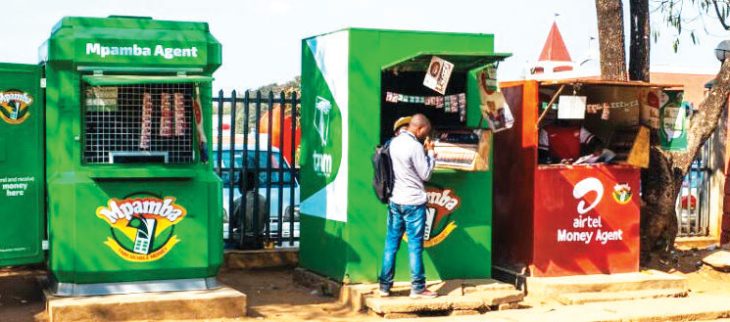
K38tn Mobile Money Transactions – Transforming Malawi’s Economic Landscape
Key Business Points
– Mobile money transactions in Malawi nearly doubled in 2025, reaching K37.9 trillion, signaling strong momentum in financial inclusion and digital adoption.
– Most transactions are still basic services like airtime top-ups and cash deposits/withdrawals, with merchant payments remaining under 8% of usage.
– Nearly 20 million subscriptions now exist, though only about half are active monthly, highlighting room for further engagement and digital financial integration.
Mobile money services in Malawi recorded significant growth in 2025, with the value of transactions nearly doubling to K37.9 trillion from K19.5 trillion the previous year, according to the 2025 National Payments System Report published by the Reserve Bank of Malawi. The number of transactions also climbed by 31.6 percent to 2.4 billion, up from 1.8 billion in 2024, reflecting broader adoption of mobile money platforms across the country. Each transaction averaged K15,668, up from K10,721 in 2023.
Despite these gains, the services most used remain centered on basic transfers and airtime. Airtime top-ups accounted for 42 percent of all transactions, while cash-in and cash-out services made up another 33.1 percent. Merchant payments, which represent a critical step toward a cashless economy, contributed only 7.7 percent, pointing to continued reliance on cash for everyday commercial exchanges. This dominance of cash-replacement use cases presents a barrier to fully realizing Malawi’s digital economy ambitions.
The central bank also highlights a growth in mobile money subscriptions, which rose by 23.3 percent to 19.9 million. However, the usage gap is significant: only 44.8 percent of enrolled users—about 8.9 million—were active in any 30-day period, and just over half had transacted within 90 days. This suggests that while registrations are high, consistent, active engagement remains limited.
A notable gender disparity persists, with male subscribers forming 54.9 percent of the user base, though the gap has narrowed to 9.7 percentage points in 2025 from 16.9 percentage points previously. Financial inclusion advocates credit the reduction to improved financial literacy programs and targeted outreach aimed at women.
Malawi Economic Justice Network Executive Director Bertha Phiri praised the expansion of mobile money, noting its critical role in bringing basic financial services, such as electronic transport and rural banking access, to populations that traditional banking institutions might overlook. “It means more people have access to mobile money services. At large, they have access to financial services…” Phiri commented, emphasizing its value in non-urban markets.
Policy changes in 2025, including the raising of holding limits from K1 million to K5 million and transaction caps from K750,000 to K1 million, are expected to facilitate higher-value transfers in 2026. With these adjustments and continued digitalization efforts, Malawi’s mobile money ecosystem could further expand its role as a cornerstone of economic activity—if merchants and consumers shift more behavior toward cashless, higher-value interactions.
What are your thoughts on this business development? Share your insights and remember to follow us on Facebook and Twitter for the latest Malawi business news and opportunities. Visit us daily for comprehensive coverage of Malawi’s business landscape.

- K38tn Mobile Money Transactions – Transforming Malawi’s Economic Landscape - March 30, 2026
- Discover Lucrative Opportunity: Lake Chilwa Basin Yields Strategic Metal for Malawi’s Mining and Investment Boom - March 29, 2026
- TNM Pumps $30m Into Cutting Edge Network Upgrade to Accelerate Malawi’s Digital Economy - March 29, 2026