
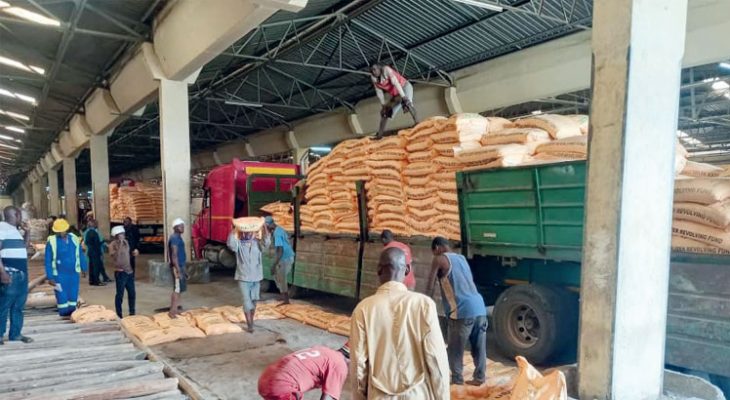
Malawi forex crunch threatens fertilizer price relief, raising business costs
Key Business Points
• Forex scarcity and import financing hurdles are blocking Malawi’s farmers from lower fertiliser prices, even as global urea costs dip.
• Malawi’s landlocked logistics and heavy import dependence mean domestic fertiliser prices are set before goods even reach local markets, making them highly volatile.
• Prioritising foreign exchange access for ag inputs and embracing balanced fertiliser use is essential to safeguard maize yields, food security and long term enterprise profitability.
The Reserve Bank of Malawi’s August 2026 Market Intelligence Report shows international urea prices declined 2.5 percent to $390 (about K683 000) per metric tonne from $400 (about K700 000) in July, yet Malawi’s farmers may not feel the relief ahead of the 2026/27 agricultural season. Diammonium phosphate (DAP) prices edged up 1.6 percent to $793.50 per tonne from $781.30, illustrating mixed movements across the global fertiliser landscape. In Lilongwe, agricultural economist Innocent Pangapanga-Phiri from Lilongwe University of Agriculture and Natural Resources warned that lower international prices have yet to translate into reduced retail costs for smallholder growers. He explained that importers must purchase fertiliser in United States dollars, and limited foreign exchange availability often forces them to pay higher financing costs or obtain currency at less favourable rates. Consequently, the effective exchange rate rather than the international urea price alone strongly influences local retail pricing, he noted. Malawi’s landlocked geography compounds the challenge, with fertiliser typically routed through regional ports such as Beira or Nacala before reaching domestic markets, adding transport and handling expenses. Pangapanga-Phiri warned that reduced fertiliser application could lower maize yields, tighten food supplies and intensify inflationary pressures across the economy. He called for priority foreign exchange access for agricultural inputs and wider adoption of integrated soil fertility management as a way to protect both harvests and business viability. Pangapanga-Phiri also cautioned that substituting cheaper nitrogen sources such as urea for more balanced fertiliser programmes can worsen nutrient deficiencies over time, undermining long term productivity. Research fellow Christone Nyondo of the Mwapata Institute emphasised Malawi’s heavy reliance on imported fertiliser compounds, noting that 90 percent of zitanzi cha bisolo are determined before consignments even cross into Malawi. Nyondo explained that the 90 percent figure stems from costs associated with fertiliser logistics, including foreign exchange, transport, warehousing, handling and other operational expenses. He warned that fertiliser shortages could undermine agricultural production and broader economic growth, given Malawi’s dependency on chemical inputs for staple crop farming. The economist’s concerns unfold against a backdrop of international commodity market volatility, the World Bank’s October 2026 Africa Economic Update reports. That analysis shows global fertiliser prices increased by approximately 45 percent between February and April, alongside a nearly 70 percent rise in Brent crude oil prices. The update identifies Malawi among countries particularly vulnerable to international energy-price shocks, highlighting a combination of elevated exposure and weak resilience. ‘This combination of elevated exposure and weak resilience was particularly pronounced in Burundi, Malawi, Senegal, South Sudan and Sudan,’ the report reads. Questionnaires seeking information on fertiliser availability, procurement costs and domestic prices were sent to the Ministry of Agriculture and industry stakeholders, yet no responses had been received by publication time. Consequently, current domestic retail price movements and fertiliser stock levels for the coming season cannot be independently established at this stage. Businesses should monitor forex and pre-order fertiliser early for season.
What are your thoughts on this business development? Share your insights and remember to follow us on Facebook and Twitter for the latest Malawi business news and opportunities. Visit us daily for comprehensive coverage of Malawi’s business landscape.

- Malawi forex crunch threatens fertilizer price relief, raising business costs - October 16, 2026
- Mera Directs Donations to Mothers, Reinforcing Corporate Role in Malawi’s Economy - October 15, 2026
- Malawi’s Widening Trade Gap: Business Impact & Strategic Response - October 15, 2026