
Revitalizing Malawi’s Economy: Driving Growth Through Strategic Reforms
Key Business Points
- Economic recovery: Malawi’s long-term development partners emphasize the need for the government to implement reforms beyond the next political cycle to ensure sustained growth and poverty reduction.
- Fiscal financing gap: The country faces a severe and persistent fiscal financing gap, driven by a mismatch between development needs and limited annual revenues, highlighting the need for domestic resource mobilization and public expenditure efficiency.
- Private sector engagement: Development partners propose an inclusive process to engage the private sector, civil society, and citizens in implementing the economic reform and recovery plan to build broad-based support and reduce the risk of policy reversals.
Malawi’s economic recovery is contingent upon the government’s ability to push through reforms, according to a joint Policy Priorities for Malawi’s Recovery Note by the United Nations, African Development Bank (AfDB), and the World Bank. The note emphasizes that a new International Monetary Fund (IMF) programme can only help anchor these reforms, which have often stalled in the past, weakening prospects for sustained growth, economic transformation, and poverty reduction. Kusintha kwa tsikolo, or economic transformation, is crucial for Malawi’s development, and the government must prioritize mkandawire, or planning, to achieve this goal.
The country is currently facing a severe and persistent fiscal financing gap, driven by a growing mismatch between its substantial development needs and limited annual revenues, estimated at just K4 trillion. This amount is insufficient to meet the country’s development needs, including educating 4.5 million children, implementing 234 public investment projects, and operating over 60 State-owned enterprises and statutory corporations. Umodzi, or unity, among stakeholders is essential to address this challenge.
The development partners propose policy reform priorities for the first three months and first 18 months, including restoring macroeconomic stability, enabling a dynamic private sector, building human capital and resilience, and strengthening critical infrastructure for growth. Kugwiritsa ntchito, or utilization, of resources efficiently is vital to achieve these priorities. Malawi is experiencing its most severe foreign-exchange and balance-of-payment crises since independence, with gross reserves having declined dramatically since 2019 and net reserves in negative at $660 million.
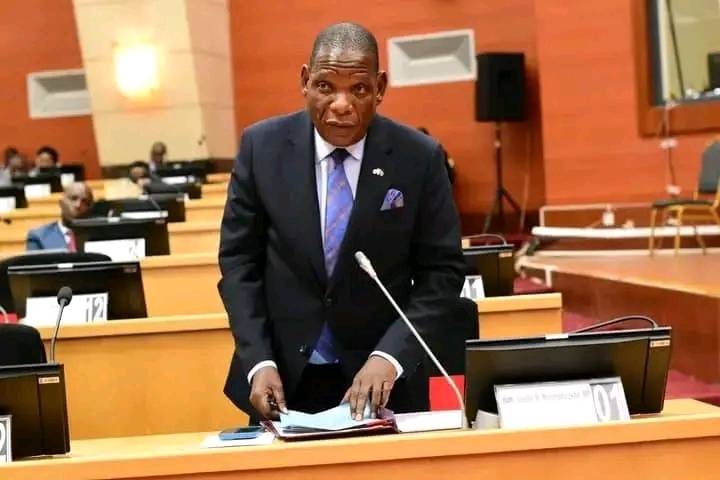
The Minister of Finance, Economic Planning and Decentralisation, Joseph Mwanamvekha, said the government has set a clear policy direction for the National Economic Recovery Plan, aimed at stabilizing the economy, restoring confidence, and accelerating inclusive and sustainable growth. The government is prioritizing kutengera mapato, or domestic resource mobilization, to reduce reliance on external financing, improving public expenditure efficiency and value for money, and advancing debt restructuring efforts to restore debt sustainability. Kuziba, or stability, is crucial for economic growth, and the government must work towards achieving this goal.
In his New Year Address, President Peter Mutharika said his administration is on track with the economic recovery plan, as the economy is steadily recovering from years of hardships while actively laying groundwork in other sectors. The government’s efforts to kuletsa, or facilitate, economic growth and development are underway, and the private sector must kujitoleza, or participate, in this process to ensure its success.
What are your thoughts on this business development? Share your insights and remember to follow us on Facebook and Twitter for the latest Malawi business news and opportunities. Visit us daily for comprehensive coverage of Malawi’s business landscape.

- Illovo Urges Forex Reforms to Fuel Malawi’s Economic Growth - February 28, 2026
- Lotus Saves K25bn with Landmark Grid Connection Deal - February 27, 2026
- A Thunderclap For Lazy Mermaid.[ It’s mostly here to take advantage of my mind’s own ability to create sensible sounding sentences in the gaps between the readable content, without paying attention to the fact that these “understandable” gaps don’t always make much sense. I think that’s part of the reason why the sentence generation is so hard — we should probably say “Generating a randomly selected, sensical English sentence” rather than “Creating a high fidelity generated random English sentence”In the same spirit, using random characters seems to make the output much more legible and has a similar effect to adding noise and jitter to random numbers.In fact, I am now considering introducing randomness into programs as a general way to create “artificial” grammatical forms and sentences. This even helps with “breadth” of comprehension of the meaning of things, which would otherwise depend entirely on the meaning of a particular sentence generator.Update 7th September 2015: I’m now using an algorithm similar to the one I originally provided in my first sentence in this post ] - February 27, 2026