
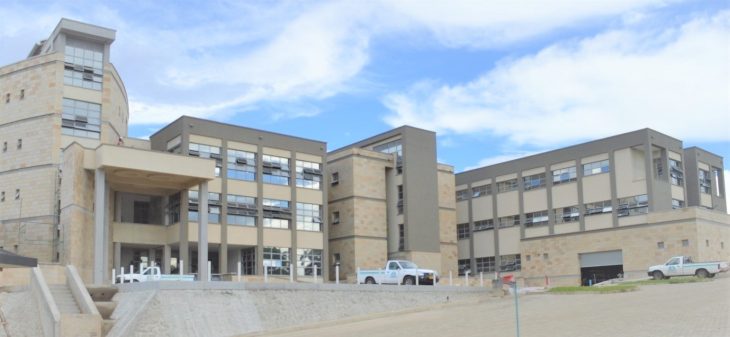
Expanding Opportunities: MBS Enhances Accreditation to Fuel Malawi’s Economic Growth
Key Business Points
- Malawi Bureau of Standards (MBS) is expanding its accreditation scope to increase the global acceptance of Malawian products, supporting the country’s export drive.
- MBS is targeting key value chains such as macadamia, tea, and honey for export, and is working to build confidence in its testing and certification services.
- By utilizing MBS’s services, exporters can save time and money, with testing costs ranging from K10,000 to K250,000 per sample, compared to $300 (K525,000) abroad.
The Malawi Bureau of Standards (MBS) is taking steps to increase the global acceptance of Malawian products, which will support the country’s export drive. According to MBS acting director general Thomas Senganimalunje, some exporters are still sending their goods abroad for testing, despite the bureau’s capacity to offer the same services at reasonable costs. Senganimalunje emphasized that MBS is "up to the task" to support the export drive, and is targeting key value chains such as macadamia, tea, and honey. He noted that building confidence in MBS’s testing and certification services is crucial, and that the bureau is working to achieve this goal.
Minister of Industrialisation, Business, Trade and Tourism George Partridge highlighted the importance of MBS in facilitating industrialisation and export drive, citing the bureau’s role in setting quality assurance standards and facilitating trade through certification. With the capacity and modern equipment, including a $1 million Liquidity Chromatograph Mass Spectrometer donated by the United Nations World Food Programme (WFP), the government is banking on MBS to deliver on their mandate.
MBS data shows that sending samples abroad for certification can cost an average of $300 (K525,000) per sample, with a turnaround time of 17 days, while MBS can provide the same service for between K10,000 and K250,000 per sample, with a downtime of 10 days. Despite testing an average of 70,000 samples annually, MBS is still operating below its capacity. The use of the Liquidity Chromatograph Mass Spectrometer is expected to unlock structured markets and elevate Malawi’s position in regional and global trade, particularly for high-value crops such as sesame, cowpeas, and sorghum.
In the sesame market, Malawi is failing to meet the demand in Japan, exporting only 3,000 metric tonnes per year, despite having the potential to supply 200,000 metric tonnes. MBS has plans to open laboratories in Mzuzu and Lilongwe to bring its services closer to the people, which will ndege za zifukwa (increase accessibility) and kupanga bizinesi (facilitate business) for exporters. With these developments, Malawian businesses can look forward to increased export opportunities and kuondoleza kwa zithandizo (access to support) from MBS.
What are your thoughts on this business development? Share your insights and remember to follow us on Facebook and Twitter for the latest Malawi business news and opportunities. Visit us daily for comprehensive coverage of Malawi’s business landscape.

- Government Courts Local Investors on $600 Million Industrial Parks Project - October 8, 2026
- Malawi Business Alert: Price Pressures Signal Margin Squeeze Across Sectors - October 8, 2026
- User Safety: safe - October 7, 2026