
Govt unveils budget shifts to fuel investment growth
Key Business Points
- Malawi’s government is prioritizing fiscal consolidation and export revival, but private sector warns policy distortions and foreign exchange shortages are suppressing growth.
- Sugar exporter Illovo reports exports have plummeted from 120,000 metric tonnes in 2021 to just 12,000 last year, highlighting structural trade and forex bottlenecks.
- Business leaders are calling for predictable policies, streamlined procedures, and accessible, patient capital to enable growth and attract investment.
Malawi’s economic reform agenda has reached a critical moment, with the government committing to swift fiscal tightening and measures to revive exports, even as business leaders warn that deep-rooted policy distortions, foreign exchange shortages, and operational bottlenecks continue to hamper growth.
The 22nd Malawi Economic Monitor, produced by the World Bank, paints a sobering picture: double-digit fiscal deficits averaging 10.9 percent of GDP over the past three years, public debt nearing 90 percent of GDP, inflation at 24.9 percent, and export levels at their lowest in two decades. Domestic borrowing at rates ranging from 16 to 35 percent has further squeezed liquidity, while interest payments now claim more than 40 percent of domestic revenues, crowding out essential social spending and private sector credit.
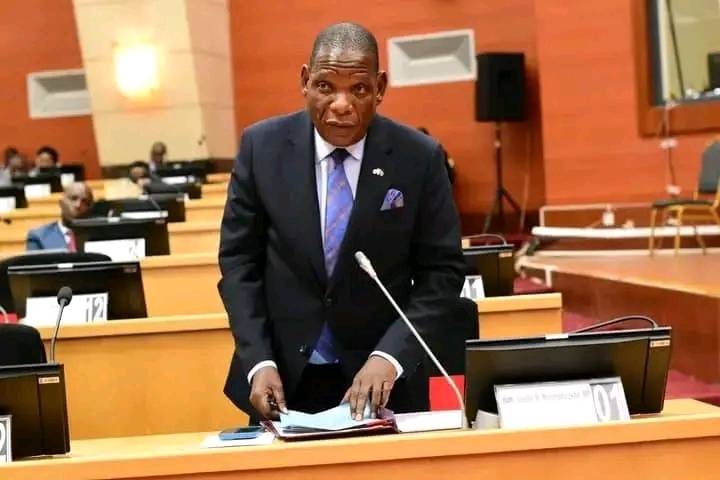
Minister of Finance, Economic Planning and Decentralisation Joseph Mwanamvekha acknowledged the urgency during a recent interview, describing fiscal consolidation as "not merely desirable, but an essential step toward restoring macroeconomic stability and safeguarding sustainable growth."
While the Reserve Bank of Malawi reports that inflation is moderating—largely due to emergency maize imports—Deputy Governor for Operations Kisu Simwaka stressed that this is only a temporary fix. "Importing food is a response and an emergency," he said, "but we need to address the fundamental issues related to food security."
Despite broader macro stabilization efforts, exporters say structural challenges persist. Ronald Ngwira, managing director of Illovo Sugar (Malawi) plc, revealed that the company’s export volumes have contracted sharply, from approximately 120,000 metric tonnes in 2021 to just 12,000 last year. Illovo requires around $50 million (about K87 billion) annually to import essential inputs but has struggled to secure foreign exchange.
The World Bank report identifies exchange-rate distortions and trade barriers as the main blockages. Senior Economist Jakob Engel warned that structural weaknesses, macroeconomic instability, and restrictive trade policies form a self-reinforcing cycle that deters formal exports. He urged for simplified licensing, removal of non-tariff barriers, and a move toward a unified, market-determined exchange rate, underpinned by disciplined fiscal and monetary policy.
Malawi Confederation of Chambers of Commerce and Industry president Wisely Phiri argued that the speed and consistency of reforms will determine whether they stimulate investment. He cited operational friction—such as multiple roadblocks and bureaucratic layers—that undermines formal trade, despite the existence of one-stop border posts on paper.
Agricultural entrepreneur Ngabaghila Chatata of Thanthwe Farms emphasized the need for "patient capital" to support long-term investments in sectors with export potential, particularly agriculture. "That kind of financing is what would build Malawi," she said.
World Bank Country Manager Firas Raad warned that decisive implementation cannot be delayed. For Malawi’s business community, the message is clear: fiscal prudence and consistent, transparent policy reform must go hand in hand to unlock the private sector’s potential, restore investor confidence, and position the economy for sustainable growth.
What are your thoughts on this business development? Share your insights and remember to follow us on Facebook and Twitter for the latest Malawi business news and opportunities. Visit us daily for comprehensive coverage of Malawi’s business landscape.

- Lotus Saves K25bn with Landmark Grid Connection Deal - February 27, 2026
- A Thunderclap For Lazy Mermaid.[ It’s mostly here to take advantage of my mind’s own ability to create sensible sounding sentences in the gaps between the readable content, without paying attention to the fact that these “understandable” gaps don’t always make much sense. I think that’s part of the reason why the sentence generation is so hard — we should probably say “Generating a randomly selected, sensical English sentence” rather than “Creating a high fidelity generated random English sentence”In the same spirit, using random characters seems to make the output much more legible and has a similar effect to adding noise and jitter to random numbers.In fact, I am now considering introducing randomness into programs as a general way to create “artificial” grammatical forms and sentences. This even helps with “breadth” of comprehension of the meaning of things, which would otherwise depend entirely on the meaning of a particular sentence generator.Update 7th September 2015: I’m now using an algorithm similar to the one I originally provided in my first sentence in this post ] - February 27, 2026
- Govt unveils budget shifts to fuel investment growth - February 27, 2026