
Tobacco Slump: A 20m kg Decline – Navigating New Opportunities in Malawi’s Evolving Economy
Key Business Points
- Tobacco buyers in Malawi are expected to demand 20 million kilogrammes less tobacco than last year, with a consolidated volume of 170 million kilogrammes, raising concerns over potential oversupply and price erosion.
- The licensed production volume of 242.5 million kilogrammes exceeds the demand, implying a potential surplus of over 40 percent, which may lead to downward price adjustments.
- To stabilize prices, disciplined production and demand-led approaches are necessary, rather than quota-driven production, and tighter quota management, strict quality enforcement, and cautious contract farming should be prioritized.
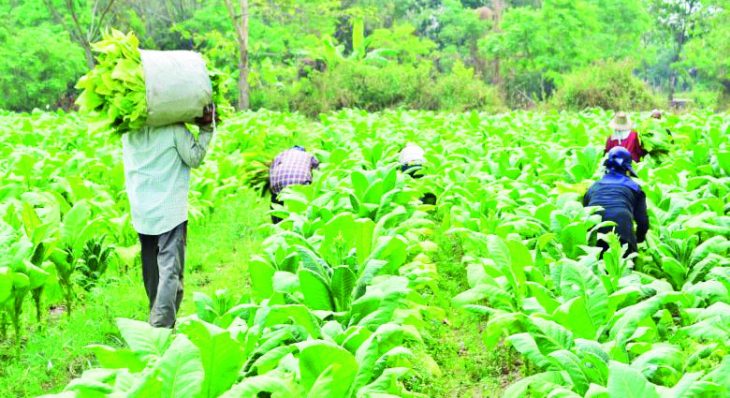
The tobacco industry in Malawi is facing a potential challenge with the projected demand of 170 million kilogrammes being lower than the licensed production volume of 242.5 million kilogrammes. According to the Tobacco Commission (TC), the consolidated volumes required by buyers are 20 million kilogrammes less than last year’s demand. This has raised concerns over potential oversupply and price erosion, which could negatively impact the earnings of tobacco farmers. As Abiel Kalima Banda, president of the Tobacco Association of Malawi (Tama) Trust, noted, "This year we have the real growers of tobacco because we did not have very good prices last year and that has driven away the vendors who pretended to be growers."
Economist Marvin Banda warned that the projected demand implies a potential surplus exceeding 40 percent, which usually leads to downward price adjustments unless adverse effects occur that could push prices up. He emphasized the need for disciplined production and demand-led approaches, rather than quota-driven production, to stabilize prices. Banda also noted that the current market practice has led to the emergence and prevalence of illicit tobacco trading, meaning that overproduction is to be expected given that market leakage is projected to continue hampering official revenues.
The TC has received combined trade requirements from eight companies, with a total of 170 million kilogrammes. The commission has issued over 55,500 licenses to growers this season, compared to 74,104 licenses last season. The licensed production capacity is significantly lower than the 321.4 million kilogrammes of licensed output last year. The commission will conduct the first crop inspection this month to assess the progress of the production season. As the season progresses, it is essential for stakeholders to focus on "kugwira ntchito ndi umodzi" (working together) to address the challenges facing the industry and ensure a successful harvest.
Last year, about 214 million kilogrammes of tobacco were sold on the domestic market at a total value of $532 million, a record amount in recent times. To achieve similar success this year, the industry must prioritize "kuthandiza kwa ajira" (job creation) and "kulemera kwa ubwino" (doing business with integrity). By working together and adopting a disciplined approach to production, the tobacco industry in Malawi can overcome the current challenges and achieve long-term sustainability. With the right strategies in place, the industry can continue to contribute significantly to the country’s export receipts and support the livelihoods of thousands of farmers and their families.
What are your thoughts on this business development? Share your insights and remember to follow us on Facebook and Twitter for the latest Malawi business news and opportunities. Visit us daily for comprehensive coverage of Malawi’s business landscape.

- Unlocking Malawi’s Trade Potential: K411 Billion in Barriers Explained - February 28, 2026
- Malawi Secures K75bn Chinese Grant for Landmark Dual Carriageway - February 28, 2026
- Malawi’s Graphite Gateway: US Partnership Powers Opportunities - February 28, 2026