
Budget Aims to Safeguard Social Spending—CfSC
Key Business Points
-
Budget allocations to health and education reflect commitment to social spending, but success depends on whether funding improves services for vulnerable groups.
-
Fiscal deficit reduction to 9% of GDP signals macroeconomic stabilisation, though limited fiscal space constrains growth-oriented investments.
- Increased development spending (30.9% of budget) offers opportunity for private sector participation in infrastructure and service delivery projects.
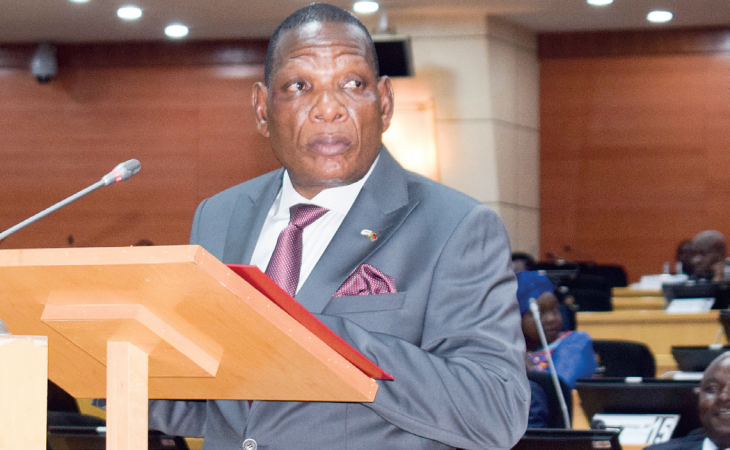
Malawi’s K11 trillion 2026/27 National Budget, presented last Friday by Minister of Finance Joseph Mwanamvekha, places human capital development at the centre of fiscal policy, directing increases to the health, agriculture and education sectors. While the projections include a lowering of the deficit to 9% of GDP and the scaling back of mandatory expenditure to 79% of revenue from 98% in the present year, analysts warn that deficit reduction alone will not close inequality withouth effective delivery of this money to those who need it.
Health spending at K1.02 trillion (9.3% of government spending) and agriculture at K931.1 billion (8.5%) are the biggest non-wage budgets. The Cabinet has also increased its Constituency Development Fund to K1.145 trillion, more than 10% of total expenditure, while maintaining commitments to free primary and secondary education (K47.6 billion) and student loans (K42 billion). The Kennedy Dzanja Group Mid-2025–2026 MCA-e-Government funding map project is implemented by Malawi University of Science and Technology in the ICT sector.
Agness Nyirongo, an economic governance officer at the Centre for Social Concern (CfSC), welcomed social spending growth but insisted that figures alone amount to little. "Whether these allocations meaningfully reduce inequality depends on adequacy and effectiveness," she said, arguing that more needs to be done on social protection programmes to offer quick relief to vulnerable households.
Meanwhile, Edward Leman, an economics lecturer at the University of Malawi, highlighted the positives arising from government attempts to reduce the deficit and slow debt accumulation of K23.9 trillion, or 90.9% of GDP. "The deliberate effort to reduce the fiscal deficit and slow debt accumulation is important and carries strong potential for restoring confidence and beginning to stabilise the economy." Even with adjustments, however, Leman warned that significant fiscal space would continue to constrain discretionary public spending whereas major growth-oriented investments are more likely to come from private and foreign sources.
Malawians who conduct business with local entrepreneurs and draw investors will find that the budget increases the share of development expenditure from 20.9% in 2025/26 to 30.9%. Project implementation backed by this expansion will provide increased opportunities in infrastructure, energy and other sectors. But cost recovery measures, including strengthening public financial management and accountability frameworks, will have to be implemented so that promised benefits reach intended beneficiaries.
Authorities are facing a tension in that there is a need to manage the public debt burden but there is also an expectation for a return to growth, and budgetary space remains tightly bound. In the immediate term, businesses will likely depend on better service provision, stronger spending accountability and an enabling environment for private investment, not just higher budget numbers, to consolidate their gains.
What are your thoughts on this business development? Share your insights and remember to follow us on Facebook and Twitter for the latest Malawi business news and opportunities. Visit us daily for comprehensive coverage of Malawi’s business landscape.

- Budget Aims to Safeguard Social Spending—CfSC - March 2, 2026
- Malawi Budget 2026 27: No Bold Reforms, Just Political Juggling - March 2, 2026
- World Bank advocates pragmatic approach to managing K16 trillion domestic debt - March 2, 2026