
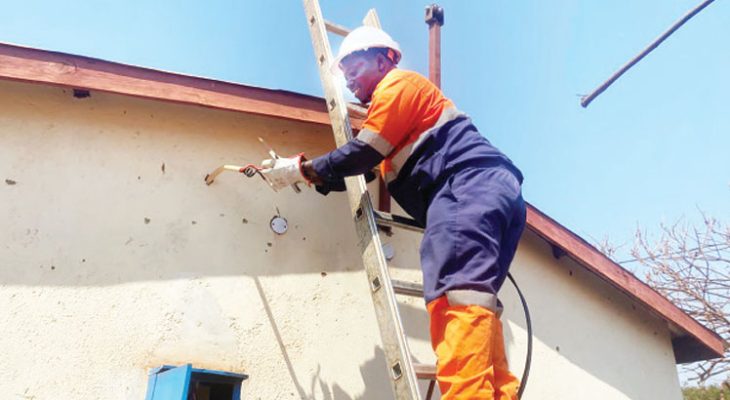
Energizing Rural Growth: Govt Initiative to Power Malawi’s Economic Expansion
Key Business Points
- Rural electrification is set to receive a significant boost in Malawi, with the government aiming to connect more households than ever before, presenting opportunities for businesses to tap into the growing demand for energy solutions.
- The Accelerating Sustainable and Clean Energy Access Transformation (Ascent) Project, funded by the World Bank, will connect 235,000 households to the grid and distribute 811,000 solar home systems, enhancing energy access and reliability in rural areas.
- Malawi requires $5.5 billion to increase electricity access from 25.9% to 70% by 2030, presenting investment opportunities for businesses and investors looking to contribute to the country’s energy sector growth.
The Malawi government is accelerating efforts to connect more households to the national grid, with a focus on rural electrification. The Malawi Rural Electrification Programme (Marep) has already completed 334 of 460 sites in Phase 9, with Phase 10 expected to add another 500 rural communities when it begins in the 2026/27 financial year. The Ascent Project aims to connect 235,000 households to the grid, distribute 811,000 solar home systems, electrify 1,000 schools and 280 health facilities, and support 150,000 households with clean cooking solutions. This project is expected to increase national electricity access to 50% by 2030.
According to the National Energy Compact for Malawi, only 25.9% of the population has access to electricity, with 11.3% connected through the national grid and 14.6% through off-grid solutions. The majority of urban households (56.5%) have electricity through the national grid, compared to only 3.8% of rural households. However, 15.9% of rural households rely on off-grid solutions, compared to 6.5% of urban households. To achieve the target of increasing electricity access to 70% by 2030, Malawi requires a significant investment of $5.5 billion.
Former Minister of Energy Grain Malunga believes that the targets are achievable if the government prioritizes the production sector by ensuring resources are available to the energy sector. He emphasized the need to "give the energy sector the needed resources to generate electricity and support manufacturing, mining, and agriculture sectors, which will generate foreign exchange". This highlights the importance of "kugwira ntchito" (creating jobs) and "kutengera malo" (developing the country) through investments in the energy sector. Malawi currently has a total installed capacity of 554MW, with 401.8MW from hydro power, 101MW from solar power, and 51.4MW from diesel-powered generators. As the country moves forward with its rural electrification efforts, businesses and investors can expect new opportunities to emerge in the energy sector, driving growth and development in Malawi.
What are your thoughts on this business development? Share your insights and remember to follow us on Facebook and Twitter for the latest Malawi business news and opportunities. Visit us daily for comprehensive coverage of Malawi’s business landscape.

- Speaker Suleman Aligns Legal Reforms to Drive Business Growth in Malawi - March 15, 2026
- Tobacco Farmers Drive New Economic Growth Opportunities - March 15, 2026
- Malawi Joins Regional Pact to Slash Transport Expenses - March 15, 2026