
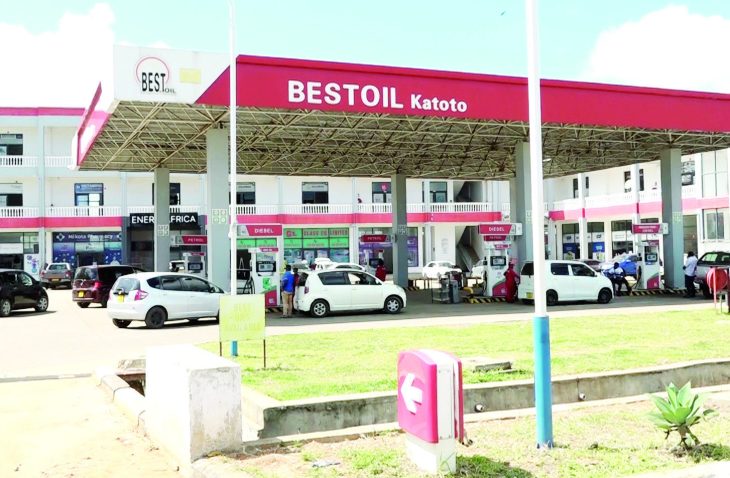
Fuel Price Shock: Navigating the Ripple Effect on Malawi’s Economy and Business Landscape
Key Business Points
- The Malawi Energy Regulatory Authority (Mera) has increased fuel prices by 41%, with petrol now selling at K4,965 per litre and diesel at K4,945 per litre, which is expected to have a significant impact on business operations and consumer spending.
- The price hike is likely to lead to increases in household commodities, such as sugar and soap, as transport costs rise, affecting small and medium-sized enterprises that rely on these products.
- Economists and business leaders are calling for a gradual and predictable fuel price adjustment mechanism to avoid sudden shocks to households and businesses, and to mitigate the impact on economic stability and social welfare.
The recent fuel price increase has sent shockwaves through Malawi’s economy, with motorists and consumers expressing concern over the 41% hike. The Malawi Energy Regulatory Authority (Mera) adjusted petrol prices from K3,499 to K4,965 per litre, and diesel from K3,500 to K4,945 per litre, citing the need to sustain importation of the products. The decision follows the abandonment of the Automatic Pricing Mechanism (APM) for a fixed pricing regime, which proved commercially unsustainable.
Motorists and consumers are worried that the price jump will lead to increases in household commodities, such as sugar and soap, as transport costs rise. "Zinthu zitakwana kwambiri" (things will be very expensive), said Victor Kimberly Sangaloti, a Blantyre-based motorist. Another motorist, Aphia Lionde, suggested that preparing consumers for an imminent fuel price rise and gradual implementation of 10% monthly would have been ideal.
Economist Mervin Banda noted that although the price hike was anticipated, the government should have considered spreading the increase over time. Banda warned that this would trigger non-food inflation to start elevating at a time food inflation was slowing down. "Kusintha kwa manja" (price adjustment) should be done gradually, he said.
The Economics Association of Malawi President Bertha Chikadza called on government to adopt a gradual and predictable fuel price adjustment mechanism to avoid sudden shocks to households and businesses. Chikadza warned that without adequate cushioning and complementary policies, fuel price hikes risk doing more harm than good to economic stability and social welfare. "Tikwanitsa kugwiritsa ntchito mphato wa kujambula za manja" (we need to implement a gradual price adjustment mechanism), she said.
As Malawi’s business community navigates this challenging economic landscape, it is essential to monitor market trends and adjust business strategies accordingly. "Kugwiritsa ntchito mawu akulu akulu" (using clever business tactics) will be crucial in mitigating the impact of the fuel price hike. By adopting a proactive approach, businesses can minimize the effects of the price increase and capitalize on new opportunities in the market.
What are your thoughts on this business development? Share your insights and remember to follow us on Facebook and Twitter for the latest Malawi business news and opportunities. Visit us daily for comprehensive coverage of Malawi’s business landscape.

- Boosting Energy Investment: Malawi Commission Seeks K2bn for Critical Funding - March 12, 2026
- Only 10.3% Have Permanent Jobs – How Malawi’s Workforce Could Transform Your Business - March 12, 2026
- Mining Giants Under Fire: What the Latest Scrutiny Means for Malawi’s Business Landscape - March 12, 2026