
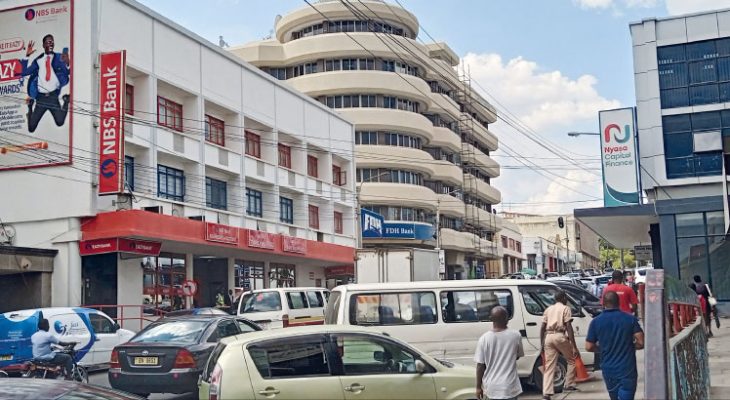
Malawi’s Banking Sector Hits Historic High: K630bn Profit Fuels Economic Growth
Key Business Points
- Malawi’s banking sector is expected to break records with a projected K630 billion in profits in 2025, driven by robust loan growth, high interest rates, and lucrative lending to the government.
- The four listed banks, including National Bank of Malawi, FDH Bank, NBS Bank, and Standard Bank, are expected to see significant increases in profits, with some projecting jumps of over 100% from the previous year, showcasing improved asset quality and satisfactory earnings.
- Experts caution that the sector’s reliance on government lending may hinder private sector growth and economic development, highlighting the need for banks to focus on lending to the real sector to enhance wealth creation and economic growth.
Malawi’s banking sector is poised for a record-breaking year, with four listed banks projected to rake in a staggering K630 billion in profits in 2025. This represents an 88% jump from K335 billion in 2024, driven by robust loan growth, high interest rates, and lucrative lending to the government. The four banks, including National Bank of Malawi, FDH Bank, NBS Bank, and Standard Bank, have published trading statements showing significant increases in profits. For instance, National Bank of Malawi expects a profit of up to K211 billion, while FDH Bank projects its profit to rise to K152 billion.
The Reserve Bank of Malawi’s Financial Stability Report for October 2025 indicates that the banks’ balance sheets remain resilient, with adequate capital, satisfactory earnings, sufficient liquidity, improved asset quality, and growth. The report notes that the non-performing loans ratio dropped to 5.1%, reducing the sector’s exposure to credit risk. Total industry assets increased by 15.6% to K8.5 trillion, demonstrating the sector’s stability and growth.
Financial experts attribute the banks’ continued sound performance to their business with the government, but also note that listed companies have generally performed well. "Banks have over the past years performed exceptionally well above inflation," said financial expert and stock market investor Benedict Nkhoma. "Banks have invested a lot in government borrowing in this high interest rate environment." However, experts also caution that the sector’s reliance on government lending may hinder private sector growth and economic development.
The commercial banks’ extension of credit to the private sector improved to 48.9% in the third quarter of 2025, up from 26.3% in the second quarter, according to the Reserve Bank of Malawi. This increase in private sector lending is a positive development, as it can lead to job creation, economic growth, and poverty reduction. As Nico Capital Limited chief executive officer Misheck Esau noted, "there is need to reverse the trend where most banks’ profits should come from private sector lending and in turn the private sector should invest in productive sectors to enhance economic development and wealth creation." This shift in focus can lead to mwambo wa chipongwe (sustainable development) and kulima kwa ajira (job creation) in the country.
Overall, Malawi’s banking sector is expected to continue its strong performance, driven by robust loan growth, high interest rates, and lucrative lending to the government. However, experts caution that the sector must focus on lending to the real sector to enhance wealth creation and economic growth, leading to tsogolo lathu la chipongwe (a sustainable future) for Malawi.
What are your thoughts on this business development? Share your insights and remember to follow us on Facebook and Twitter for the latest Malawi business news and opportunities. Visit us daily for comprehensive coverage of Malawi’s business landscape.
