
Malawi’s Debt Burden: A Heavy Toll on Economic Growth and Business Prosperity
Key Business Points
- Malawi’s debt servicing is consuming over half of its domestic revenue, limiting fiscal space for growth and development, according to the World Bank’s Public Finance Review 2025.
- The country’s expenditure structure has become increasingly rigid, with a rising share of the budget being allocated to the wage bill, allowances, and poorly prioritized projects.
- Bold reforms are necessary to restore confidence and unlock private investment, including fiscal consolidation, stronger governance, and better prioritization of spending, as emphasized by the World Bank and local experts.
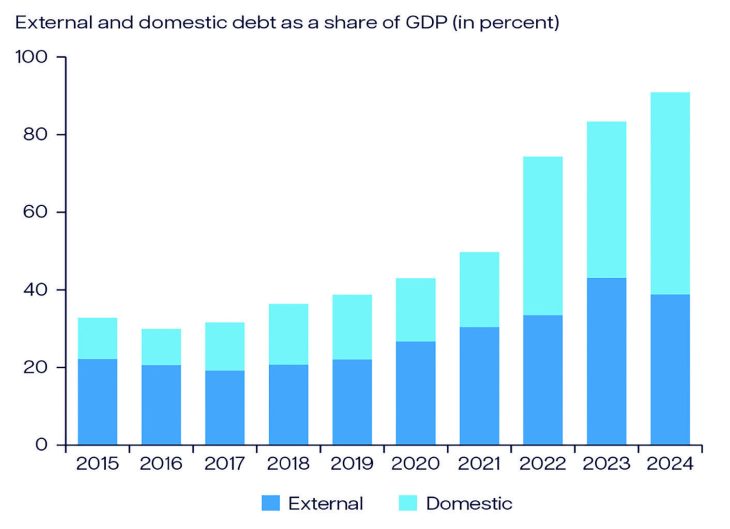
The World Bank’s Public Finance Review 2025, titled ‘Restoring Stability, Rebuilding Trust’, has highlighted the critical juncture at which Malawi finds itself, with a persistent fiscal deficit, unsustainable debt, and low growth. The report notes that debt service is crowding out essential social and infrastructure spending, leaving little room for investment in key sectors. This is a major concern for malo a malo (small and medium-sized enterprises) and biashara (businesses) in Malawi, as it limits access to credit and hinders economic growth.
The World Bank Country Manager, Firas Raad, has urged the authorities to take decisive action to address the issue, emphasizing the need to tighten revenue and expenditure controls to restore macroeconomic stability. This includes addressing exchange-rate distortions and implicit subsidies that are draining public finances, as well as quasi-fiscal activities in public corporations that are worsening the crisis.
The Economics Association of Malawi (Ecama) President, Bertha Chikadza, has also warned that the economic crisis is deepening and requires urgent corrective measures. The recent Mid-Year Budget Statement presented by Finance Minister Joseph Mwanamvekha acknowledged the issues of widening deficits and revenue shortfalls, which forced the government to revise the budget upwards by K512.6 billion.
The fiscal squeeze facing Malawi threatens to affect the attainment of the country’s long-term development goals under the Malawi 2063 vision. To achieve these goals, it is essential for the government to implement bold reforms that prioritize fiscal consolidation, stronger governance, and better prioritization of spending. This will help to restore confidence and unlock private investment, creating opportunities for biashara and malo a malo to grow and thrive. By taking decisive action, Malawi can overcome its current economic challenges and achieve sustainable economic growth and development.
What are your thoughts on this business development? Share your insights and remember to follow us on Facebook and Twitter for the latest Malawi business news and opportunities. Visit us daily for comprehensive coverage of Malawi’s business landscape.

- Malawi’s Small Businesses Battle Persistent Power Cuts – Nation Online - October 8, 2026
- Malawi’s external commercial debt overhaul paves way for business growth - October 8, 2026
- Malawi Stock Exchange Plunges K1.3 Trillion in Q3 as Bear Market Intensifies - October 8, 2026