
Reshaping Malawi’s Financial Landscape: Navigating Debt Relief for Economic Revival
Key Business Points
- Debt restructuring efforts will target inflated projects and dollar-denominated promissory notes, with the government applying haircuts to reduce the amount owed to creditors.
- The government will work with creditors on a case-by-case basis to determine the size of the haircut, with the goal of minimizing the impact on the economy and stakeholders.
- Domestic debt restructuring must be combined with stronger fiscal discipline, improved revenue performance, and broader economic reforms to address Malawi’s unsustainable debt problems, as emphasized by Economics Association of Malawi President Bertha Bangara Chikadza, who notes that "maturity extension ndi chifukwa cha mphamvu" (maturity extension is a strong solution).
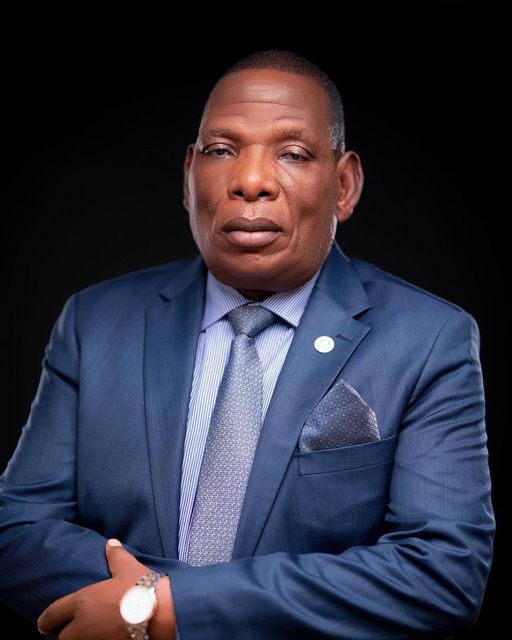
Finance Minister Joseph Mwanamvekha has announced that the government will apply haircuts on domestic debt as part of its debt restructuring efforts. This move aims to address the huge arrears accumulated over the past five years, largely due to inflated projects and dollar-denominated promissory notes. Mwanamvekha explained that a haircut in debt restructuring means creditors agree to accept less than the full amount owed, with the size of the haircut depending on individual circumstances. For instance, road projects that started with initial costs of K50 billion now cost around K130 billion, and promissory notes in United States dollars are being offered at local interest rates of 12 percent to 18 percent, which is not in line with international standards such as LIBOR (London Interbank Offered Rate) or SOFR (Secured Overnight Financing Rate).
The government’s decision to restructure its domestic debt comes as Malawi’s public debt stands at K22.4 trillion, with 65 percent of it being domestic debt. Economic experts have advised the government that extending debt maturities offers the most practical option for easing fiscal pressure. According to Chikadza, "kuzenga matenda a nkhondo" (extending debt maturities) can alleviate immediate budget pressures and reduce rollover risk without destabilizing the financial system. Economist Marvin Banda notes that the effectiveness of any restructuring framework will depend on key variables, including debt size and structure, maturity profile, coupon rates, and present value considerations.
While domestic debt restructuring is a necessary step, experts emphasize that it must be combined with stronger fiscal discipline, improved revenue performance, and broader economic reforms to address Malawi’s unsustainable debt problems. As Mwanamvekha noted, the government will work with creditors to ensure that the restructuring process is done in a manner that minimizes the impact on the economy and stakeholders, including banks and capital owners. With the government’s commitment to debt restructuring and economic reform, Malawi’s business community can expect a more stable economic environment, which will boost investor confidence and support economic growth. As Chikadza puts it, "tithandize kuyesetsa mfundo wa chikwambo" (we need to work together to improve the economic framework).
What are your thoughts on this business development? Share your insights and remember to follow us on Facebook and Twitter for the latest Malawi business news and opportunities. Visit us daily for comprehensive coverage of Malawi’s business landscape.

- Malawi’s Tourism Boom: A K1 Trillion Opportunity for Business Growth! - March 4, 2026
- Bad Loans Fall: Positive Shift Signals Economic Recovery - March 3, 2026
- Bank Levy Deductions Spark Public Outcry and Economic Debate in Malawi - March 3, 2026