
Revitalizing Malawi’s Dairy Sector: Overcoming Obstacles to Fuel Business Growth
Key Business Points
- Milk supply challenges are hindering the growth of Malawi’s dairy industry, with high raw milk prices and limited local supply being major obstacles.
- Investment opportunities exist in the dairy sector, with a proposed private sector-led model aiming to address existing challenges through the establishment of a breeding centre, liquid nitrogen plant, and dairy processing centres, requiring a total investment of $11.2 million.
- Farm-gate prices need to be revised to ensure farmers can break even, with the current price of K725 to K900 per litre being below the production cost of around K890 per litre, affecting the livelihoods of dairy farmers and the overall competitiveness of the industry.
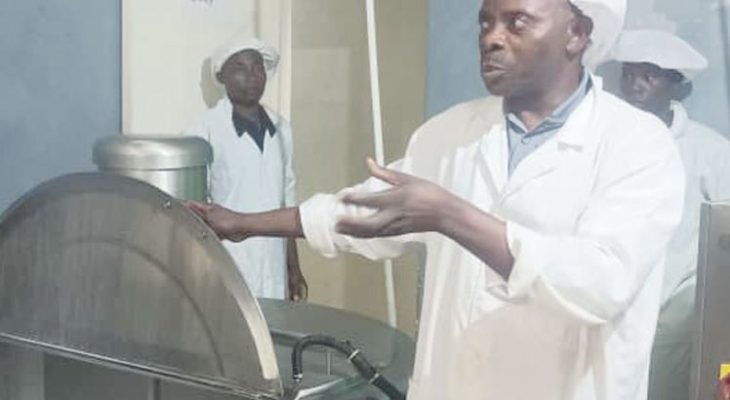
Malawi’s dairy industry is facing significant challenges that are preventing it from reaching its full potential. Despite the demand for dairy products, the industry is struggling to keep pace due to milk supply challenges. Udon Dairy, a dairy processing plant in Mzuzu, is only processing 5,000 litres of milk per month, compared to a potential demand of 20,000 litres. The firm’s factory manager, Hastings Thondoni, attributes this to the shortage of milk in the North, where the plant is located. He notes that the milk produced in the region is of high quality, but the quantity is insufficient to meet the demand.
The Malawi Milk Producers Association has also highlighted the challenges facing the dairy industry, including low and unprofitable farm-gate prices, inadequate budget support, scarcity of feed, weak extension services, and climate change-induced water shortages. The association’s national director, Herbert Chagona, notes that farmers are struggling to break even due to the low farm-gate prices, which are currently between K725 to K900 per litre, below the production cost of around K890 per litre. Chagona emphasizes the need for zinthu zofunika (things to be done) to address these challenges and improve the livelihoods of dairy farmers.
The dairy industry’s challenges have significant implications for Malawi’s economic growth and investment opportunities. The industry has the potential to contribute significantly to the country’s economy, but it requires kulima kwa ajira (farming for employment) and uziranji (entrepreneurship) to thrive. The proposed private sector-led model, which aims to establish a breeding centre, liquid nitrogen plant, and dairy processing centres, is a step in the right direction. However, it requires a total investment of $11.2 million, which is a significant amount for the industry.
To address the existing challenges, it is essential to pangana (come together) and find solutions that benefit all stakeholders. This includes revising farm-gate prices to ensure farmers can break even, improving extension services, and addressing the scarcity of feed and water. By working together, the dairy industry can overcome its challenges and contribute to Malawi’s economic growth and kuwongolera kwa ajira (job creation). The industry’s growth will also have a positive impact on malonda (farmers) and wafukara (the poor), who will benefit from increased incomes and employment opportunities.
What are your thoughts on this business development? Share your insights and remember to follow us on Facebook and Twitter for the latest Malawi business news and opportunities. Visit us daily for comprehensive coverage of Malawi’s business landscape.
