
Revitalizing Malawi’s Economy: Overcoming Forex Hurdles to Fuel Business Growth
Key Business Points
- Foreign exchange scarcity remains the biggest challenge for Malawi’s businesses, undermining production, investment, and confidence across the private sector, with 74.1% of firms ranking it among their top three challenges.
- Export diversification and value addition are crucial to strengthening foreign exchange generation and reducing dependence on primary commodities, with the Malawi Confederation of Chambers of Commerce and Industry (MCCCI) calling for policies to promote export-oriented investment.
- A predictable and investor-friendly business environment is necessary to attract domestic and foreign investment, with MCCCI stressing the need for reduced policy uncertainty, streamlined regulations, and improved access to foreign exchange, as well as a transparent, growth-oriented tax regime and faster contract enforcement to support small and medium-size enterprises.
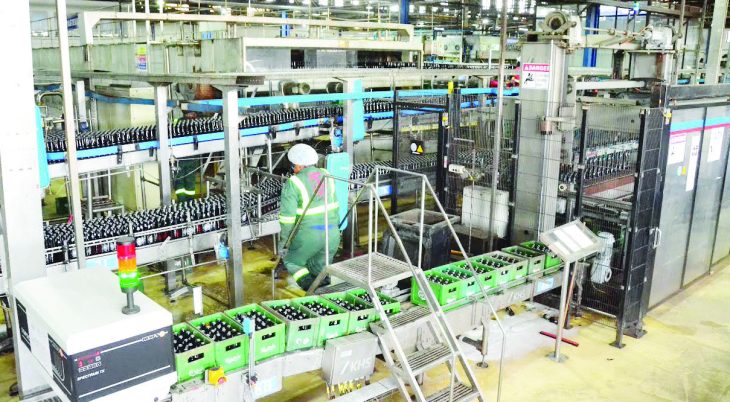
The Malawi Confederation of Chambers of Commerce and Industry (MCCCI) has released its 2025 Annual Economic Performance and Business Environment Review, highlighting the challenges faced by the country’s private sector. Foreign exchange scarcity was the biggest challenge, with limited access to foreign currency disrupting the importation of raw materials, spare parts, and intermediate inputs, forcing firms to operate below capacity. This has resulted in reduced production levels, with 51.9% of businesses operating at below 50% capacity and 37% operating between 50 and 75% capacity.
The report also notes that inflation and rising input costs were significant challenges, with 70.4% of firms citing inflation as a major concern and 55.6% affected by rising input costs. The manufacturing sector was particularly hard hit, with growth revised down to 1.8% from 2.4%, impacted by foreign exchange shortages. The wholesale and retail trade sector also underperformed, with growth of only 0.1%, pointing to subdued consumer demand.
To address these challenges, MCCCI recommends export diversification and value addition to strengthen foreign exchange generation and reduce dependence on primary commodities. The chamber also calls for policies to promote export-oriented investment, formal remittance inflows, and targeted import substitution, particularly in food, energy, and basic industrial inputs, to ease pressure on the balance of payment position. On the domestic front, MCCCI stresses the need for a predictable and investor-friendly business environment, with reduced policy uncertainty, streamlined regulations, and improved access to foreign exchange.
Economist Velli Nyirongo recommends a decisive shift in policy for 2026, from short-term stabilisation to structural reform, including reform of the foreign exchange regime to support productive sectors and improve the business environment. Nyirongo also calls for fiscal discipline, improved public financial management, and tackling corruption to restore credibility, as well as prioritising agriculture transformation, irrigation, and agro-processing to address hunger and boost exports. With real gross domestic product projected to grow by 2.7% in 2025, slightly below earlier forecasts, it is essential for businesses and policymakers to work together to address these challenges and create a more conducive business environment, or mazingira ya biashara iliyo na tija, to support economic growth and development in Malawi.
What are your thoughts on this business development? Share your insights and remember to follow us on Facebook and Twitter for the latest Malawi business news and opportunities. Visit us daily for comprehensive coverage of Malawi’s business landscape.

- New Visions for Progress: Charting Malawi’s Next Generation Economic Growth - February 13, 2026
- Kanyika Niobium Mine Breaks Ground: Fuelling Malawi’s Business Growth - February 12, 2026
- RBM Tightens Grip: K145bn Treasury Decision Impacts Malawi’s Economic Landscape - February 11, 2026