
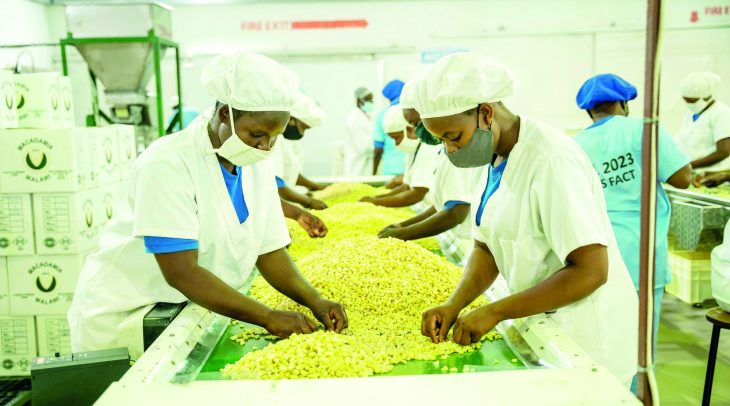
Revitalizing Malawi’s Private Sector: Igniting Growth and Opportunity
Key Business Points
- Private sector players in Malawi are calling for tangible support to boost their productivity and propel economic growth, citing policy inconsistencies and harsh forex regulations as major obstacles.
- The World Bank has warned that the country’s declining industrial output could deepen Malawi’s economic crisis if left unchecked, emphasizing the need for fiscal consolidation and optimizing revenue collections.
- To achieve a credible and sustainable economic recovery, the government must work closely with the private sector, addressing constraints and implementing reforms to unlock potential industries and attract investment.
Malawi’s private sector is expressing concerns over the lack of support from the government to stimulate their growth and productivity. According to Daisy Kambalame, CEO of the Malawi Confederation of Chambers of Commerce and Industry (MCCCI), the authorities have not done enough to address the constraints facing the private sector, which is essential for a sustainable economic recovery. Kambalame emphasized that "any economic recovery that has no private sector as a key contributor cannot be a credible and sustainable recovery". The MCCCI and other industry players, including the National Smallholder Farmers Association of Malawi and the Malawi Chamber of Mining, raised these concerns during the unveiling of policy notes by the United Nations, World Bank, and African Development Bank in Lilongwe.
The policy notes suggest that the government should focus on fiscal consolidation to reduce pressure and address the public debt crisis, as well as optimizing revenue collections and unlocking potential industries. Bettie Chinyamunyamu, CEO of the National Smallholder Farmers Association of Malawi, noted that the government’s rhetoric about private sector-driven economic growth needs to be actualized. The Malawi Chamber of Mining’s National Coordinator, Grain Malunga, lamented the prohibitive forex regulations that discourage exports and stifle operations.
Fredrick Changaya, Director General of the National Planning Commission (NPC), acknowledged that inconsistencies in policy direction are a deterrent to investment. He assured that a high-level committee is working on an economic recovery pathway, which will focus on private sector support and implement the governing party’s manifesto in line with the Malawi 2063 vision. The government plans to use a public-private partnership approach to lead investments and is developing tools to strengthen the needed reforms, including a fiscal dashboard to enhance fiscal transparency and accountability. As Kambalame said, "the economy needs private sector dynamism to recover", and it is essential for the government to work closely with the private sector to achieve this goal, creating a zithetezo (booming) economy that benefits all Malawians.
What are your thoughts on this business development? Share your insights and remember to follow us on Facebook and Twitter for the latest Malawi business news and opportunities. Visit us daily for comprehensive coverage of Malawi’s business landscape.
